

Sand Landscapes: Nature in perpetual motion
In Sand Landscapes: Nature in perpetual motion, Ivonne Walls explores sand landscapes as living, ever-changing territories shaped by wind, climate, water, and human action.
Although all natural landscapes change due to different factors, such as seasonal changes, natural phenomena, and human activities, sandy landscapes have a distinctive characteristic that makes them unique: they are constantly in motion and transform in lasting, unpredictable ways.
Sandy landscapes are living territories: they move, transform, and change in eternal and unpredictable ways.
Dunes are shaped by wind on beaches and in deserts; deserts change their morphology through sandstorms or through the low temperatures they experience at night, which contrast with the scorching heat of the day. In other words, they are characterized by a dynamism that produces shapes, and even colors, that can change in an instant. They range from deserts to beaches around the world.
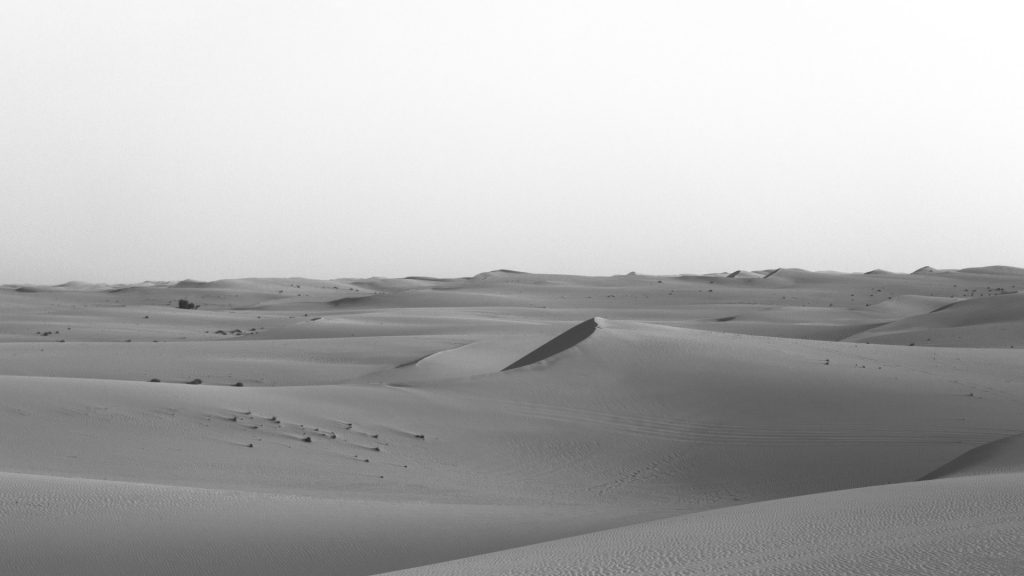
Dunes | Sand Dunes Fotografía/Photography: Saraí López
The whimsical and organic shapes of sand in this type of landscape engage with the environment and amaze us with their incredible versatility and speed of transformation.
Sandy landscapes are characterized by being made up of a natural grain material (sand), which can have a wide variety of shades depending on the geological origin, climate, and mineralogical composition of its place of origin.
We can distinguish five main types of sandy landscapes:
Deserts: Extensive spaces such as the Sahara in Morocco or the Sonoran Desert, whose immensity in perpetual motion resembles the sea, which changes and is transformed by various meteorological factors.
Beaches and coasts: Accumulations of sand (generally light, although they also exist in dark tones or in various colors, depending on the geological characteristics and chemical composition of the place where they are found).
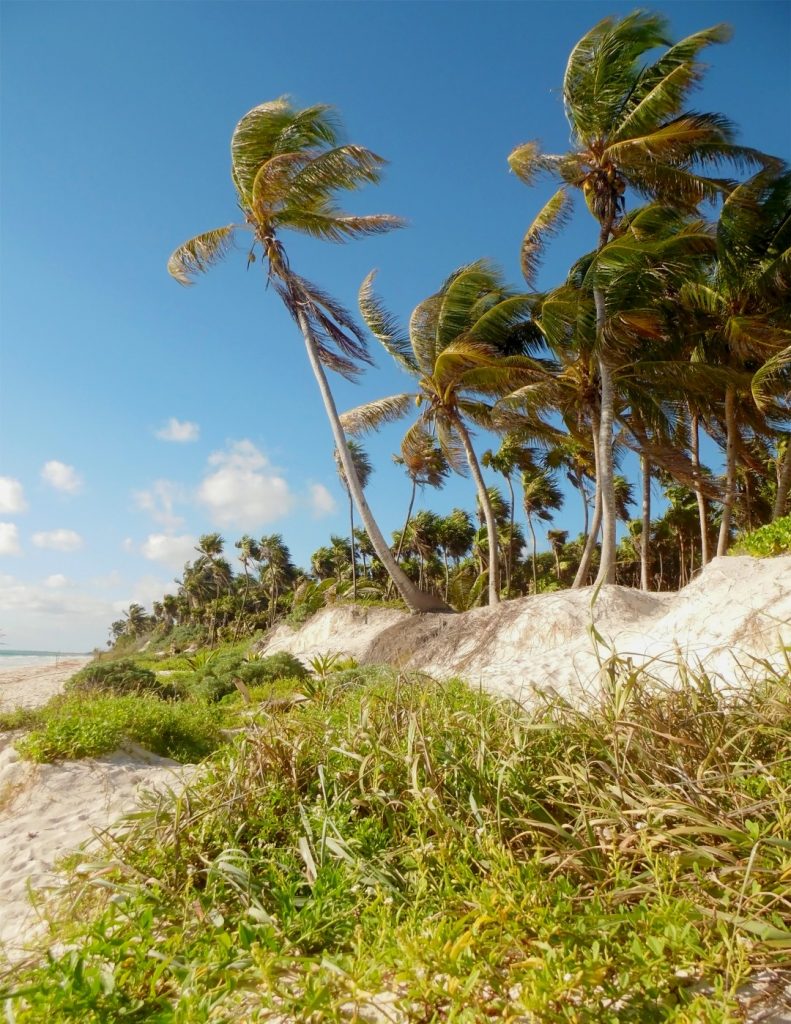
A palm grove in the Sian Ka’an Biosphere Reserve, Quintana Roo, Mexico. Fotografía/Photography: Kevin Daniel Romero Hernández
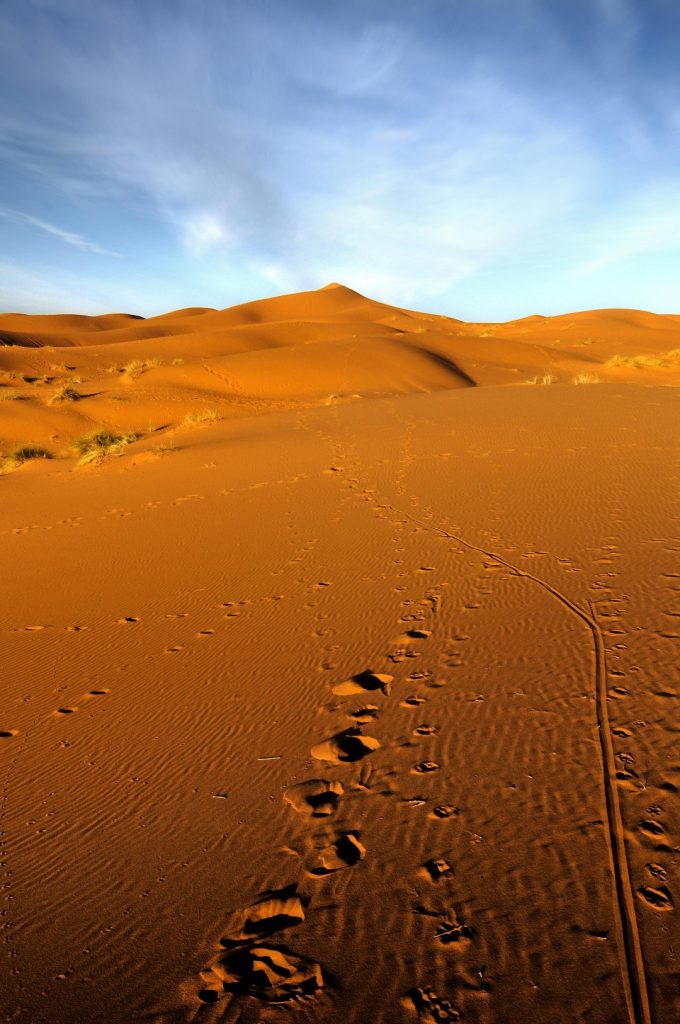
Large orange sand dunes under a blue sky in Merzouga, Morocco. Fotografía/Photography: Moussa Idrissi vía Pexels
Dunes: Landscape formations shaped by wind, common in coastal and desert ecosystems.
Freshwater landscapes: rivers, streams, and other freshwater currents
Artificial and artistic sand landscapes: artistic representations in which sand is the material used by the designer or artist.
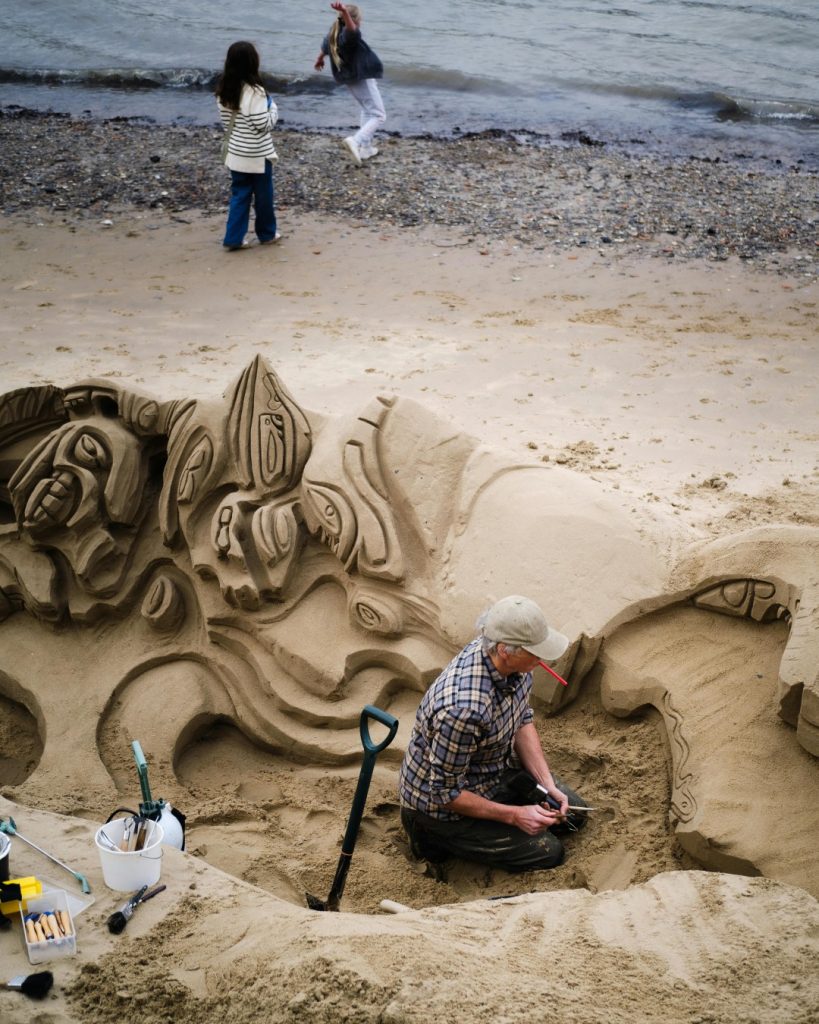
Sand sculptor creates intricate designs on a busy London beach.
Fotografía/Photography: Cross ImageM vía Pexels
Desert landscapes
Sand seas (Ergs): large expanses of sand covered by deep dunes, such as the Sahara Desert.
Coastal deserts: Arid areas that border the ocean where the wind blows toward the land, such as the Atacama Desert in Chile.
Red sand deserts: These are soils rich in iron oxide, which gives the sand its red color, characteristic of desert areas such as those in Pachuca, Hidalgo, Mexico.
Coastal landscapes
We also find sandy landscapes on coasts, beaches, islands, and peninsulas, each with their own characteristics. Their main distinguishing feature is the color of the sand:
White sand beaches: They are formed from pure quartz or crushed coral fragments, typical of the Caribbean or such as those found in Egypt.
Black sand beaches: They are of volcanic origin and derived from basalt erosion; they are common in places such as Iceland and Hawaii.
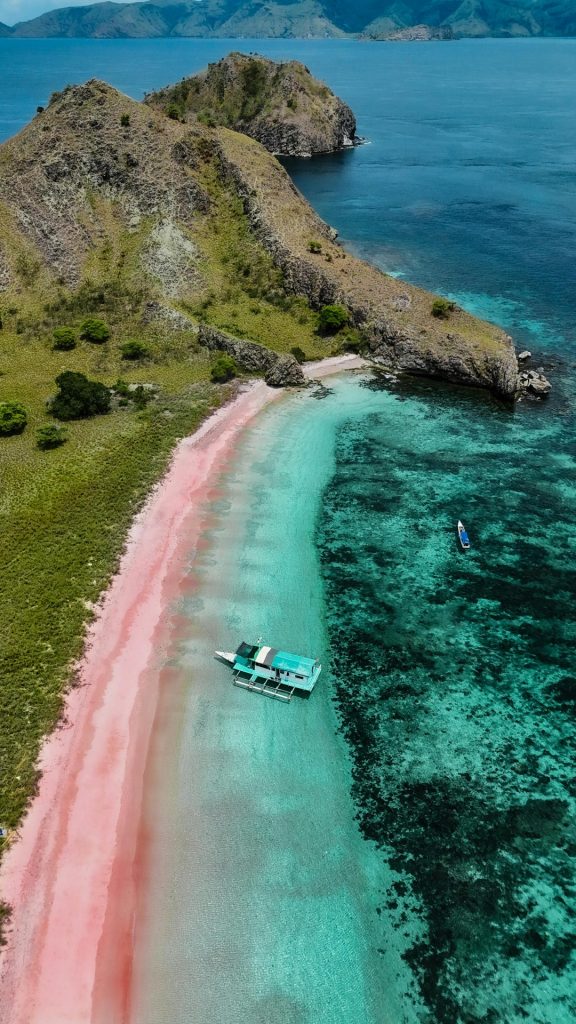
Pink sand beaches: They are composed of a mixture of white sand and pulverized shells of foraminifera (marine microfossils), such as those found along the coasts of Indonesia.
Coastal dunes: These are mounds of sand that form behind beaches, stabilized by hardy vegetation.
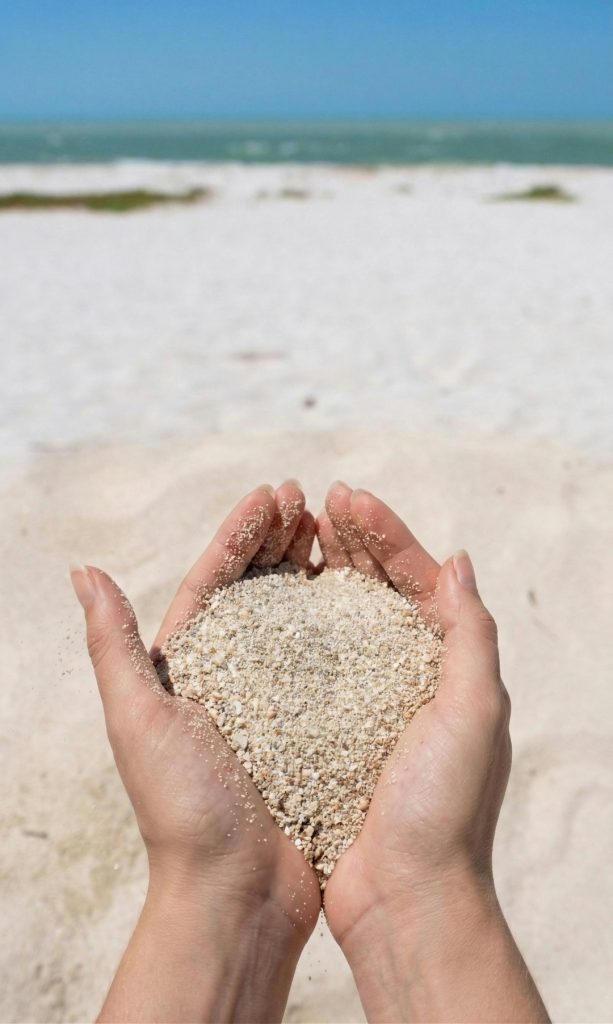
A serene scene of hands holding sand on the picturesque beach of Celestún, Yucatán, Mexico.Fotografía/Photography: Pannora Mkt vía Pexels
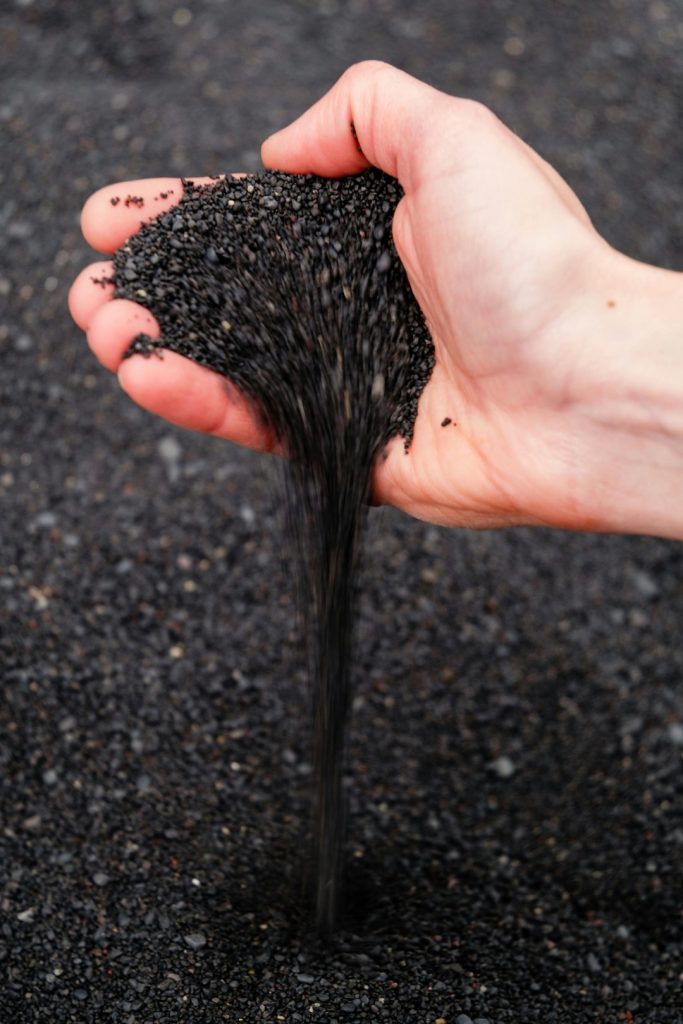
Close-up of a hand pouring black pebbles onto the ground, showcasing texture and depth
Fotografía/Photography: Laura Paredis vía Pexels
Large orange sand dunes under a blue sky in Merzouga, Morocco. Fotografía/Photography: Joe Fikar vía Pexels
Freshwater landscapes
Sandy landscapes also exist in freshwater environments such as rivers, streams, and other freshwater currents. Some examples are:
Sandbanks: Sedimentary accumulations in riverbeds, bends, or mouths.
Lake beaches: Lake shores covered with fine sand due to the constant movement of freshwater waves.
Artificial and artistic sand landscapes
As for artistic or design landscapes, we can mention at least five types:
Sandscape: These are natural settings that are increasingly used by landscape designers and architects in coastal projects to integrate beach environments into the urban, often tourism-oriented architecture of the place, in order to add richness to the setting and give greater meaning to the human experience. In these designs, light accentuates the volumes generated by shadows on the sand and is accompanied by the natural environment (the breeze, walkers, the sound of waves, and seabirds), generating physical and mental well-being for those who experience them. They are ideal for relaxation and meditation.
Sand art (Art in Motion or painting with sand): is an ephemeral artistic technique that consists of creating drawings using sand as a painting canvas. It is ephemeral, as it is designed to disappear due to wind or the action of the sea, and that is precisely part of its charm. The process is a kind of theatrical act, where the work begins with the tracing of lines or forms and continues until the work disappears, as essential parts of its meaning. These works, unrepeatable and conditioned by the natural environment, combine technique, scale, and message with a profoundly contemporary sensibility.
Zen paintings: These are homemade creations that use beach sand and glue to create decorative reliefs.
Zen Gardens (Karesansui): Japanese dry landscapes of raked sand or gravel that simulate the movement of water.
Decorative sandscapes: Glass artworks with water and sands of different densities that create landscapes when rotated.
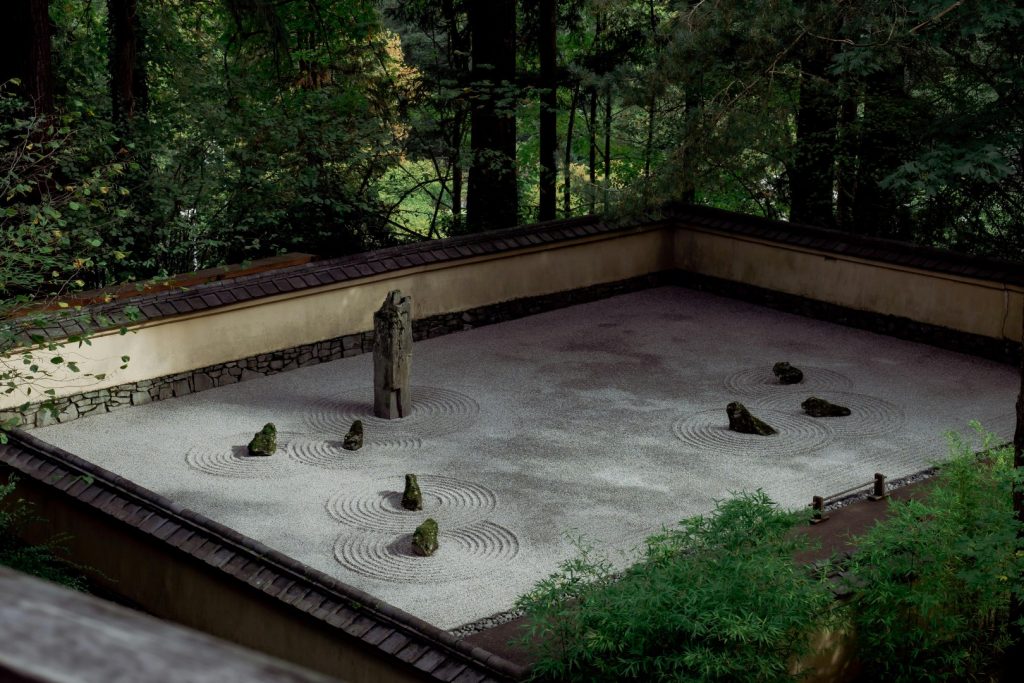
A serene Zen rock garden in Portland surrounded by lush greenery, ideal for mindfulness.
Fotografía/Photography: Alexis Molina vía Pexels


-10.28.24.jpg "Anunciate07-13-a-la(s)-10.28.24")

 13.26.42.png "Captura de Pantalla 2023-02-08 a la(s) 13.26.42")


