
The landscape teaches: towards learning territories
Discover The Landscape Teaches: Toward Learning Territories, where Ana Julia Carvajal speaks about Learning Territories, a model that integrates landscape, environmental health, and play. Within this approach, the landscape is understood as an active part of everyday learning, a living system of which we are part, and at the same time, a climatic refuge for children.
For a long time, we have thought of and accepted the school as just another building in the city: a collection of classrooms, hallways, and playgrounds. A place that fulfills the need to contain a large group of children in one location, where they spend many hours of their daily lives. However, education has never been limited solely to the classroom. We also learn from the places we inhabit, from everything we observe, from the shadow of a tree, from the anecdotes and memories that shape us, from the textures beneath our feet, and even from the way waterfalls and seeps in. In this way, the environment becomes a third teacher.
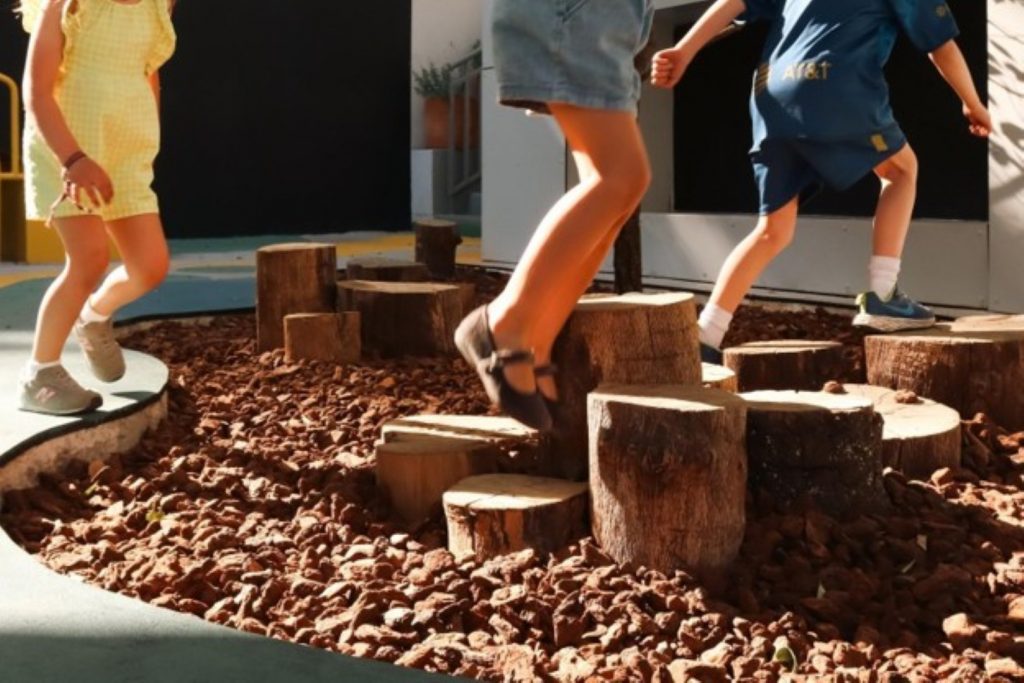
Bardana- P. Preescolar Juego Libre / Bardana- P. Preschool Free Play
Fotografía/Photography: DCM Studio (Daniela Magni Studio)
The territory teaches; it does so through everyday experience, through the movement of the body, the observation of cycles, and the recognition of others and of place. Despite this, in many cities, educational spaces have been progressively disconnected from living systems: a suffocating continuum of concrete, with hard, impermeable courtyards; homogeneous surfaces, devoid of color, vegetation, and living soil. These are spaces designed more for the durability of concrete and supposedly easy maintenance than for the experience of those who inhabit them. This condition is not insignificant: the spaces where children grow shape their relationship with the world.
The territory teaches; it does so through everyday experience, through movement, through observation, through recognizing others and the place itself.
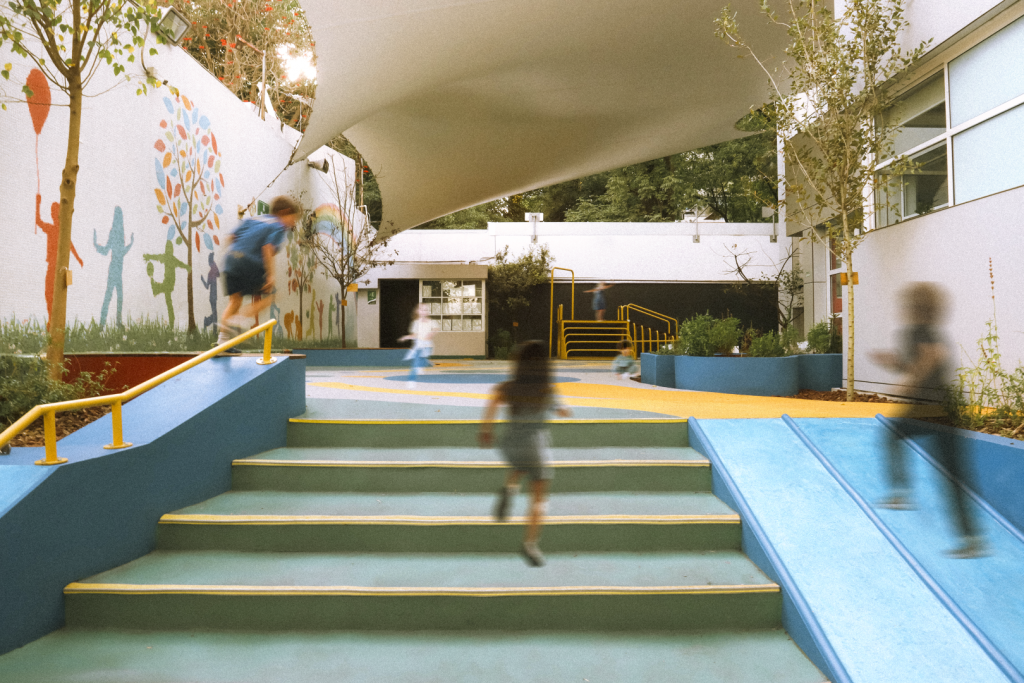
Bardana Patio Preescolar / Bardana Preschool Courtyard
Fotografía/Photography: DCM Studio (Daniela Magni Studio)
Within this context, the Learning Territories model emerges: a model that integrates landscape, environmental health, and play, where the landscape becomes an active part of everyday learning and a climate refuge for children. It is a model in which soil, water, vegetation, biodiversity, and diverse forms of play function as ecological and climate infrastructures, as well as pedagogical tools.
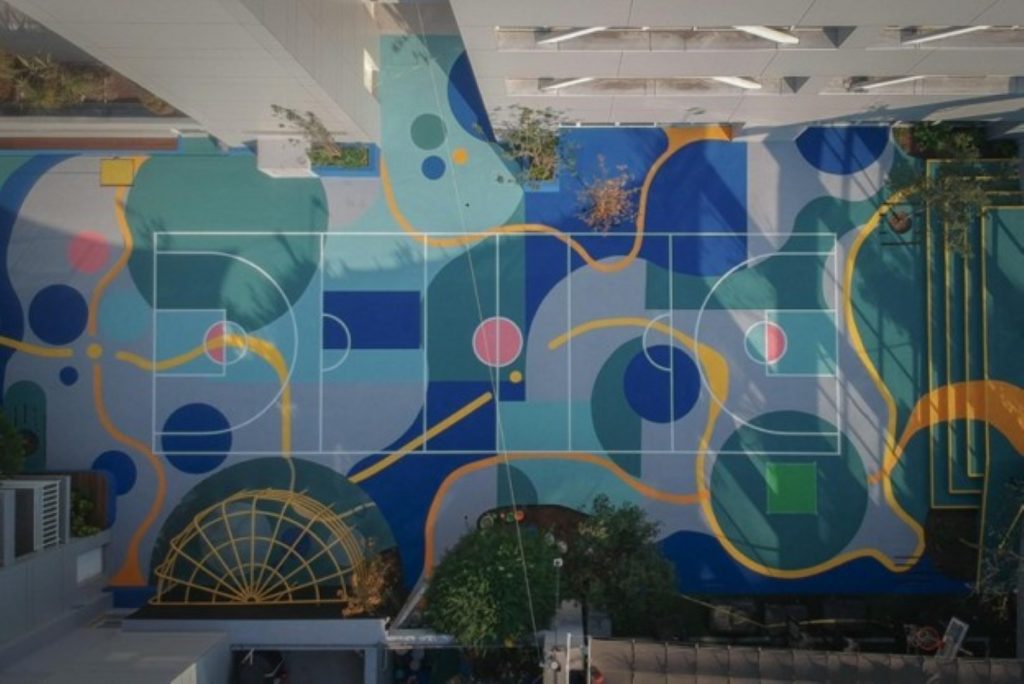
Bardana- P. Primaria Vista Aérea / Bardana- P. Aerial View Of The Elementary School
Fotografía/Photography: DCM Studio (Daniela Magni Studio)
Various thinkers have pointed out that knowledge emerges from the relationship with the environment. Anthropologist Tim Ingold describes learning as a process of educating attention: a form of knowledge that arises from actively inhabiting and perceiving the world. Similarly, environmental educator David W. Orr has argued that much of the current ecological crisis stems from educational systems that separate knowledge from the territory that sustains it. In this sense, schools can become places where that relationship is recovered and strengthened.
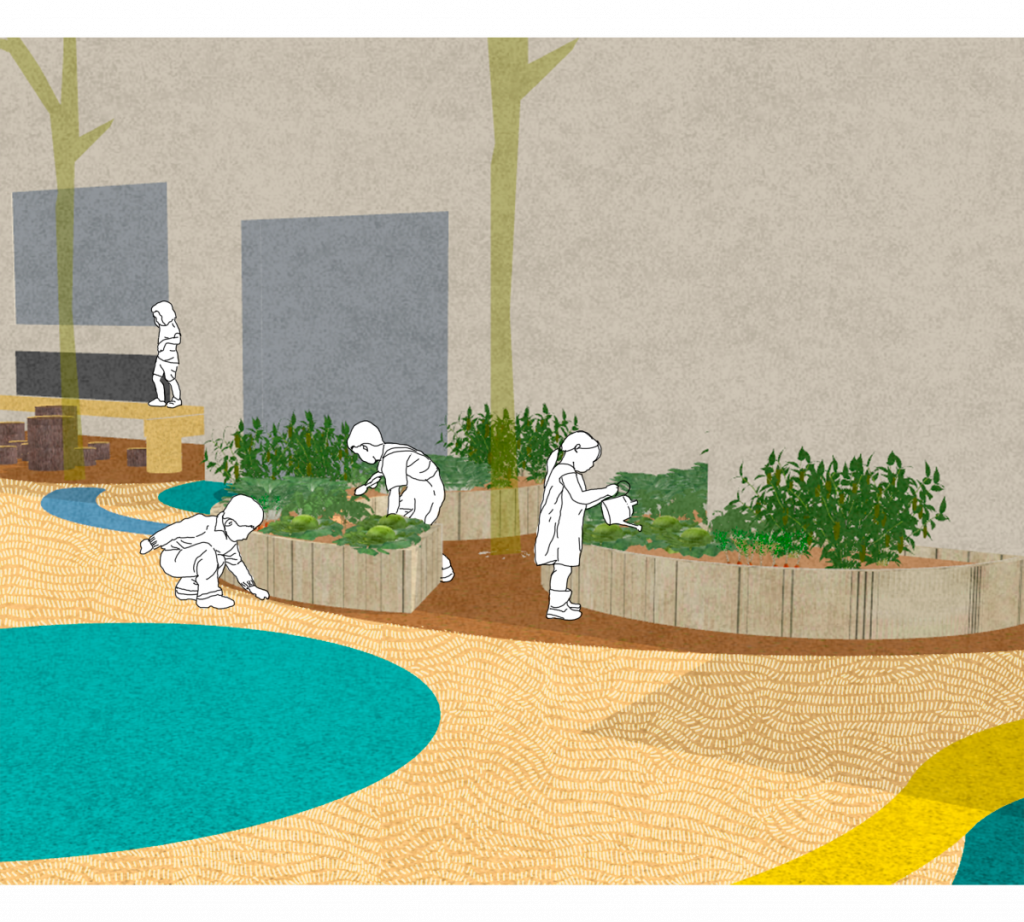
Bardana Vista Huerto Preescolar / Bardana Preschool Garden View
Fotografía/Photography: DCM Studio (Daniela Magni Studio)
This possibility becomes even more relevant given the environmental conditions of many cities. In Mexico City, for example, urbanization has drastically reduced soil permeability; it is estimated that more than 70% of the urban surface is sealed by concrete or asphalt. At the same time, the urban heat island effect can raise the temperature between 3 and 7 degrees Celsius compared to less urbanized areas. In Mexico City, we often underestimate the poor air quality we breathe, which is one of the main harmful effects on public health. The American Academy of Pediatrics (AAP) and the World Health Organization (WHO) support the idea that children’s exposure to polluted air has real and cumulative consequences, which makes it necessary to rethink the conditions of school spaces.
In this context, transforming school playgrounds can have implications that extend far beyond their design. A playground can be a concrete slab that amplifies heat and resuspends harmful particles from the air, or it can be a small ecosystem capable of generating shade, infiltrating water, and harboring biodiversity. A school playground has the potential to become a climate refuge and a network of green infrastructure within cities.
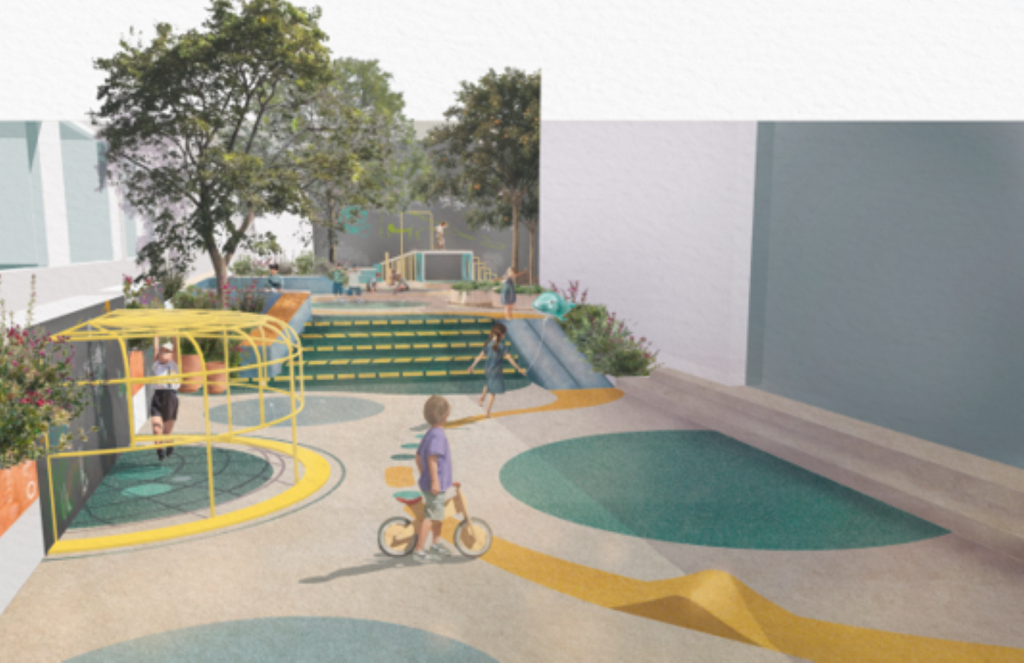
Bardana Vista Patio Preescolar / Bardana Preschool Courtyard View
Fotografía/Photography: DCM Studio (Daniela Magni Studio)
In a school in Mexico City, a most completely impermeable schoolyard began to transform after the decision was made to open up the ground. We implemented the Learning Territories model: breaking through the concrete allowed us to recover areas of natural soil, where more than thirty native tree species were planted. Over time, new layers of vegetation began to attract insects and birds, while the shaded areas began to transform the thermal experience of the place. The space changed character; we brought color and new possibilities for play in contact with natural materials. Little by little, the schoolyard became a habitable landscape.
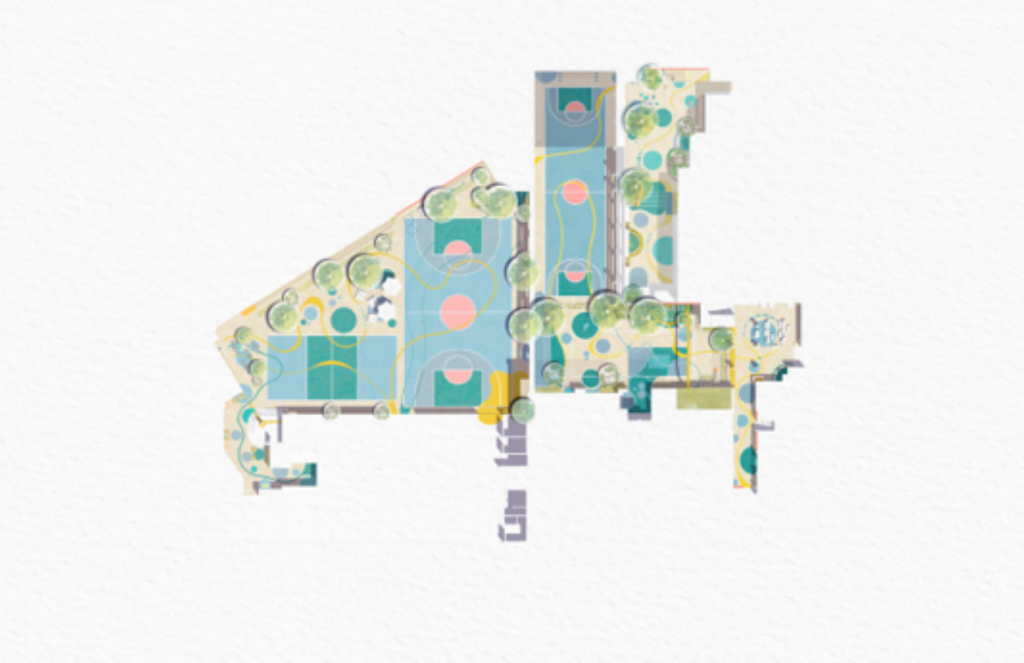
Bardana Anteproyecto – Patios / Bardana Schoolyard Concept Design
Fotografía/Photography: DCM Studio (Daniela Magni Studio)
Without being explicitly part of the school curriculum, the playground began to teach. It showed how plants grow, how the shade changes throughout the day, what happens when the leaves fall from deciduous trees, how a fruit grows, how water slowly seeps through the soil. It showed that the landscape is not something external or separate from daily life, but a living system of which we are a part.
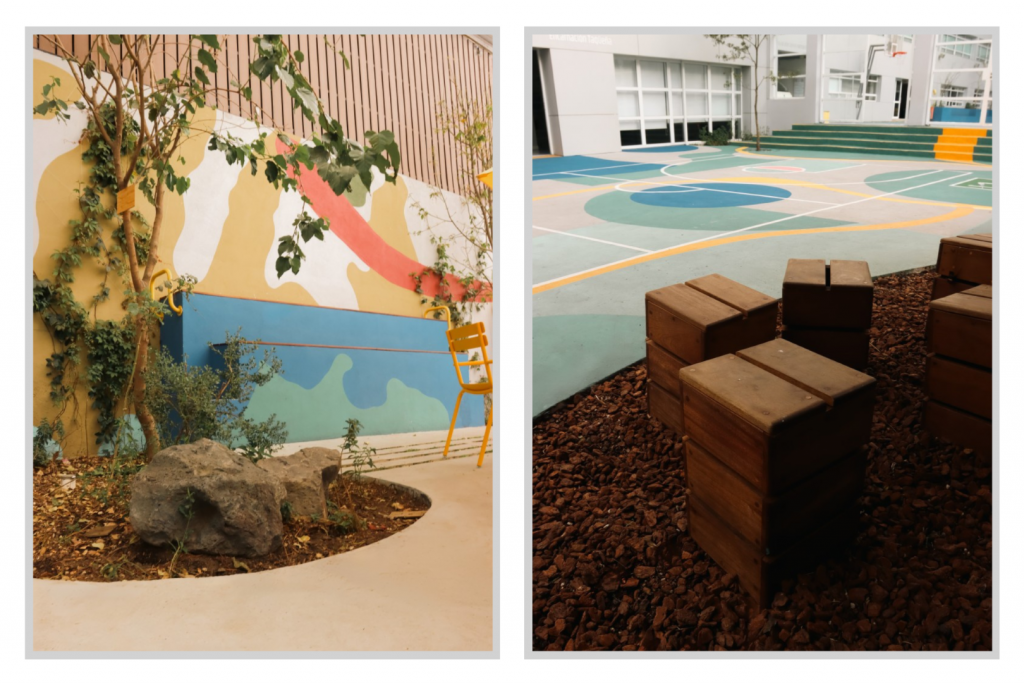
Fotografía izquierda Bardana- P. Prepa gradas / Left photography Bardana- P. High School Bleachers
Fotografía/Photography: DCM Studio (Daniela Magni Studio)
Fotografía derecha Bardana- P. Descanso y naturaleza / Right photography Bardana- P. Nature and Relaxation
Fotografía/Photography: DCM Studio (Daniela Magni Studio)
Perhaps this is one of the most urgent lessons of our time: to understand that the soil sustains plants and trees, that plants regulate the climate, that insects, birds, and mammals pollinate and disperse seeds, that water circulates beneath our feet and replenishes life; to observe and be part of nature’s cycles, not as an abstract concept but as something tangible; and to recognize that we inhabit living networks because we are interdependent beings
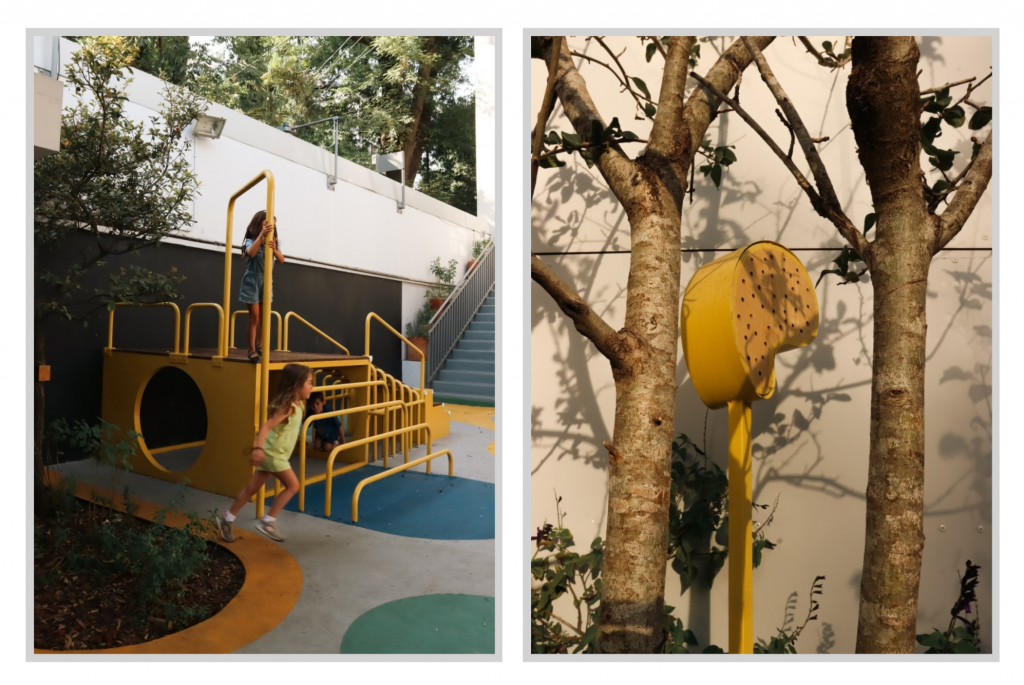
Fotografía izquierda Bardana- P. Preescolar changuera y cuevita / Left photography Bardana- P. Monkey Bar and Play Cave
Fotografía/Photography: DCM Studio (Daniela Magni Studio)
Fotografía derecha Bardana- P. Vida y naturaleza en crecimiento / Right photography Bardana- P. Growing Life and Nature
Fotografía/Photography: DCM Studio (Daniela Magni Studio)
Transforming schools into learning territories is not just a pedagogical or environmental strategy; it is also a way of returning knowledge to where it has always been: the territory.
Let’s start by calling the schoolyard “the school garden”—would that change how we see it? It might, right?
Bardana:
Bardana connects landscape, design, and collective action to activate new ways of relating to nature, through a sensitive, site-specific, and collaborative practice.
We are an interdisciplinary, creative, and experimental workshop. We don’t operate like a conventional landscape architecture firm: we are a space that thrives on research, exploration, collaboration, and play. Here, design coexists with ecology, biology, pedagogy, psychology, art, philosophy, and history to build projects and develop strategies deeply connected to the territory.
Founded by Ana Julia Carvajal in 2025, Bardana represents a new stage in her life dedicated to ecological landscape design after more than fifteen years of experience in Mexico City. It emerged with the intention of restoring the link between design and nature through integrated landscape management, using a situated, interdisciplinary practice committed to conservation.


-10.28.24.jpg "Anunciate07-13-a-la(s)-10.28.24")

 13.26.42.png "Captura de Pantalla 2023-02-08 a la(s) 13.26.42")