

Ruin: landscape, gastronomy and urban oasis design
Discover how the Ruin: landscape, gastronomy and urban oasis design garden, by Estudio Taller Sin Titulo, transforms a commercial space in Morelia into a sensory oasis inspired by the genius loci. We invite you to explore this landscape proposal that integrates biodiversity, memory, and gastronomy to reconnect the city with nature.
In an urban context marked by densification, the acceleration of daily rhythms, and a progressive loss of contact with natural systems, landscape architecture faces the challenge of reintegrating the sensitive experience of nature into everyday life. Contemporary cities, dominated by productive and commercial logics, increasingly reduce spaces for pause, contemplation, and encounter. In response to this scenario, the Ruina thematic garden—integrated into a gastronomic commercial space near the historic center of Morelia, Michoacán—is presented as a critical reflection on the possibility of constructing an urban oasis capable of offering well-being, connection, and meaning within the dense city fabric.
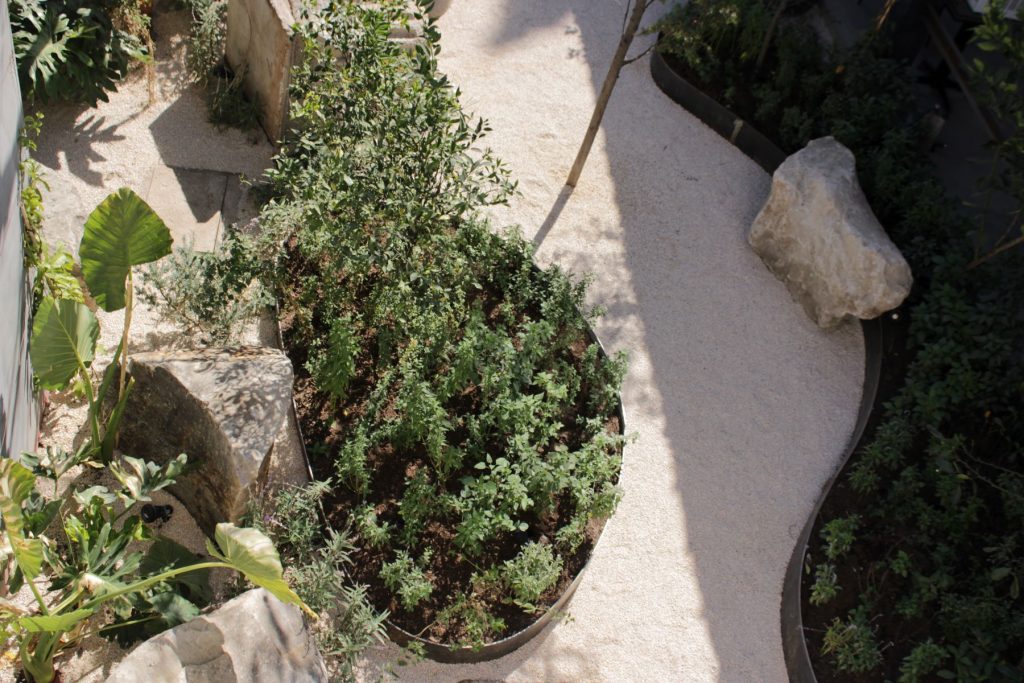
Jardín Ruina lugar de biodiversidad/Ruina garden: A Place of biodiversity
Fotografías/Photographies: Claudia Rendón
The design process stems from the principle of genius loci, a classical Roman concept referring to the distinctive spirit of a place. This principle is understood not merely as a physical condition, but as a symbolic, cultural, and environmental construction in permanent transformation
Rather than imposing a predetermined aesthetic, the proposal was developed through a sensitive reading of the site, its material pre-existences, spatial scale, visual relationships, and the atmosphere of the immediate surroundings. In dialogue with the Mediterranean theme of the gastronomic project, this approach allowed for the construction of a landscape narrative that integrates memory, identity, and contemporary experience.
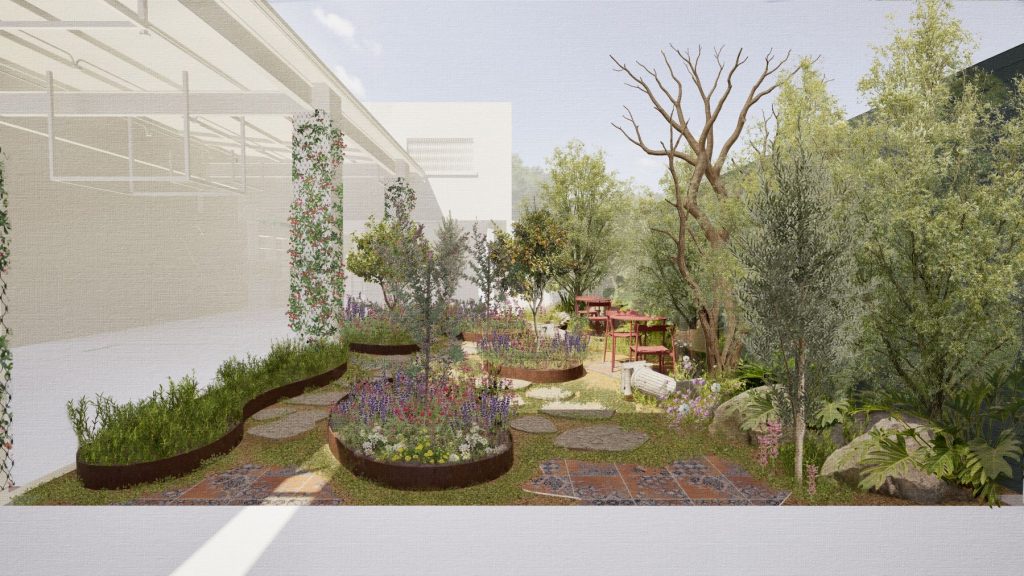
Vista panorámica conceptual/Conceptual panoramic view
Ilustración/Illustration: Sharon Maldonado
The Ruina garden proposes a reflection on the role of landscape within contemporary commercial spaces, transcending ornamental functions to establish itself as a sensory, ecological, and cultural infrastructure
The spatial strategy materializes through the arrangement of vegetation islands that fragment the rigid, originally orthogonal, and compact geometry of the plot. These islands generate a system of sinuous paths that induce a leisurely pace, favoring the progressive exploration of the space. Far from suggesting direct trajectories, the layout proposes detours, transitions, and visual openings that activate curiosity and multiply perceptions, transforming a limited space into an expanded experience. The garden is thus configured as a spatial device that articulates paths, seating areas, and focal points, granting depth, complexity, and dynamism to the architectural ensemble.
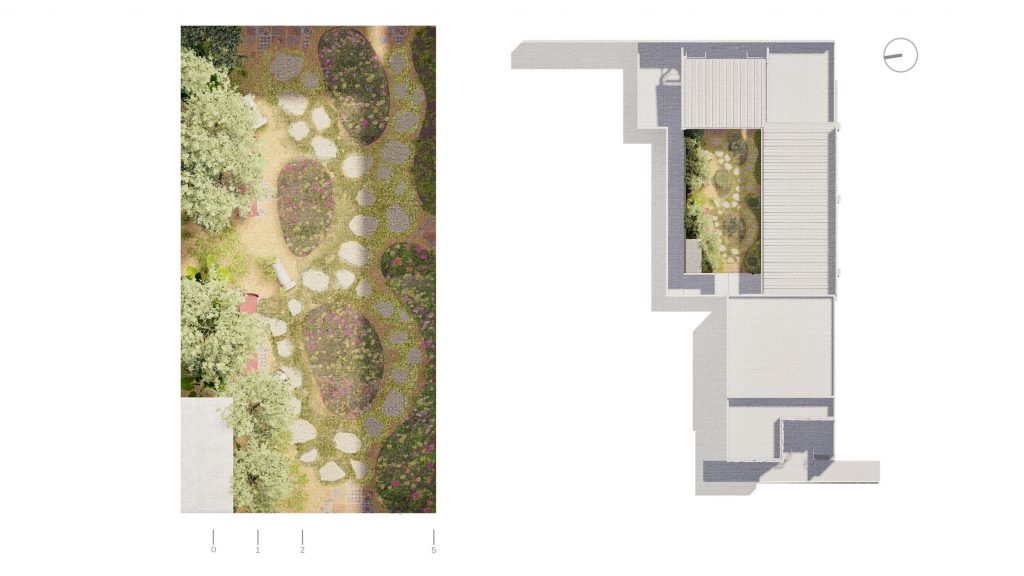
Plano de conjunto/Site Plan
Ilustración/Illustration: Sharon Maldonado
The sensory experience constitutes one of the central axes of the project. The plant selection privileges wild species adapted to the urban context, with high ecological value and the capacity to attract pollinators, strengthening biodiversity and ecosystem services. Among the species used, Agastache mexicana stands out, along with various salvias—”Mystic Spires Blue”, “Wendy’s Wish”, S. leucantha, S. microphylla, “Amistad”, S. greggii, and S. coccinea—as well as Cosmos atrosanguineus, Cosmos bipinnatus, Pachystachys lutea, and Petrea volubilis. This botanical assembly constructs a dynamic chromatic palette where colors, textures, aromas, and sounds generate a continuous landscape.
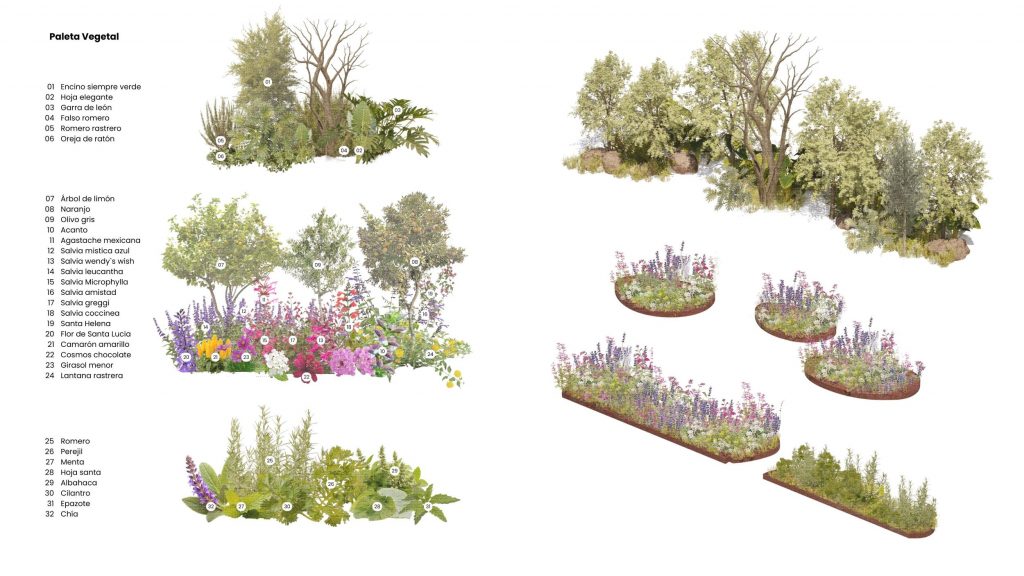
Paleta vegetal jardín Ruina/Plant Palette
Ilustración/Illustration: Sharon Maldonado
Complementarily, the integration of edible and medicinal plants establishes a direct link between the garden and the culinary proposal. These species and fruit trees are incorporated into the restaurant’s menus, redefining the act of eating as a territorial experience. This operation reintroduces the biological origin of food into daily space, promoting a more conscious relationship between production, consumption, and landscape.
The project’s temporal dimension is reinforced by the lighting design, which transforms the nocturnal atmosphere. While natural light models shadows and plant volumes during the day, at night, punctual lighting constructs a new spatial narrative, emphasizing paths, textures, and planes, and generating an intimate, enveloping environment. This duality expands the reading of the garden, turning it into a dynamic, mutable, and sensorially active space.
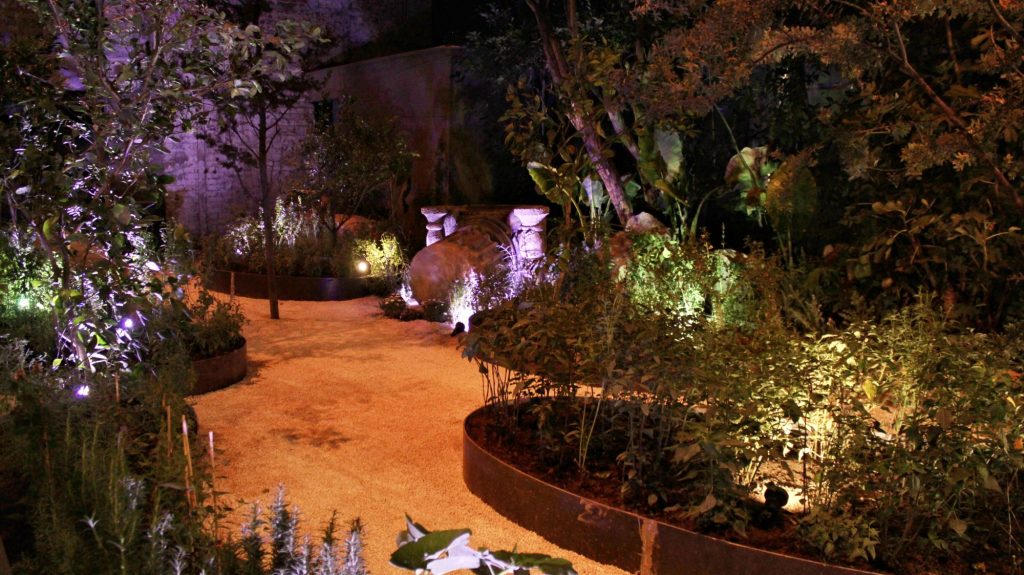
Jardín Ruina lugar de experiencia sensorial/Ruina Garden: A Place of Sensory Experience
Fotografía/Photography: Claudia Rendón
Altogether, the Ruina garden proposes a reflection on the role of landscape in contemporary commercial spaces, transcending ornamental functions to consolidate itself as a sensorial, ecological, and cultural infrastructure. Amidst the urban fabric of Morelia, this project demonstrates the capacity of landscape design to build meaningful places capable of reconnecting people with natural cycles, activating the memory of the territory, and offering new ways of inhabiting the city.
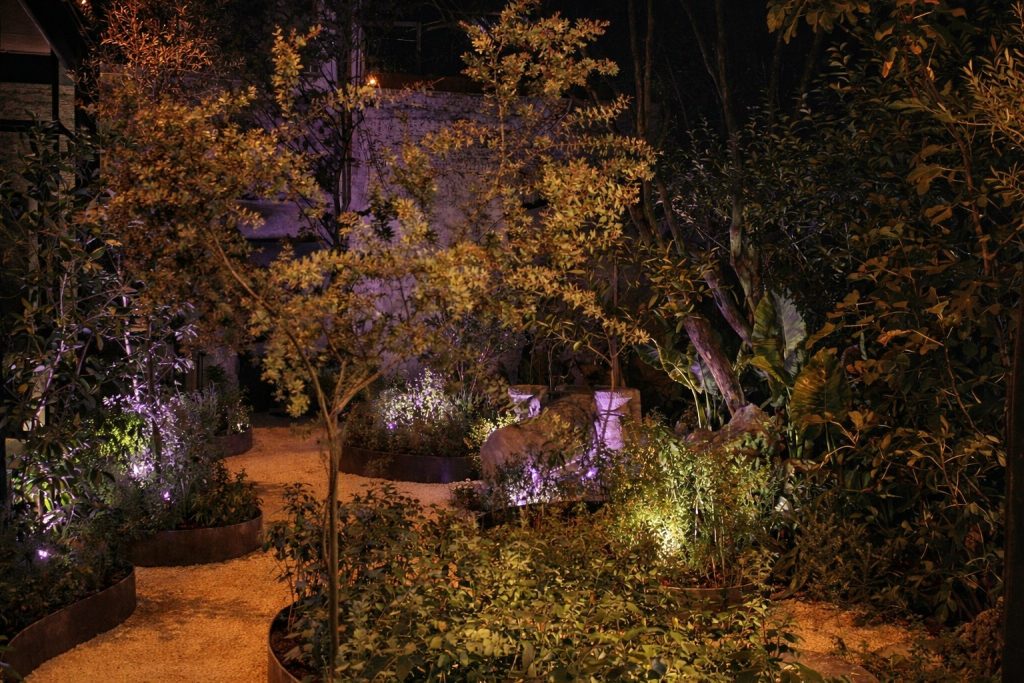
Jardín Ruina atmósfera nocturna/Ruina Garden: Night Atmosphere
Fotografía/Photography: Claudia Rendón
Conoce más: www.sintitulo.com.mx


