

Moxos: Multifunctional urban space. LIVING IN THE AMAZON
Facing extreme heat, the Moxos project by Edwin Bause Architecture emerges in the Amazon as an urban oasis of organic and permeable design. This sanctuary restores ecological sensitivity and respect for native vegetation to offer a unique communal space. Come, see, and discover this haven of freshness by reading the full article!
The Context The city of Trinidad, Bolivia, is located in a humid tropical region characteristic of the Amazon, characterized by a generally extreme climate of intense sun and rain. These factors are becoming increasingly frequent and pronounced as a result of global climate change, with temperatures exceeding 40 degrees Celsius in many cases this past year. In this area, this is due in some cases to deforestation.
The Moxos project is conceived as a multifunctional community urban space in the city of Trinidad, in the heart of the Llanos de Moxos region, within the Bolivian Amazon. The design responds to the area’s extreme climatic conditions—high temperatures and intense rainfall—through an open, permeable architecture adapted to the natural and social environment. The proposal is structured around a large, undulating, elevated, and lightweight metal roof that defines a continuous and flexible public space. This roof acts as the primary climate control element, providing shade, rain protection, and natural ventilation, thus promoting thermal comfort without the need for artificial systems. Its organic geometry evokes the dynamic, riverine landscape of the plains, visually integrating with the existing vegetation.
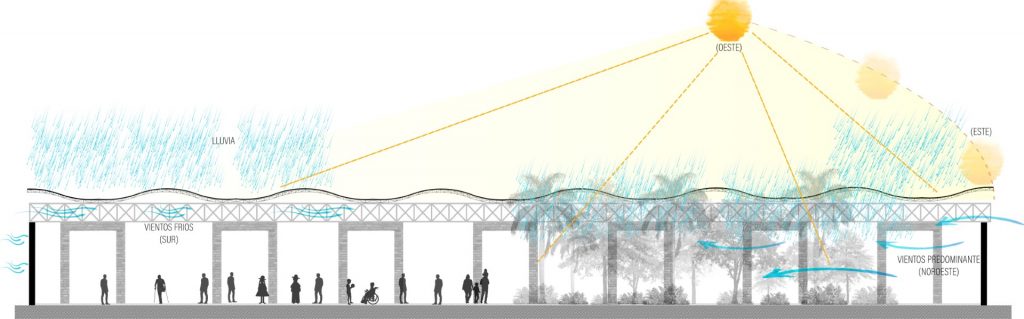
Esquema ambiental/Environmental Diagram
Ilustración/Illustration: Cortesía de autores
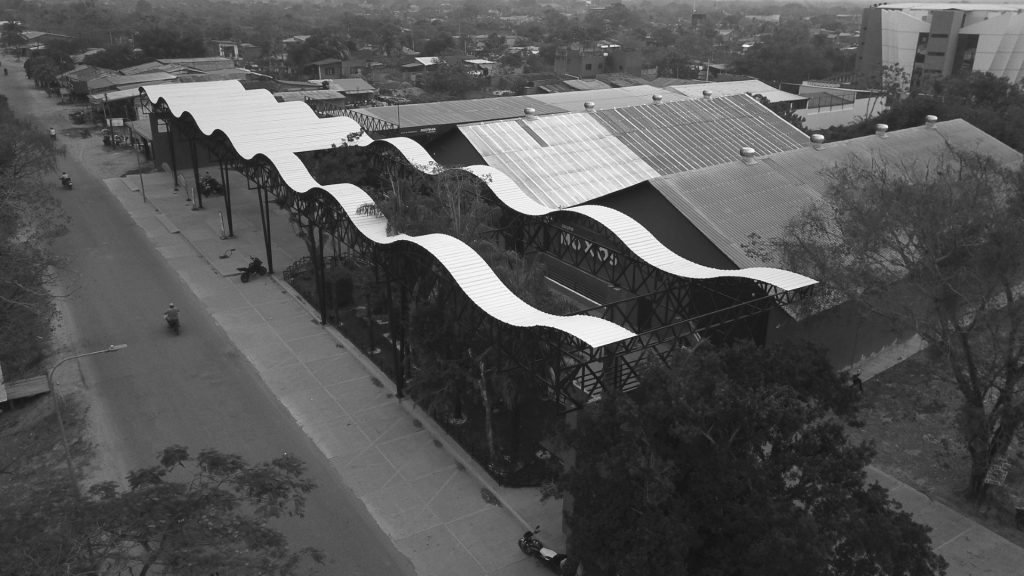
Photography: Imagen área posterior/Frontal aerial view
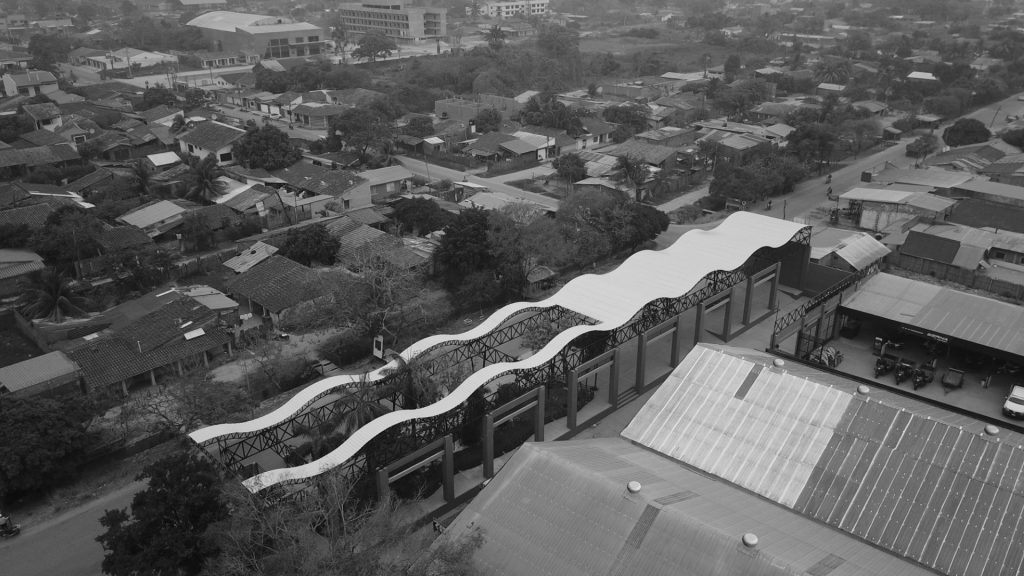
Imagen área frontal/Frontal aerial view
Fotografías/Photographies: Álvaro Irigoyen
Moxos is not just an urban infrastructure but a spatial system of coexistence
The covered space is envisioned as a community meeting place, capable of hosting a wide range of activities, including fairs, cultural events, temporary markets, recreational activities, pedestrian traffic, and everyday gatherings. The absence of rigid enclosures allows for a direct connection with the surrounding urban environment, reinforcing the idea of a democratic, inclusive, and accessible space for all residents, thus becoming a new urban setting.
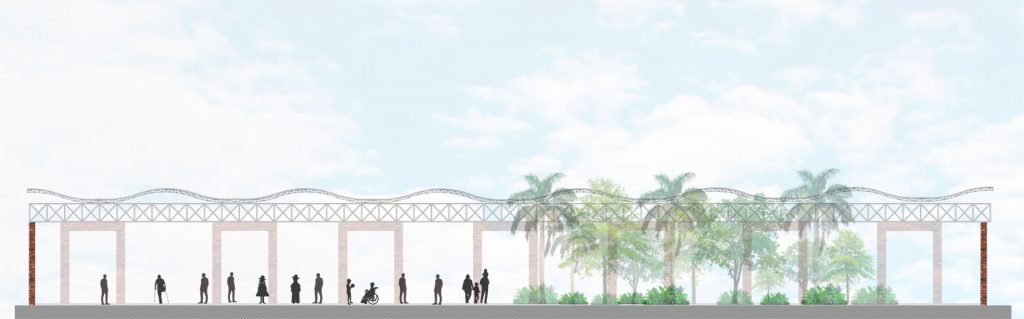
Corte Longitudinal/Longitudinal Section
Ilustración/Illustration: Cortesía de autores
The structural supports and lateral brick volumes provide solidity and local roots, using durable and low-maintenance materials, consistent with the regional construction tradition. Local construction processes and labour were used in its execution, generating employment for the community.
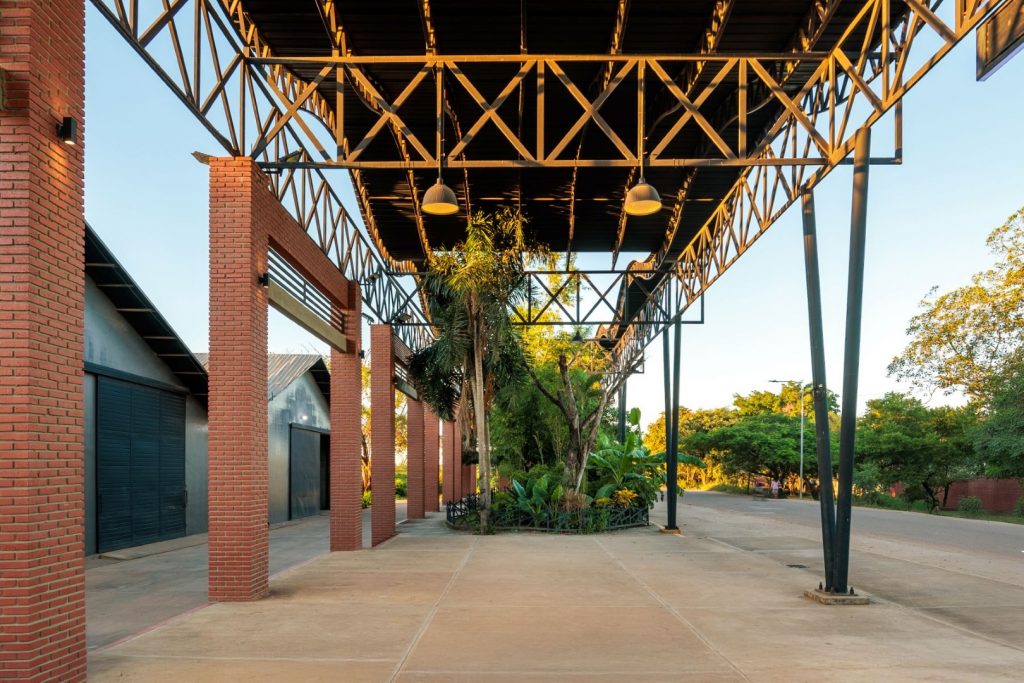
Vista interior/Interior view
Fotografía/Photography: José Ferrufino
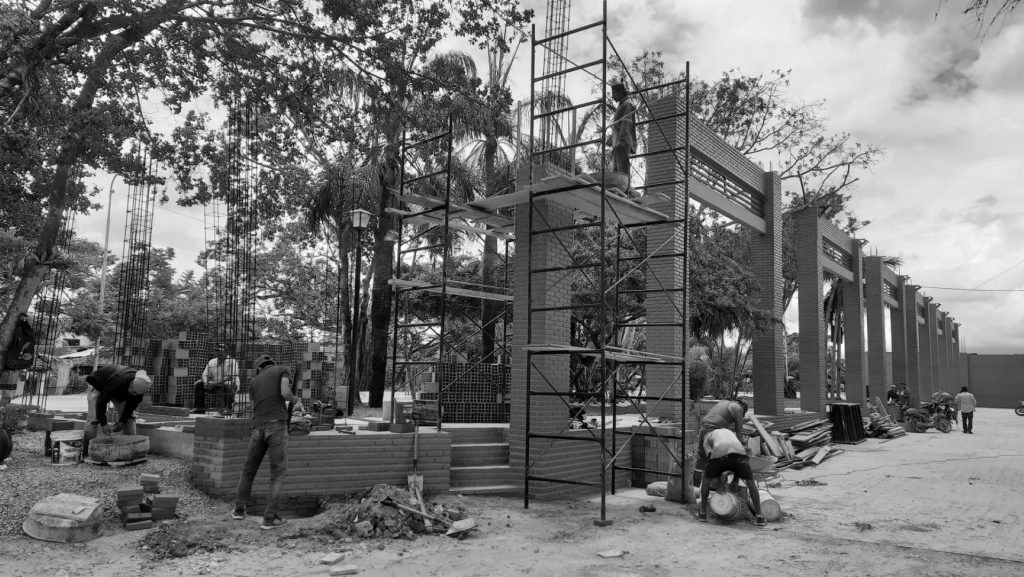
Proceso de obra, materiales y mano de obra local/Construction process, materials, and local labor
Fotografía/Photography: Edwin Bause
This project preserves an island of native vegetation—trees and palms that have existed for many years—as a demonstration of appreciation, respect, preservation, and interaction with nature (representing 50% of the total area, shared equitably and in balance with the space occupied by people). This aspect helps to mitigate the effects of the hot climate and, at the same time, serves as an example of environmental education in an era where ecological awareness has been lost and should be considered a permanent attitude aimed at rescuing diverse ecosystems. The Amazonian identity of the complex reinforces the idea of sustainability as a permanent approach. An example of an urban oasis.
In short, Moxos is not just an urban infrastructure but a spatial system of coexistence which prioritises the pedestrian, strengthens community life democratically and proposes a contemporary architecture deeply linked to the territory, climate and culture of Trinidad and the Llanos de Moxos.
Autor de proyecto de arquitectura/Architectural Project Author: Edwin Bause
Arquitecto/Architect: Fernando Céspedes
Ingeniero estructural/Structural Engineer: Luis Zambrana
Dirección de obra/Construction Management: Percy Rojas
Superficie/Surface Area: 400 m2
Año/Year: 2024
Ubicación/Location: Trinidad Beni, Bolivia


-10.28.24.jpg "Anunciate07-13-a-la(s)-10.28.24")

 13.26.42.png "Captura de Pantalla 2023-02-08 a la(s) 13.26.42")


