
Casa Shultz: Veracruz atmospheres in Mexico City
Corazón Copil presents Casa Shultz: Veracruz atmospheres in Mexico City, an intervention project developed by Jara studio, in collaboration with Corazón Copil. The landscape intervention stands out for the creation of a Veracruz atmosphere through a domestic-scale edible garden, based on an agroforestry system grounded in plant associations.
Casa Shultz is an old residence with high ceilings, courtyards, and generous spaces located in the San Rafael neighborhood of Mexico City. The intervention project was commissioned to Jara architecture studio in collaboration with the landscape and gardening studio Corazón Copil. The project’s main objective was to understand the essence of the building in order to recognize its potential and adapt it to the present without losing its timeless character.
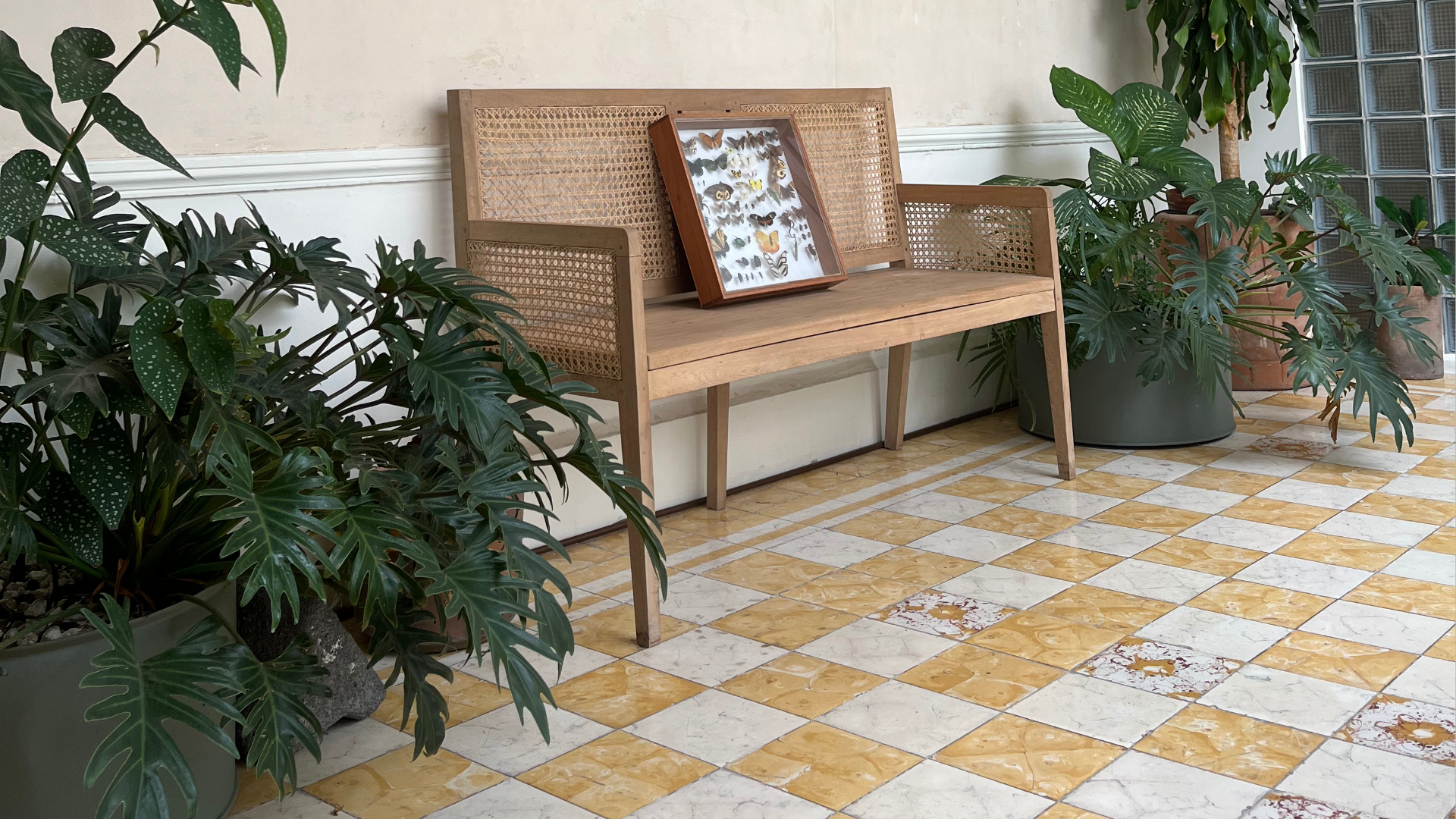
Nivel 1 banca/ Level 1 bench
Ilustración/ Illustration: Diego Monterrubio
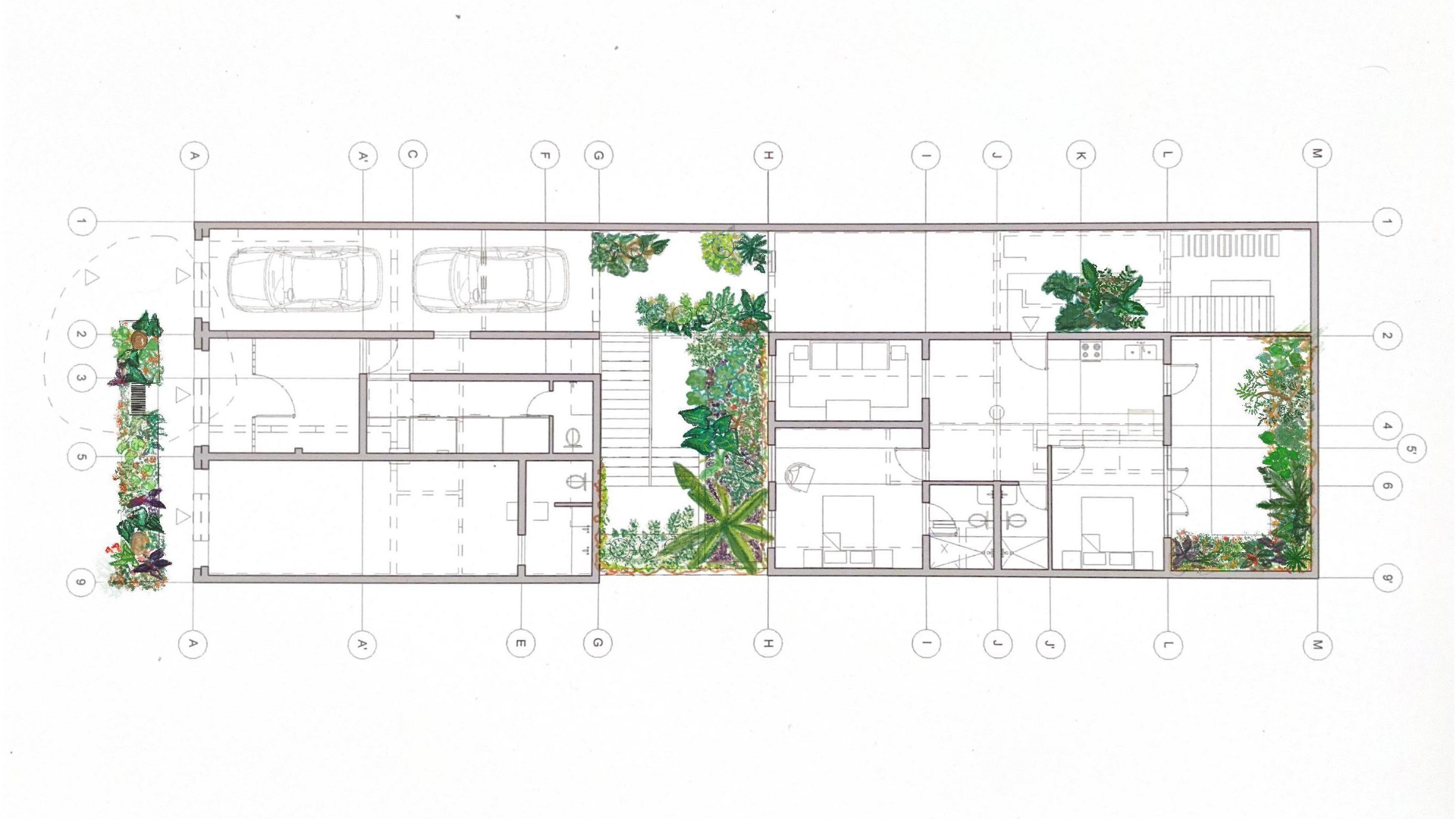
Planta arquitectónica ambientada/ Landscape architectural floor plan
Ilustración/ Illustration: Corazón Copil
The landscape intervention stems from the inhabitants’ desire to maintain a living connection with their home state. Within this context, the project was conceived as an intervention capable of transporting its inhabitants into a Veracruz atmosphere, recreating two ecosystems representative of the state: the warm region of Sotavento and the highland areas of the montane cloud forest. The proposal reproduces some of the environmental conditions inherent of these landscapes: abundant vegetation, humidity, the diversity of strata, and the coexistence of species from different origins.
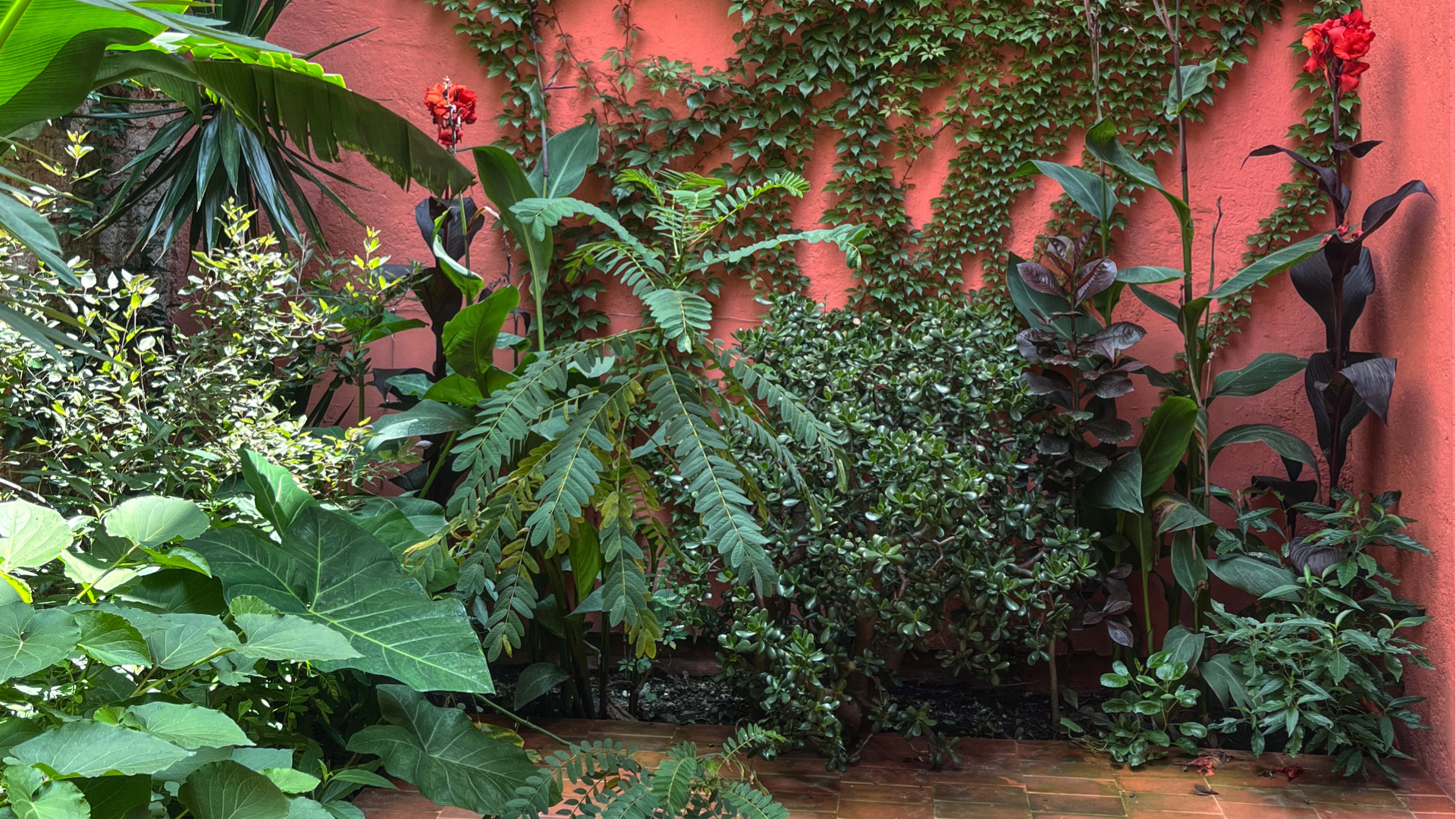
Vegetación jardín trasero/ Vegetation in the back garden
Fotografía/Photography: Diego Monterrubio
Casa Shultz recreates a Veracruz atmosphere through abundant vegetation, humidity, diverse plant strata, and the coexistence of species from different origins.
From within, the leaves filter the light, cast shadows onto the walls, and alter the perception of the house throughout the day. In this way, the vegetation becomes a living structure that accompanies the architecture and participates in the daily experience of its inhabitants, who move through the space, weave their narratives, and engage with the garden in an immersion that slows down the pace of life. The project’s intervention opens toward the street, reclaiming the sidewalk soil and providing shelter, food, and medicine for the human and non-human inhabitants of the city.
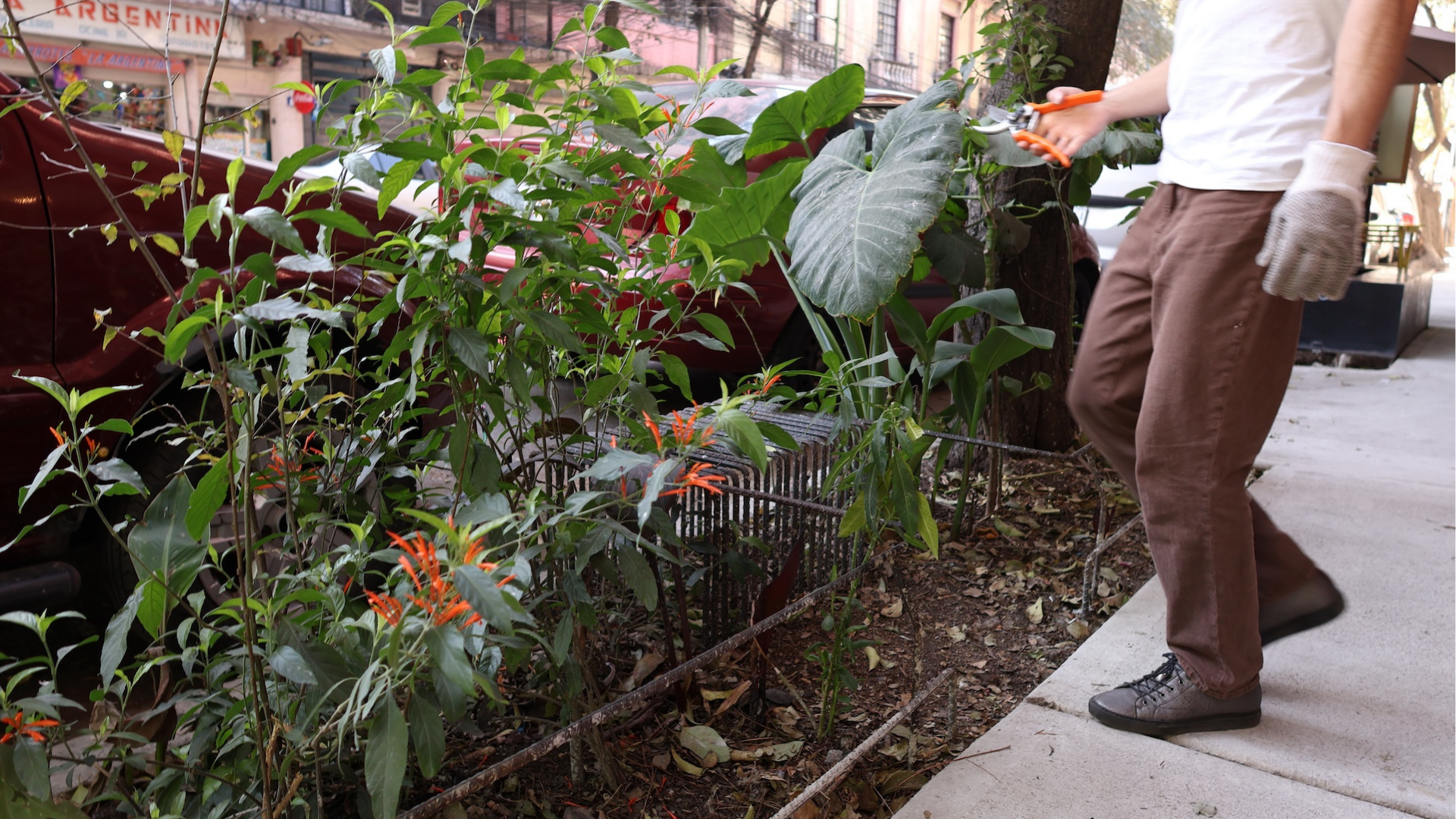
Jardinera de banqueta/ Sidewalk planter
Fotografía/Photography: Tercus Kuhnsis
In search of a relationship between shelter, vegetation, and people, the project embarked on the idea of an edible garden, of domestic scale and Veracruz heritage. Under this philosophy, the movement and management of the garden become essential. The movement is understood as the cycle of planting, harvesting, and returning pruning residues to the soil. Therefore, gardening practices—the planting, care, and development—form an essential part of the design.
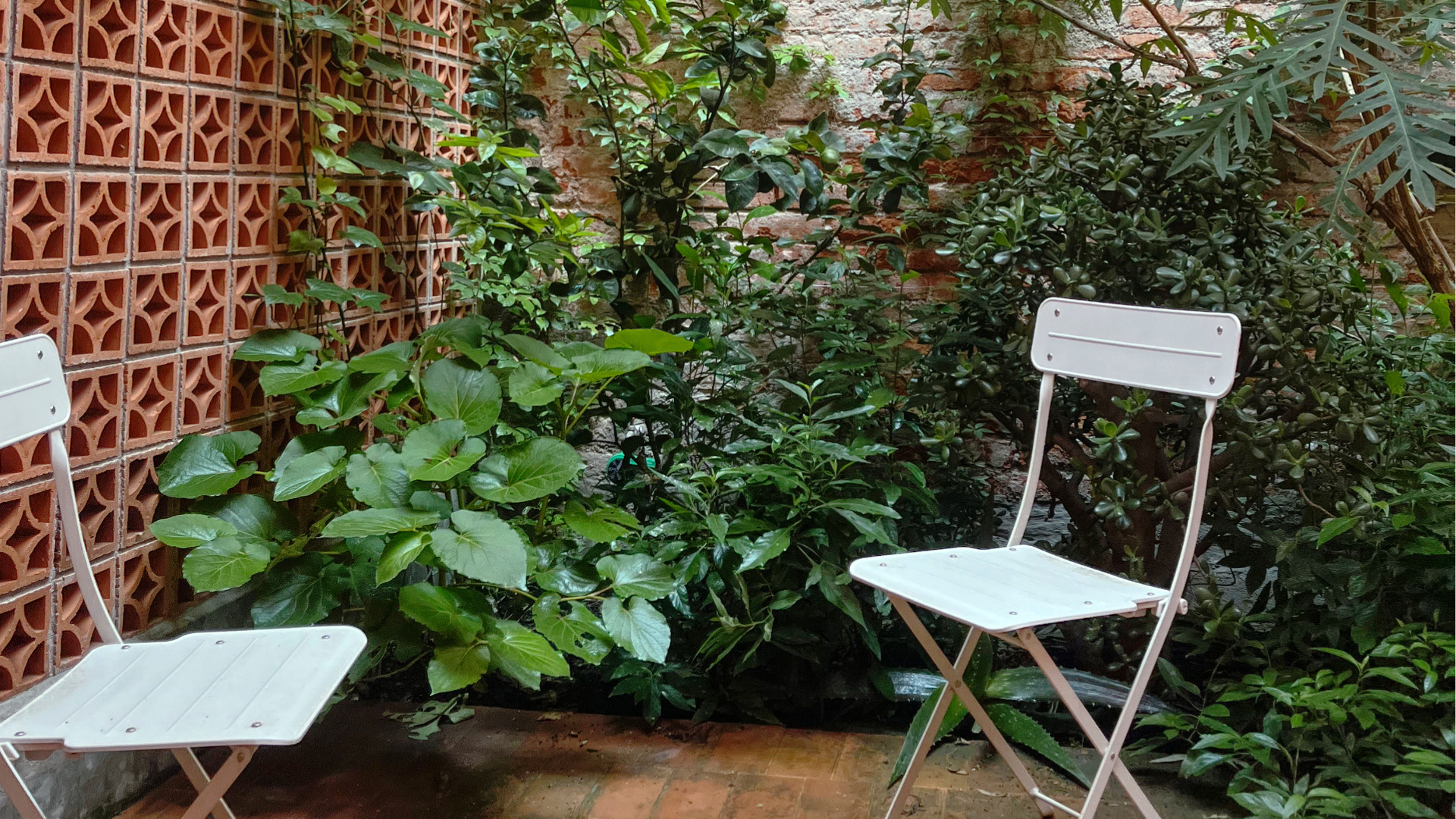
Jardín trasero y celosía/ Back garden and screen
Fotografía/Photography: Diego Monterrubio
For the design of this garden, an agroforestry system known as an edible forest was used as a reference. In which plant associations are created, where different species occupy various functional strata. Following this guideline, dense communities were planted that combine groundcovers, herbaceous plants, shrubs, palms, and trees. This organization made it possible to make better use of light, conserve moisture, generate organic matter, and promote regeneration processes within a limited urban space.
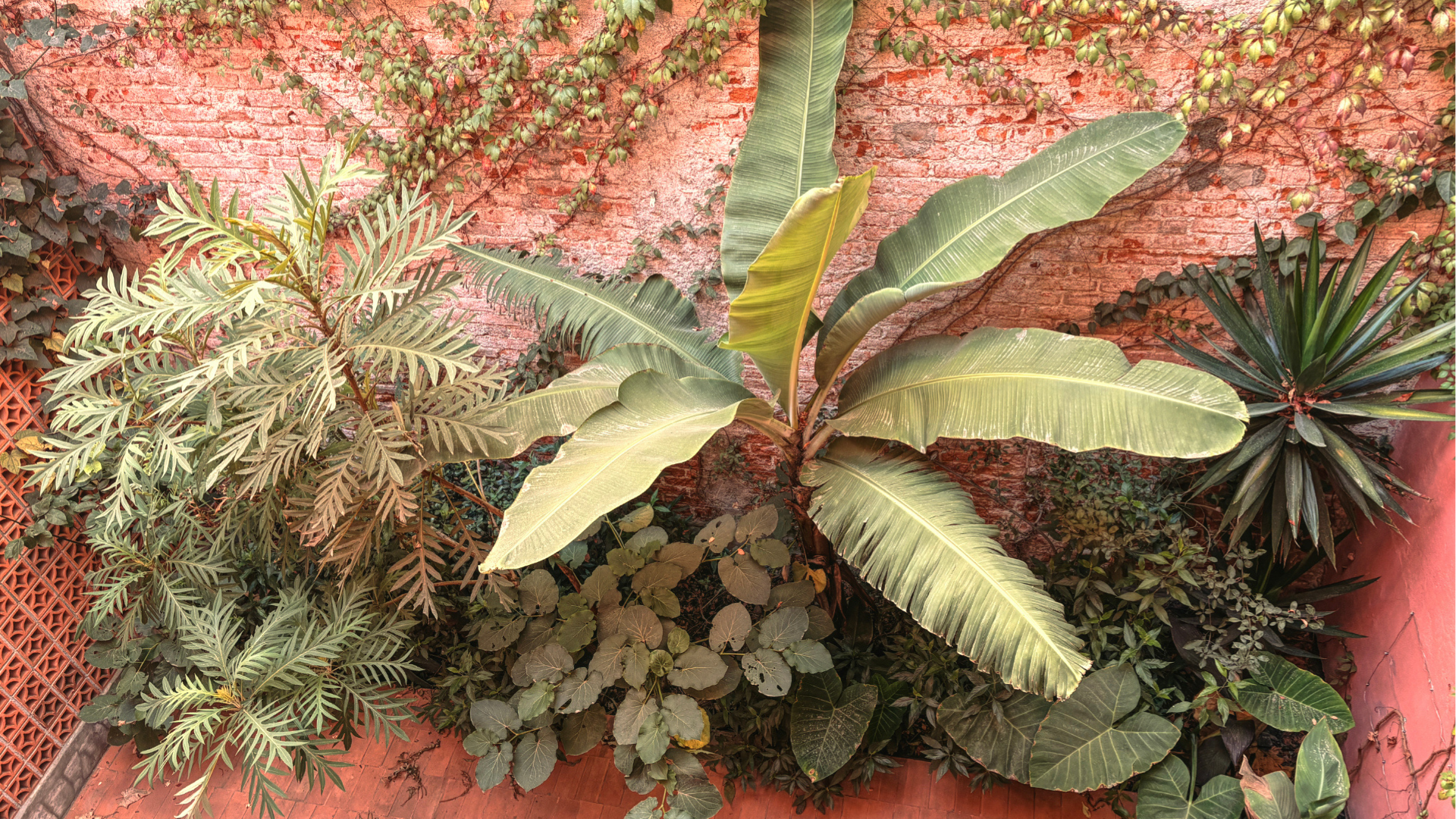
Foto aérea jardín trasero/ Aerial photo of the back garden
Fotografía/Photography: Diego Monterrubio
Among the edible species, banana (Musa × paradisiaca), macal (Xanthosoma sagittifolium), fig (Ficus carica), lemon (Citrus × limon), and guava (Psidium cattleianum) stand out. As for the medicinal species, these include llora sangre (Bocconia arborea), hierba santa (Piper auritum), and muicle (Justicia spicigera). On the other hand, to accompany the Veracruz narrative, three species of parlor palm were included: Chamaedorea elegans, Chamaedorea seifrizii, and Chamaedorea tepejilote, as well as turtle shell (Dioscorea bulbifera), arrowhead plant (Syngonium podophyllum), and peace lilies (Spathiphyllum). This collection creates an immersive experience, creating spaces where inhabitants can walk, rest, harvest, and observe the transformation of the garden.
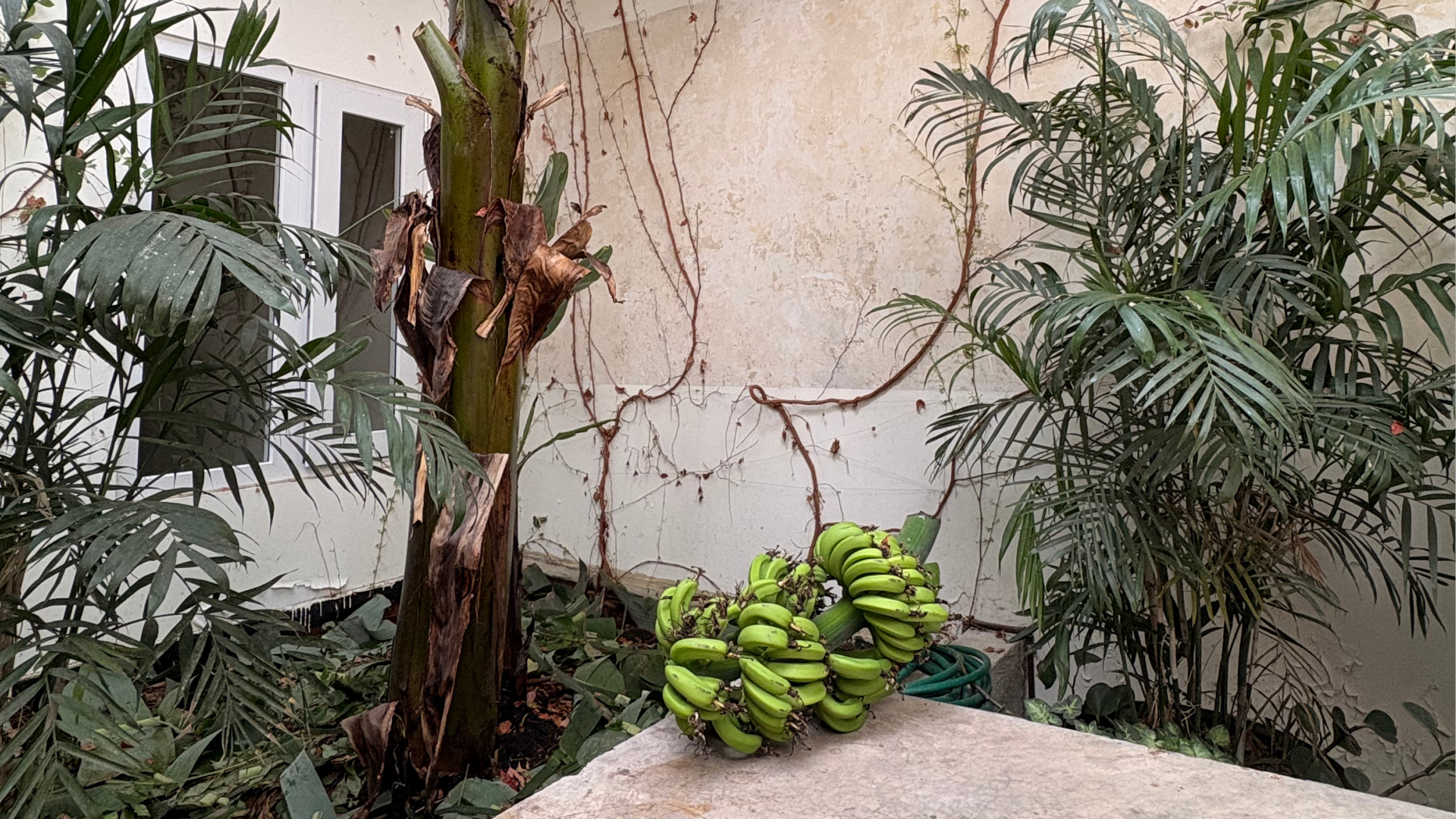
Cosecha, patio central/ Harvest, central courtyard
Ilustración/Illustration: Diego Monterrubio
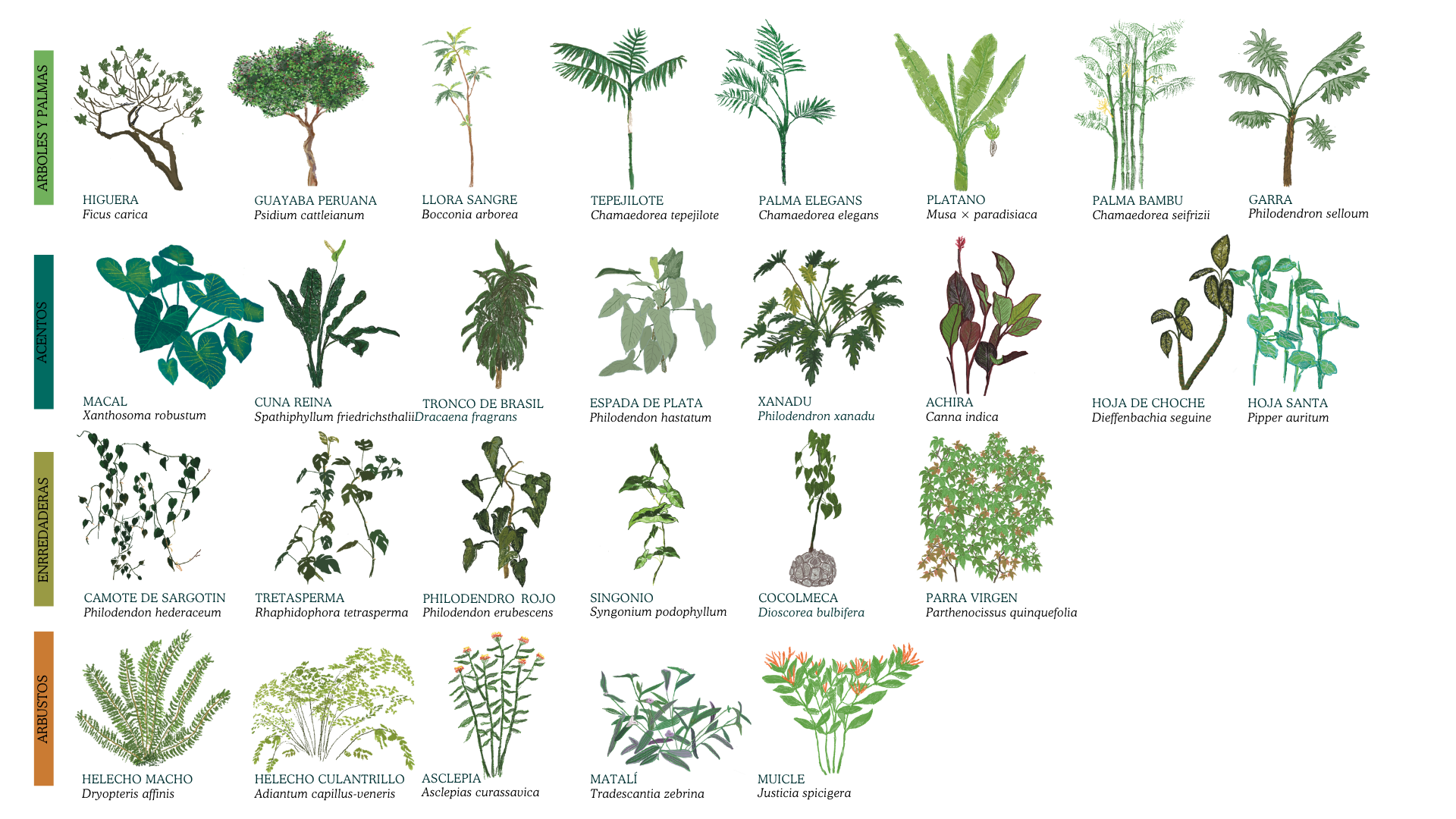
Paleta vegetal/ Plant palette
Ilustración/Illustration: Corazón Copil
Casa Shultz seeks to establish its own microclimate. Understanding the garden as a dynamic organism; an ecosystem at scale that evolves through interspecies participation and direction. This type of project forms part of an ongoing experiment at Corazón Copil studio, focused on developing strategies that guide landscape practices toward a sustainable and regenerative vocation within urban environments.
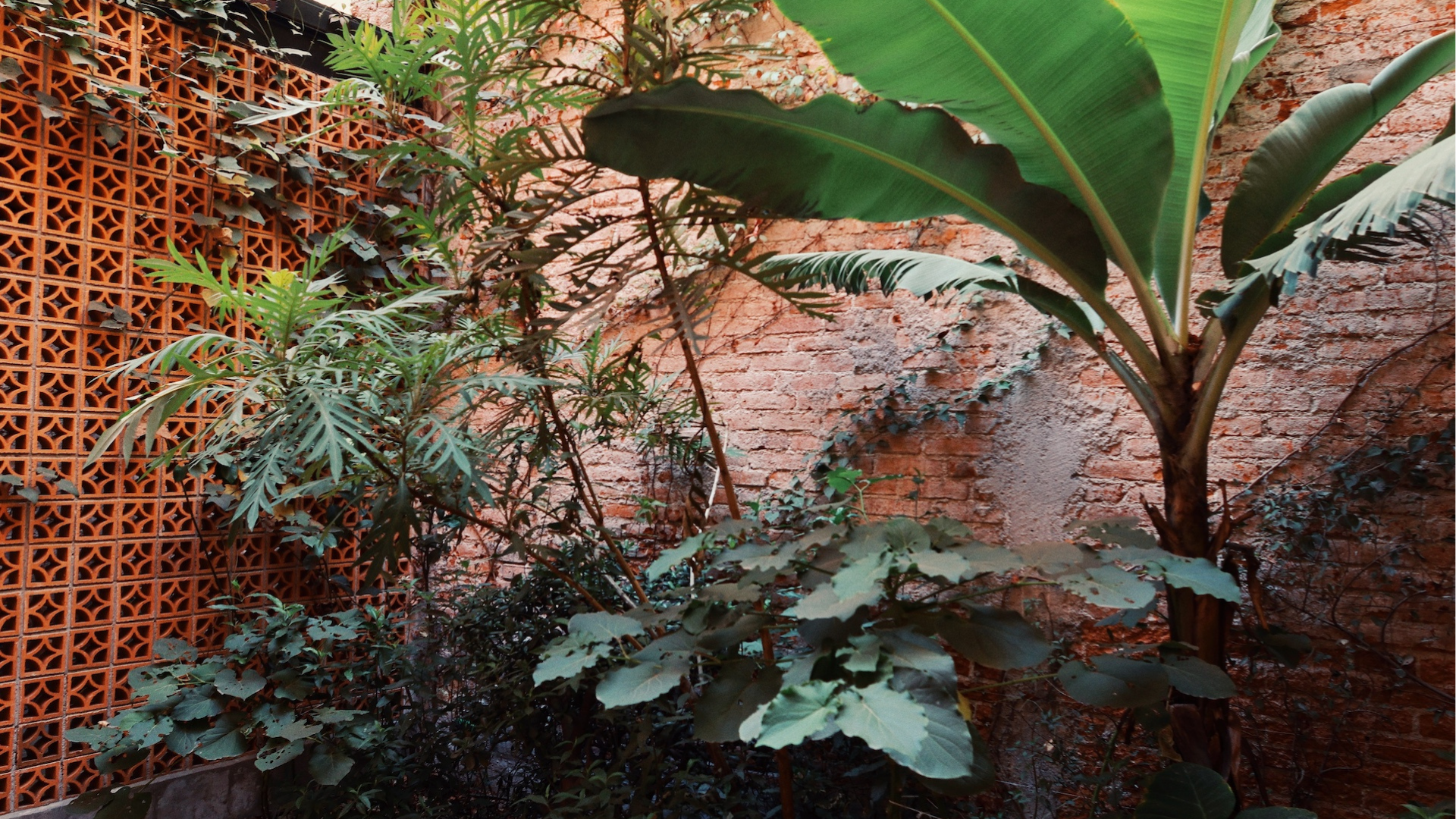
Plátano, Bocconia y Hoja santa/ Banana, Bocconia, and Hoja Santa
Fotografía/Photography: Tercus Kuhnsis
About the team:
Corazón Copil is a landscape and gardening studio whose main motivation is the regeneration and greening of the urban environment through ecosystem-based design and interspecies gardening practices.


-10.28.24.jpg "Anunciate07-13-a-la(s)-10.28.24")

 13.26.42.png "Captura de Pantalla 2023-02-08 a la(s) 13.26.42")