

Native and creole seed exchanges: Where? and Why?
Roxana González-Ball presents Native and creole seed exchanges: Where? and Why? a text that highlights the importance of creole seeds for the agroecological food system and humanity. Native seed exchanges are collective environments where diverse genetic material and knowledge about their cultivation and storage are shared.
In my opinion, attending these exchanges becomes a great responsibility in return for the vital role of creole seeds in our agroecological food systems.
I can say that there have been various spaces that I have visited in search of these givers of life: markets, festivals (INIA 2007, 12, 14), neighbors, family members, and protests linked to socio-environmental struggles. Even during the pandemic, I used the postal service, my garden, and other projects. If I could portray these moments, they would be filled with emotions such as wonder, gratitude, affection, respect, recognition, that foster a sense of hope and collectivity.
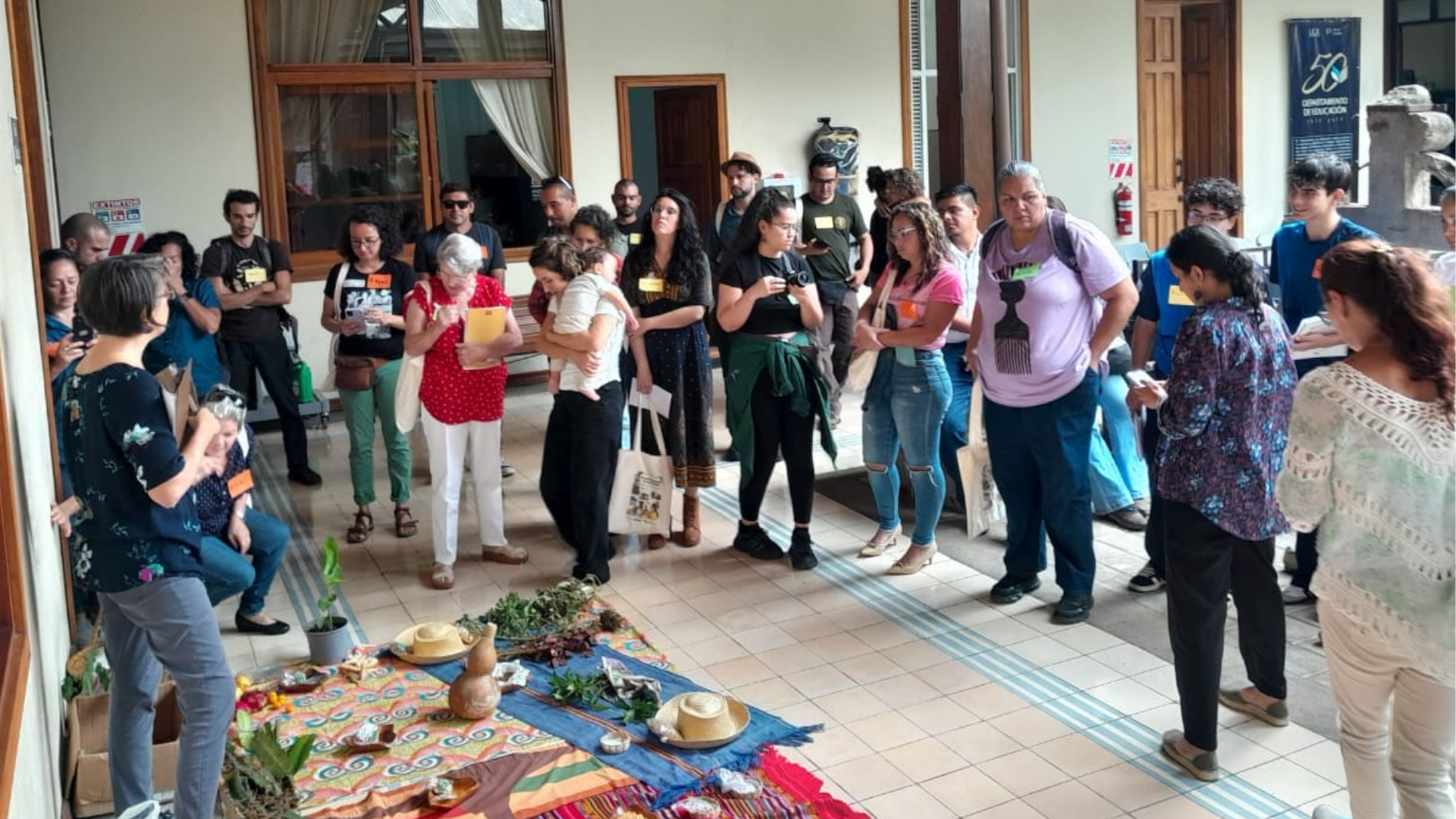
Altar, encuentro agroecológico de occidente 2025, San Ramón/ Altar, western agroecological gathering 2025, San Ramón
Fotografía/Photography: Eber Víquez León
I traveled as far as 300 km, crossing almost half of the territory of Costa Rica, to a seed exchange. The retribution was great: I brought diverse genetic material to my garden —squashes, beans, chilies, quelites or PANC— and shared them at other events. These variants could bring resistance, keeping climate change in mind. My friend Fanny, Seed Guardian, tells me: Ah! you are marrying them.
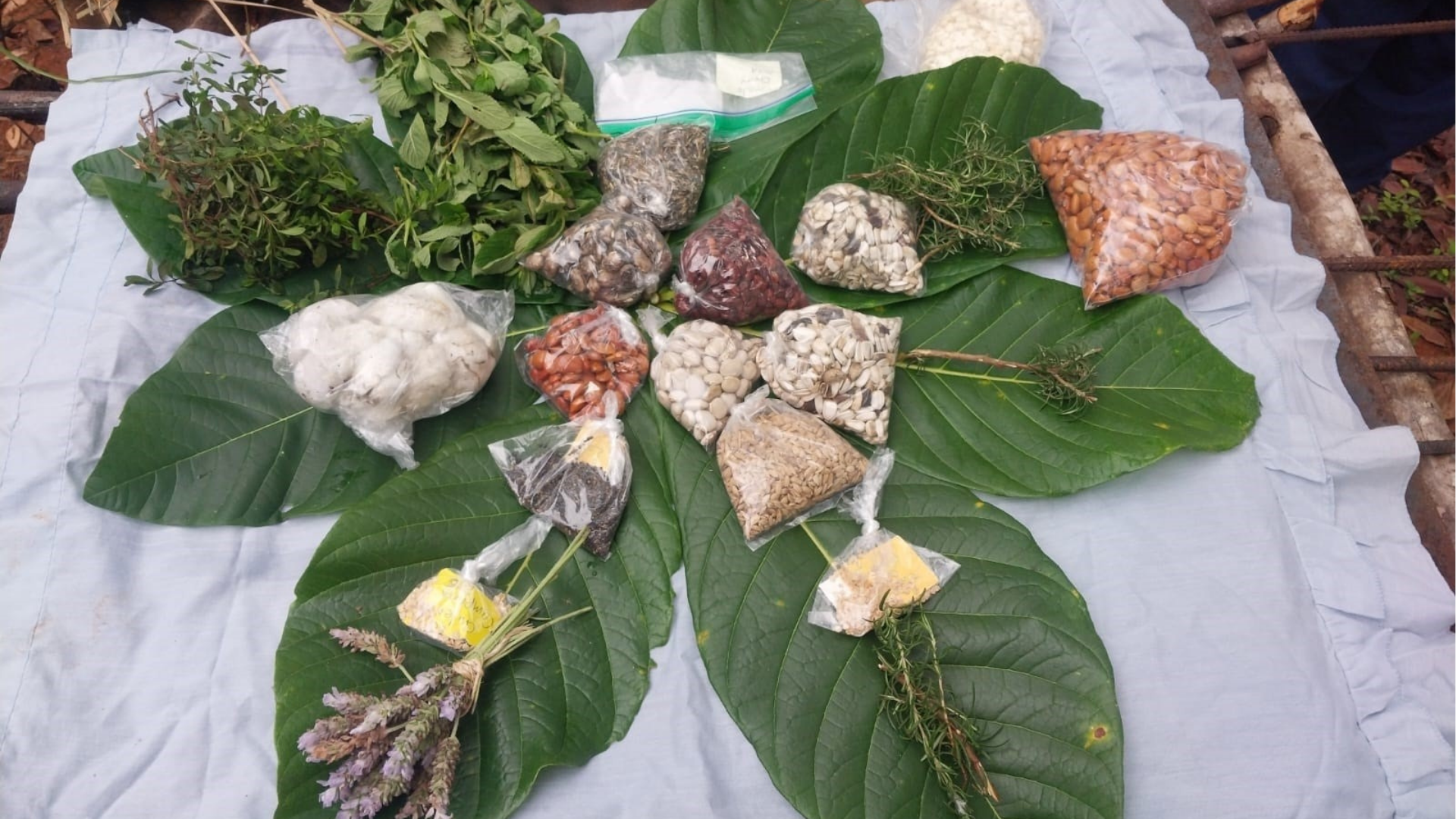
Intercambio de semillas, junta de trabajo en parcela San Andrés/ Seed exchange, work meeting at the San Andrés plot
Fotografía/Photography: Jahel Quiros Soto
These collective environments span from seed altars on the ground, decorated with beautiful tablecloths, flowers, fibers, and baskets, which bring to mind the implements used in the countryside, during the harvest, or in the kitchen —everything is highly symbolic! I could translate the event into a true ceremony, where participants, with a certain sense of reverence, place this precious gift and leave a little note with their information, while other seeds remain anonymous—something that could be improved.. We also consult and interact with visitors, showing them a small handful of seeds. Another possibility is the use of decorated tables, with the seeds placed inside jars or paper bags, in open stockings, or scattered across the tablecloth. Common elements include food vendors and music, which help foster conversation around the seeds.
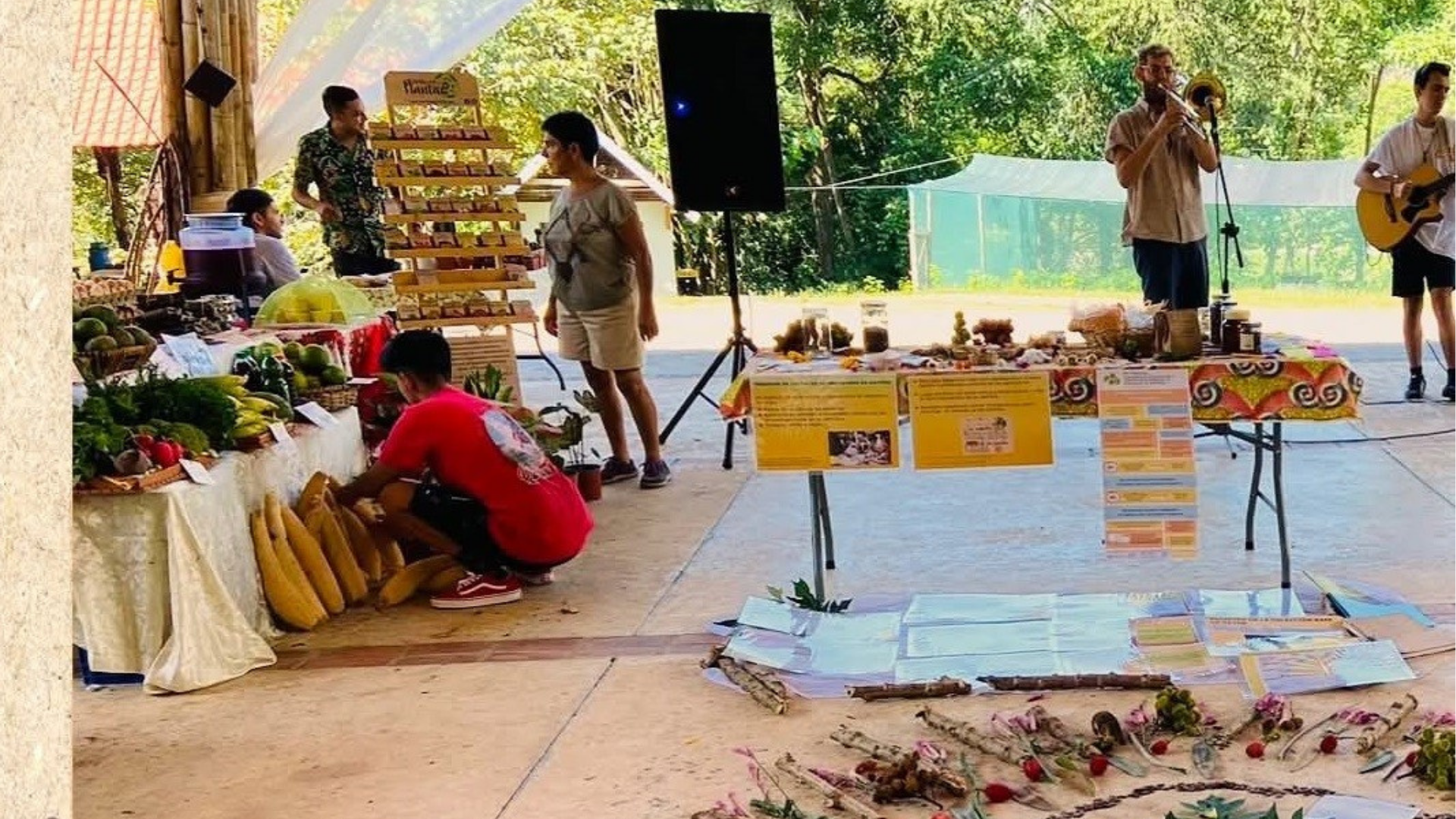
Mesa y mandala, San Mateo-Costa Rica/ Table and mandala, San Mateo, Costa Rica
Fotografía/Photography: Ana Chacón-Mercado de la Tierra
Creole seed exchanges constitute a symbiosis of knowledge and connections, as well as an opportunity to rescue and perpetuate varieties, while promoting food sovereignty.
In my opinion, a creole seeds exchange is accompanied by a symbiosis with diverse forms of knowledge about their cultivation, storage, and the connection between the cooking–recipes duo. It is also a space that provides an opportunity for the recovery of lost varieties, community cohesion (the gathering), and the promotion of food sovereignty (Cababié et al. 2015, 126–127).
We see the power that creole seeds exert over humanity: they perpetuate their species and are a source of food. As the biocultural heritage of peoples, they are always accompanied by a “sack of knowledge,” the fruit of domestication that has taken place since the birth of agriculture.
Bibliography:
Cababié, Javier, María Margarita Bonicatto y Esteban Abbona. “Semillas y saberes de los agricultores familiares. ¿Cuál es el rol de las ferias de intercambio en su reproducción y conservación?”. Revista de la Facultad de Agronomía La Plata 114, no. 1 (2015): 122-128.
Instituto Nacional de Investigación Agraria (INIA). Mecanismos tradicionales de intercambio de semillas. Lima, Perú: Instituto Nacional de Investigación Agraria, 2007.
Bio of the author
Roxana González-Ball, biologist, natural resource management. Interests: Food sovereignty, plants (PANC), creole seeds, and urban gardens.
Agroecological Garden Grigarones Project. Blog: https://aquaponiajard.blogspot.com/
Member of Slow Food Farms and the Agroecology Network of Costa Rica.


-10.28.24.jpg "Anunciate07-13-a-la(s)-10.28.24")

 13.26.42.png "Captura de Pantalla 2023-02-08 a la(s) 13.26.42")