

My oasis at home: guide to mapping light and shadows on your balcony
In My oasis at home: a guide to mapping light and shadows on your balcony, by Sofía Medrano, you will learn how to interpret the light on your balcony through a solar observation journal, allowing you to select the most suitable plant species and design a personal refuge that is strategic, functional, and full of life.
Many times, a garden’s success depends not only on how much we water it, but on how well we understand its microclimate: that corner where the midday sun hits hardest, or that spot where the wind creates a constant draft.
In this exercise, I invite you to take the first fundamental step for any landscape architect: shadow mapping. Through a simple log at three key times (9:00 a.m., 1:00 p.m., and 5:00 p.m.), we will learn to read the dance of light across the space. Only then can we choose the right plant species and define that strategic spot where a bench or a table becomes our true sanctuary.
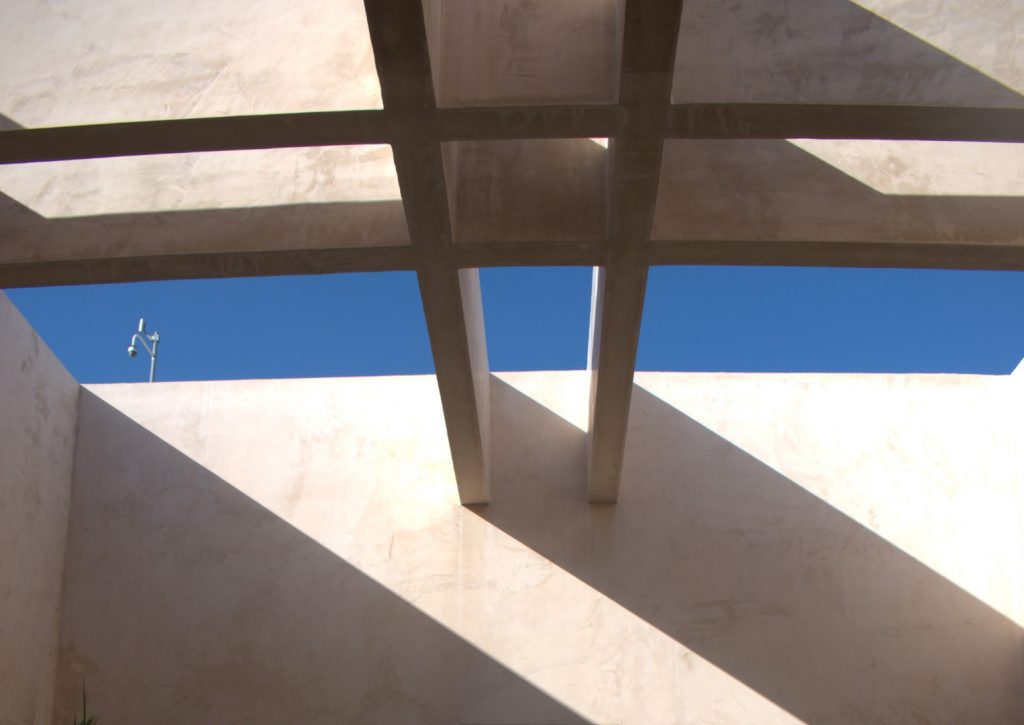
Luz y sombra / Light and shadow
Fotografía/ Photography: Sofía Medrano
Microclimate log: My oasis at home shadow record.
Instructions: Choose a clear day to perform your observations. Stand in the center of your space (balcony, terrace, or window) and record what happens during these three key moments:
| Time | Direct Sunlight? | Light Intensity | Observations (wind, heat, reflections) |
| 09:00 a.m. | [ ] Yes / [ ] No | Low / Medium / High | E.g., Sunlight enters from the side, cool breeze. |
| 01:00 p.m. | [ ] Yes / [ ] No | Low / Medium / High | E.g., Overhead sun, high floor temperature. |
| 05:00 p.m. | [ ] Yes / [ ] No | Low / Medium / High | E.g., Long shadows, steady airflow. |
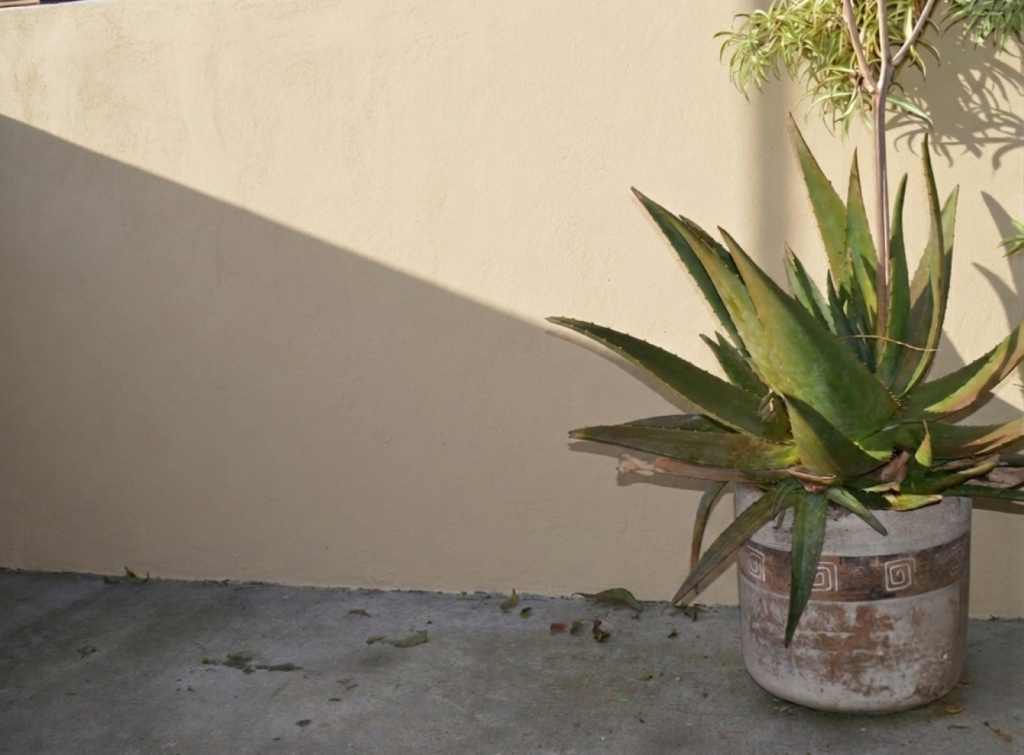
Balcón a las 9 am, media sombra, intensidad de luz baja, el sol entra de lado, sin corrientes de aire Balcony at 9 am, partial shade, low light intensity, sideways sunlight, and no drafts
Fotografía / Photography: Sofía Medrano

Balcón a la 1 am, sol en posición cenital, intensidad de luz media / Balcony at 1 pm, sun at zenith, medium light intensity
Fotografía / Photography: Sofía Medrano
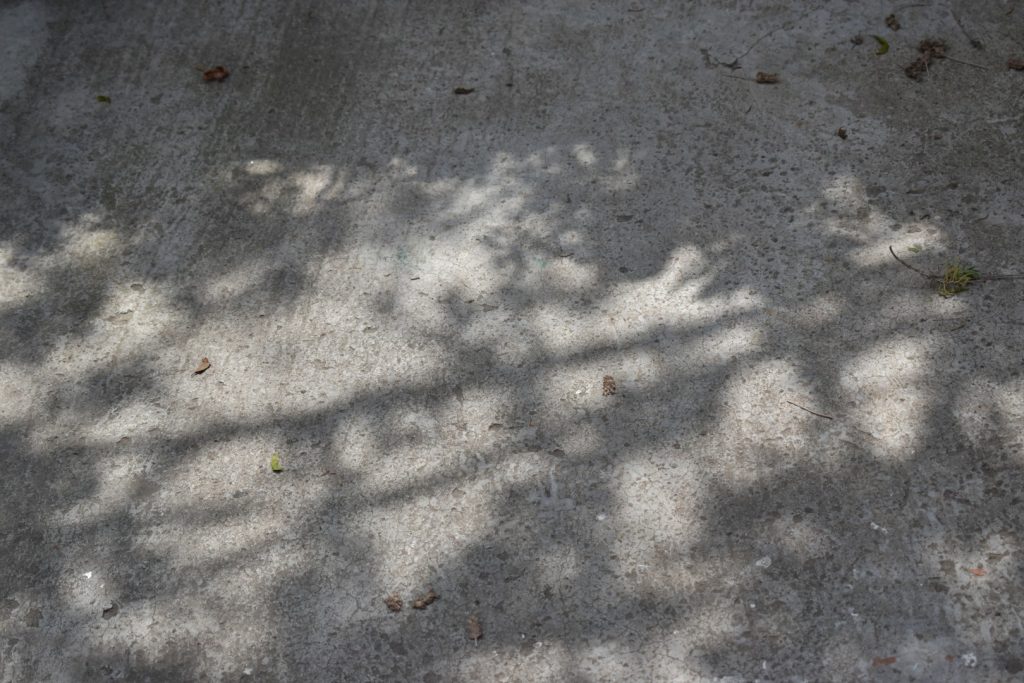
Balcón a la 1 am, se pueden observar las sombras largas y marcadas de las ramas de los árboles Balcony at 1:00 p.m.; long, sharp shadows from the tree branches can be observed
Fotografía / Photography: Sofía Medrano
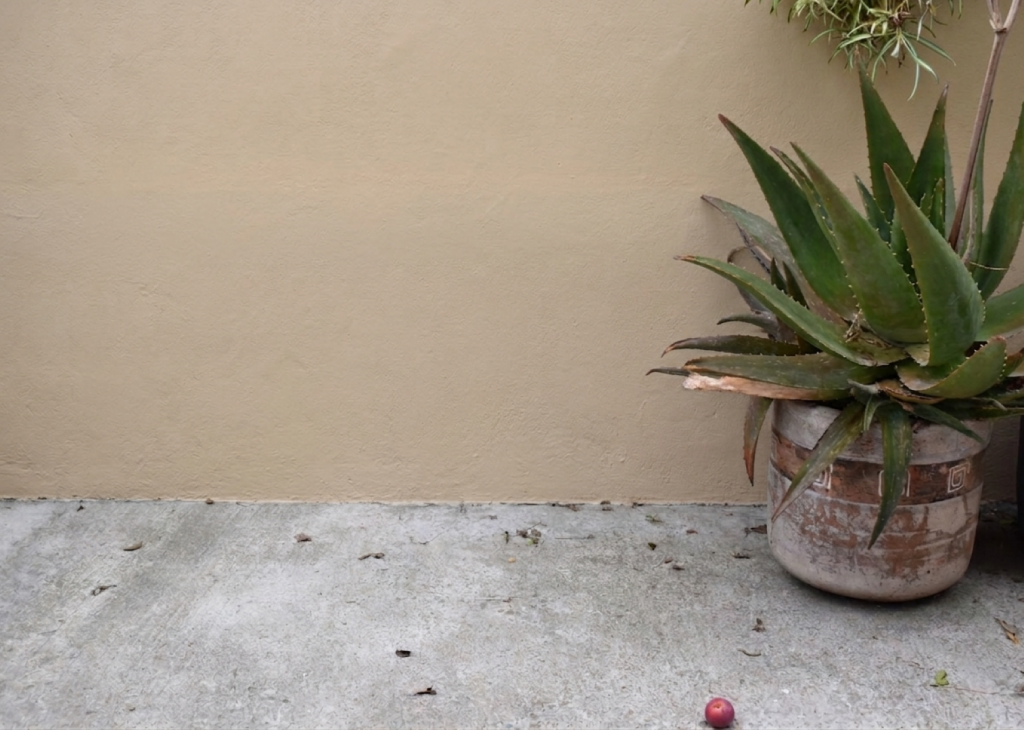
Balcón a las 5pm Intensidad de la luz baja no se puede percibir ninguna sombra, pero sí varias corrientes de aire / Balcony at 5 pm. Low light intensity; no shadows are visible, but there are several drafts
Fotografía / Photography: Sofía Medrano
Tips for your home experiment:
- The hand trick: Place your hand about 20 cm above a light-colored surface. If the shadow is very sharp, it is the direct sun. If it is blurry, it is partial shade.
- Identify “hot spots”: Notice if sunlight bounces off a neighbor’s window or a white wall; this can increase your plants’ temperature more than usual.
Once you have identified the sun’s behavior on your balcony or terrace, choosing species becomes an act of conscious design. Here are some recommendations based on your findings:
Once you have identified the sun’s behavior on your balcony or terrace, choosing species becomes an act of conscious design.
1. The full sun corner (direct light at 9:00, 13:00, and 17:00 hrs)
If your space receives sun all day, you need “warrior” plants that can withstand high radiation and rapid evaporation.
- Suggested species: Lavender, sages, or large-format succulents.
- Design tip: These plants are not only resilient; many provide scents that the sun intensifies, creating a sensory oasis.
2. The transition zone (sun only at 9:00 or 17:00 hrs)
This is the “partial shade” microclimate. It is the most versatile because the light is soft and won’t burn delicate leaves.
- Suggested species: Dahlias, Mexican Begonias, or some hardy fern varieties (such as Asplenium nidus).
- Design tip: This is where leaf texture shines brightest; look for contrasts between large and small leaves to add depth to the space.
3. The shade retreat (indirect light or shade at 13:00 and 17:00 hrs)
If the light is minimal, do not be discouraged; it is the perfect place to create a cool, jungle-like atmosphere.
- Suggested species: Peace Lilies (Spathiphyllum), Calatheas, or the classic Anthurium.
- Design tip: Use light-colored pots (white or blue) to bounce back the little available light and bring brightness to the corner.
After conducting this shadow analysis on your balcony, you will be able to correctly select the appropriate plant species considering the site’s microclimate.
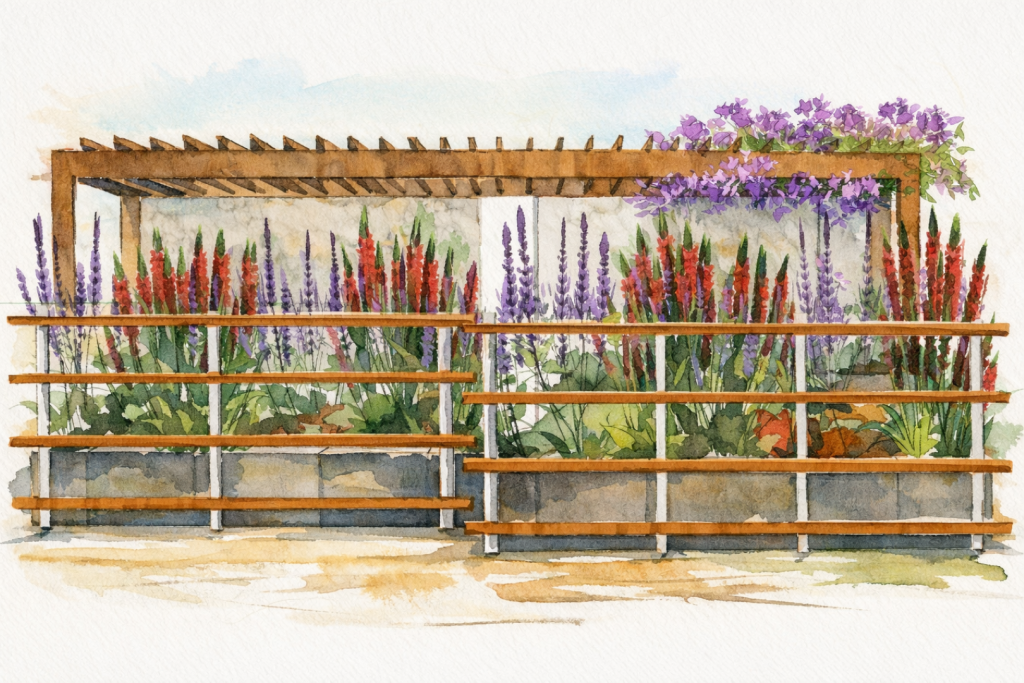
Propuesta de paleta vegetal con salvias y lavandas para un balcón que recibe luz directa durante todo el día / Planting palette proposal featuring salvias and lavenders for a balcony with full sun exposure throughout the day.
Ilustración / Illustration: Sofía Medrano y Valentina Lara


-10.28.24.jpg "Anunciate07-13-a-la(s)-10.28.24")

 13.26.42.png "Captura de Pantalla 2023-02-08 a la(s) 13.26.42")


