
Beneath our feet, the secret network that sustains ecosystems
In the article Under Our Feet: The Secret Network that Sustains Ecosystems, M.Sc. Juan Manuel Salazar and Biol. David Santiago present some of the symbiotic associations that fungi have developed with other species, highlighting the fundamental role of these organisms as a basal component of ecosystems and ecological balance.
Fungi are eukaryotic organisms, classified in 1977 by Woese within the domain Eukarya and the kingdom Fungi. They possess a lipid membrane and a cell wall composed of polysaccharides (chitin, glucans, chitosan, and mannans), proteins, and lipids. Furthermore, they are heterotrophic organisms, as they do not perform photosynthesis nor fix carbon; for this reason, they require carbohydrates from external sources to obtain energy. Most are strict aerobes and non-motile. They may be unicellular—such as yeasts—or multicellular—such as filamentous fungi, which are composed of hyphae that together constitute the mycelium— (Ocara et al., 2018).
At present, fungi are used in numerous activities, including the food, pharmaceutical, and biotechnological sectors, as pesticide detoxifiers, in bioremediation processes, and as a food source. In addition, they play a very important ecological role in maintaining the balance of ecosystems (Cepero et al., 2012).
If we hope to keep planet Earth healthy or to restore areas that have been devastated by human activity, greater attention should be paid to fungi. These organisms have the ability to interact with other species, connecting animals or bacteria with plants like no other organism on Earth (Stamets, Paul. 2023).
Due to their abundance and diversity, these organisms play a very important ecological role in ecosystems. They contribute to their dynamics and play an essential role in their development, stability, and function. Their distribution is generally cosmopolitan; they can be found in soil, in water—freshwater or marine—, in wood, in excrement, and in animal remains, etc. Thus, in all ecosystems, death and decomposition are the fundamental principles of life. When each organism reaches the end of its life, it returns to the soil and, during the decomposition process, fungi and bacteria, primarily, are responsible for releasing nutrients that become bioavailable to other organisms within the trophic network. Particularly, fungi distribute nutrients through their mycelium, converting them into basic and fundamental components of the ecosystem, since they initiate food chains (Cepero et ál., 2012).
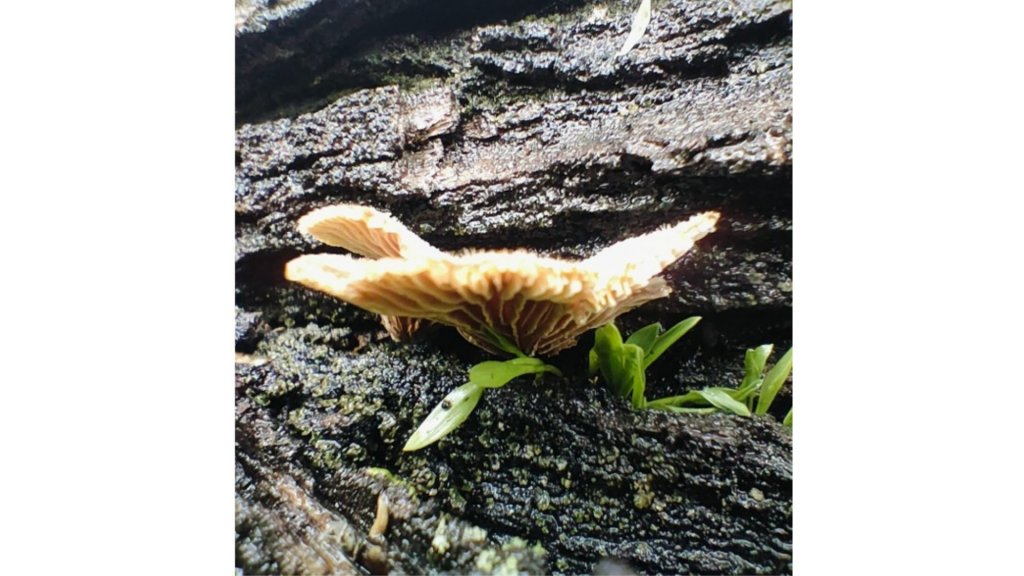
Cuerpo fructífero de un hongo no identificado sobre un tronco caído, con laminillas visibles en la parte inferior, donde se producen las esporas/ Fruiting body of an unidentified fungus growing on a fallen log, with gills visible on the underside, where spores are produced.
Fotografía/Photography: David Santiago
What happens beneath the soil of a forest is just as important as what happens above it. Fungi are part of a vast underground vegetation network called mycelium, composed of tiny threads of organic life —resembling spider webs— known as hyphae. This network of microscopic threads recycles air, soil, and water in a continuous cycle of balance and renewal. Survival does not depend on the strongest, but on those that associate and cooperate most effectively (Stamets, Paul. 2023).
Fungi can associate in different ways and with diverse species; for example, through mutualism, commensalism, or parasitism. As mutualists, they interact with other species in relationships where both parties benefit; such is the case with mycorrhizae, lichens, endophytes, and fungus-animal mutualisms, in which interdependent relationships are formed for their existence. In the case of mycorrhizae, they are characterized by an intimate contact between the fungus and the roots of the plant, establishing a reciprocal physiological dependence. In this association, the supply and transport of photosynthates —such as sugars— move from the plant to the fungus, while mineral nutrients move from the fungus to the plant, promoting better growth of the latter, which, in the absence of such a relationship, would be limited (Cepero et al., 2012).
Another mutualistic association is that of lichens, composed of a fungus and one or more photosynthetic organisms —green algae or cyanobacteria—. Among the benefits of this relationship, we can highlight that they are soil generators and, moreover, are used as bioindicators of environmental pollution.
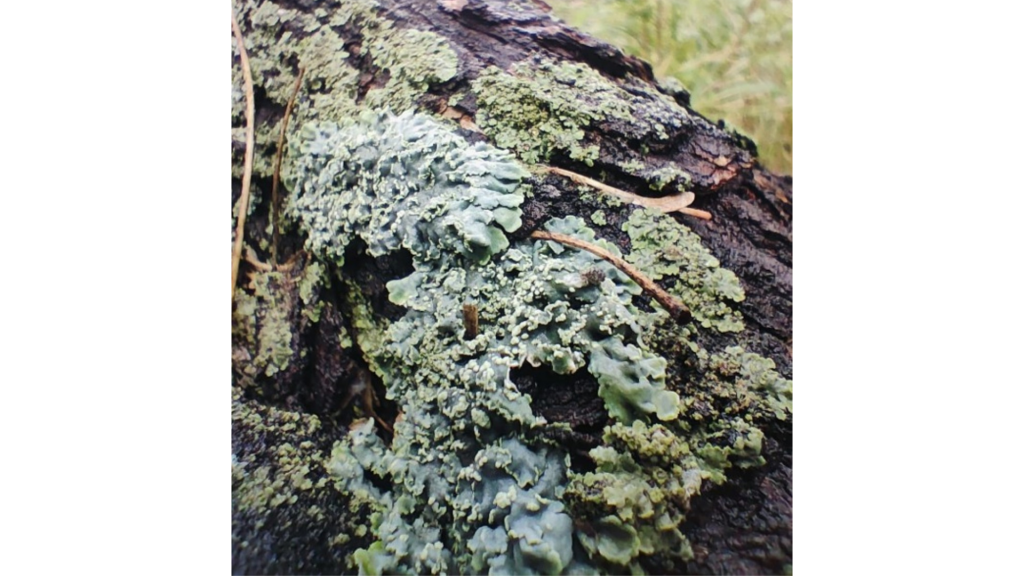
Líquenes (sin identificar) sobre la corteza de un árbol/ Lichens (unidentified) on the bark of a tree
Fotografía/Photography: David Santiago
Endophytes are a fungal association that lives inside a plant—leaves and stems—without causing disease. The fungus feeds on the plant, and in return it protects it from colonization by other microorganisms, such as fungi or bacteria that could be pathogenic, as well as from herbivores, by producing certain substances that prevent some animals from feeding on the plants, increasing germination success, drought resistance, and water stress tolerance.
Regarding fungus–animal mutualism, a well-known example is leaf-cutter ants, which cultivate the fungus Leucoagaricus gonglyophorus, feeding it with the leaves they cut, transport, and that are degraded by the cells produced by the fungus. In this way, the ants feed on the biomass of the fungus, at least during their larval stages.
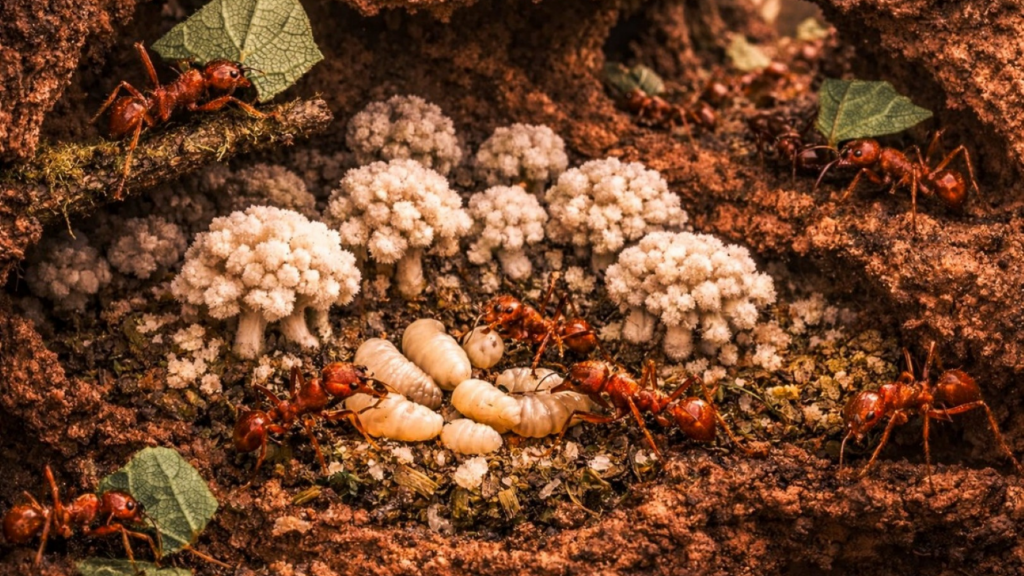
Representación de mutualismo entre hormigas y hongos/ Representation of mutualism between ants and fungi
Ilustración/ Illustration: Microsoft (B). 2026. Copilot. Imagen generada el 17 de junio de 2026.
Beetles of the families Scolytidae and Lymexylidae, which bore tunnels in tree trunks, establish a symbiotic relationship with “ambrosia fungi.” The beetles possess specialized structures called mycangia, where they transport the fungus and, upon introducing it into the tree tunnels, it degrades the wood, grows, and sporulates, serving as food for the larvae, since they are unable to digest wood (Cepero et al., 2012).
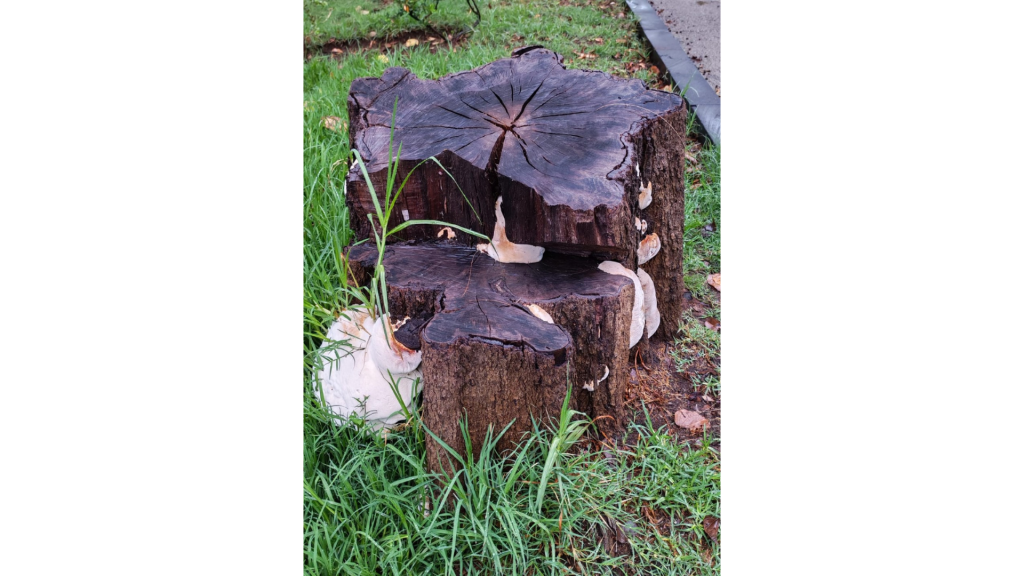
Hongo Ganoderma sp. degradando la madera muerta/ Ganoderma sp. fungus degrading dead wood Fotografía/Photography: David Santiago
On the other hand, both yeasts and filamentous fungi can behave as pathogens, causing infections in plants, animals, and humans, which may range from superficial to deep. In this regard, it is important to mention that fungal infections have been increasing, and an estimated 1.5 million deaths occur worldwide each year; this is due to the fact that they tend to be chronic, are difficult to diagnose, treat, and eradicate, in addition to the limited effectiveness of the antifungal drugs currently available. Unlike viral or bacterial infections, invasive fungal infections are rarely transmissible, which reduces the interest in their study in this respect (Gómez y Escandón, 2023).
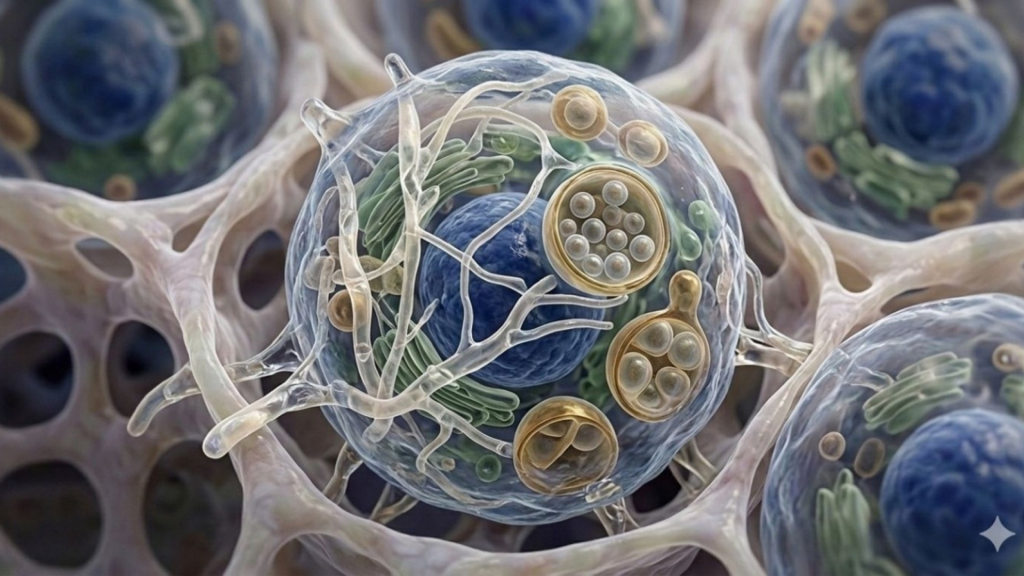
Representación de un hongo microscópicos, parasitando células animales/ Representation of a microscopic fungus parasitizing animal cells
Ilustración/ Illustration: Google (C). 2026. Gemini. Imagen generada el 17 de junio de 2026.
Los hongos poseen una gran capacidad para asociarse con otras especies, lo que les permite regular los ciclos de vida de numerosos organismos y contribuir a la renovación continua de los ecosistemas.
Without a doubt, fungi are indispensable organisms for the functioning of ecosystems, since, through their associations, which range from mutualistic to pathogenic, they regulate the life cycles of many organisms, in a positive way—facilitating their existence—or in a negative way—causing disease or ending their existence—thus giving rise to a new virtuous cycle in nature.
Bibliography:
- Cepero, María C., Silvia Restrepo, Ana E. Franco, Martha Cárdenas y Natalia Vargas. Biología de Hongos. Universidad de los Andes, Facultad de Ciencias, 2012.
- Gómez, Beatriz L. y Patricia Escandón. “Las infecciones fúngicas: una amenaza creciente”. Biomédica 43, Supl.1 (2023):11-16. 2590-7379-bio-43-s1-7214.pdf
- Google (A). (2026). Imagen generada mediante inteligencia artificial a partir de la indicación: “ Crea una imagen dónde está dividida en dos, en la parte de arriba un bosque templado con mucha vida, y en la parte de abajo el subsuelo donde estén hongos formando relaciones con por ejemplo las raíces de los árboles, formando un ecosistema mucho más complejo que el exterior. El protagonista es el hongo, usa un formato realista y usa información real de los hongos para que hagas una imagen con complejidad técnica, sin errores científicos, no inventes nada solo toma información de fuentes fidedignas como artículos científicos o libros para crear la imagen”. Gemini. https://gemini.google.com/.
- Microsoft (B). (2026). Imagen generada mediante inteligencia artificial a partir de la indicación: “ Mutualismo entre hormigas cortadoras de hojas y el hongo Leucoagaricus gongylophorus“. Copilot. https://copilot.microsoft.com.
- Google (C). (2026). Imagen generada mediante inteligencia artificial a partir de la indicación: “ Crea una imagen donde el hongo Coccidoides immitis esté desarrollándose en una célula pulmonar“. Gemini. https://gemini.google.com/.
- Ocara, Miranda, Peggy Vieille, Laura Carvajal y Rodrigo Cruz. “Los hongos en la salud y la enfermedad. Parte I”. Boletín Micológico 33. n.º 2 (2018): 1-9. DOI: 10.22370/bolmicol.2018.33.2.1370.
- Stamets, Paul. Hongos Fantásticos. MATIRI, 2023.
Bios:
Juan Manuel Salazar López is a biologist and holds a Master of Science degree with a specialization in Plant Biotechnology. He works in the fields of teaching, research, and science communication, with interests in science education, biotechnology, and the development of innovative strategies for science teaching.
David Santiago is a biologist graduated from the Autonomous University of Aguascalientes. He has worked in research in the field of toxicology, with an interest in biotechnology applied to environmental improvement.


-10.28.24.jpg "Anunciate07-13-a-la(s)-10.28.24")

 13.26.42.png "Captura de Pantalla 2023-02-08 a la(s) 13.26.42")