

Magneten Sensory Garden
Discover Magneten Sensory Garden, designed by MASU Planning: an urban oasis in the heights of Denmark that redefines inclusion and creates a sensory therapeutic retreat. This project demonstrates how landscape architecture can heal and provide biodiversity in the heart of the city.
Magneten Sensory Garden demonstrates how recreational and safe environments for citizens with special needs can be created within a very limited amount of space.
Magneten, located in Frederiksberg, Denmark is a municipal activity and social center for citizens with physical and mental disabilities. On top of the center lies the Magneten Sensory Garden, providing users with a safe, green, and recreational space in an urban setting.
Inclusive design creates a safe environment
Magneten Sensory Garden is a multifunctional green roof with a strong focus on the wellbeing of both visitors and staff.
All users of the sensory garden have some form of physical or mental disability, and by placing the garden on the roof, access and use of the green space can be easily controlled and managed.
This inclusive design ensures that all users can enjoy the therapeutic benefits of greenery in a safe, welcoming, and clearly defined environment.
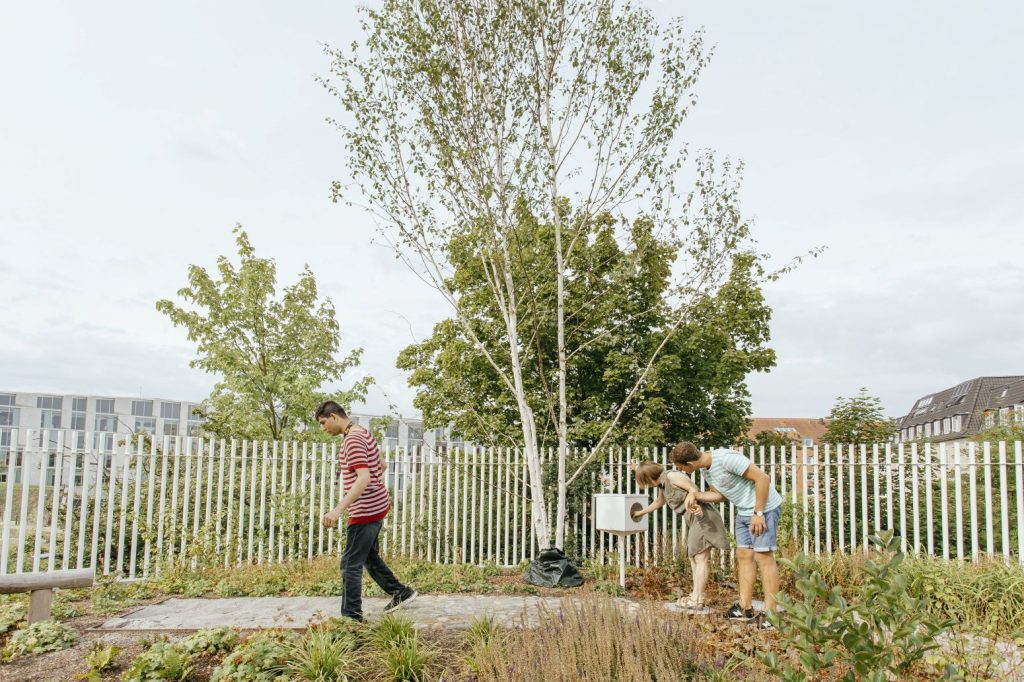
Espacios verdes terapéuticos y seguros/Safe and therapeutic green spaces
Fotografía/Photography: Kirstine Autzen
User involvement identifies specific needs
Copenhagen- and Helsinki-based MASU Planning is responsible for the design of the garden. As part of the initial design process, MASU Planning and the rest of the project team conducted a series of meetings with staff and users to identify specific needs and wishes.
The user involvement process resulted in three overarching themes, all of which were incorporated into the final design. Therefore, Magneten Sensory Garden is divided into three distinct sections. From above, the layout almost resembles a fidget spinner, with an organic form in which each circular shape constitutes a separate garden room.
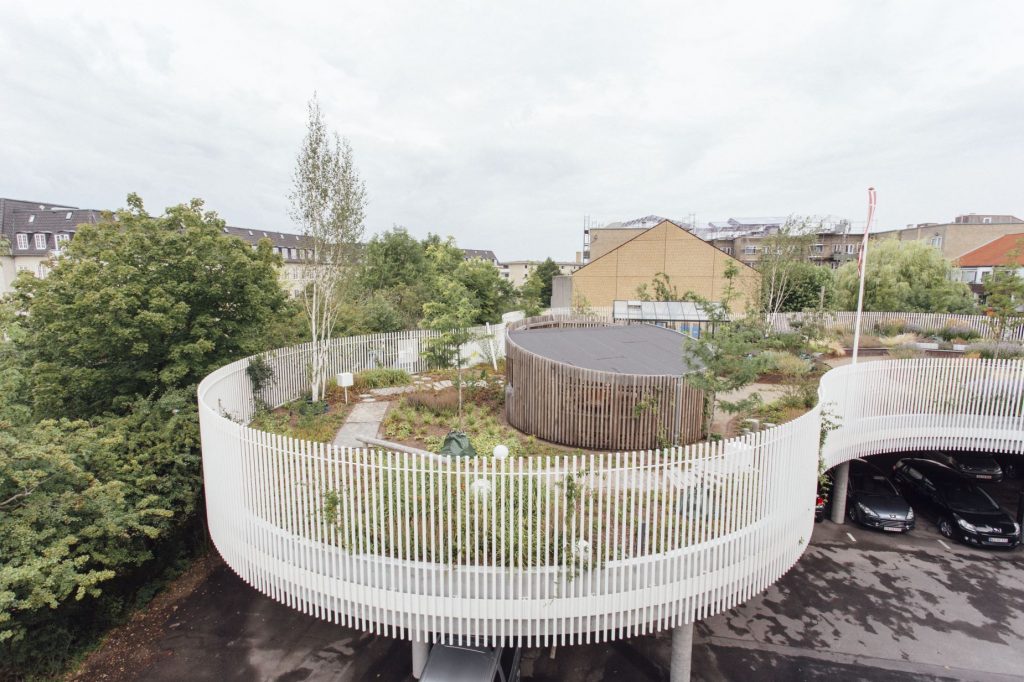
Vista aérea del Jardín Sensorial Magneten/Aerial view of the Magneten Sensory Garden
Fotografía/Photography: Kirstine Autzen
The garden consists of a vegetable garden, a bonfire garden, and a flower garden. These spaces vary in size and design to support different activities and stimulate different senses.
Gardens designed for activity, calm, and sensory stimulation
In the vegetable garden, there are fruit-bearing shrubs and trees, planting beds, and a greenhouse with beehives located behind it.

Árbol frutal/Fruit tree
Fotografías/Photographys: Kirstine Autzen
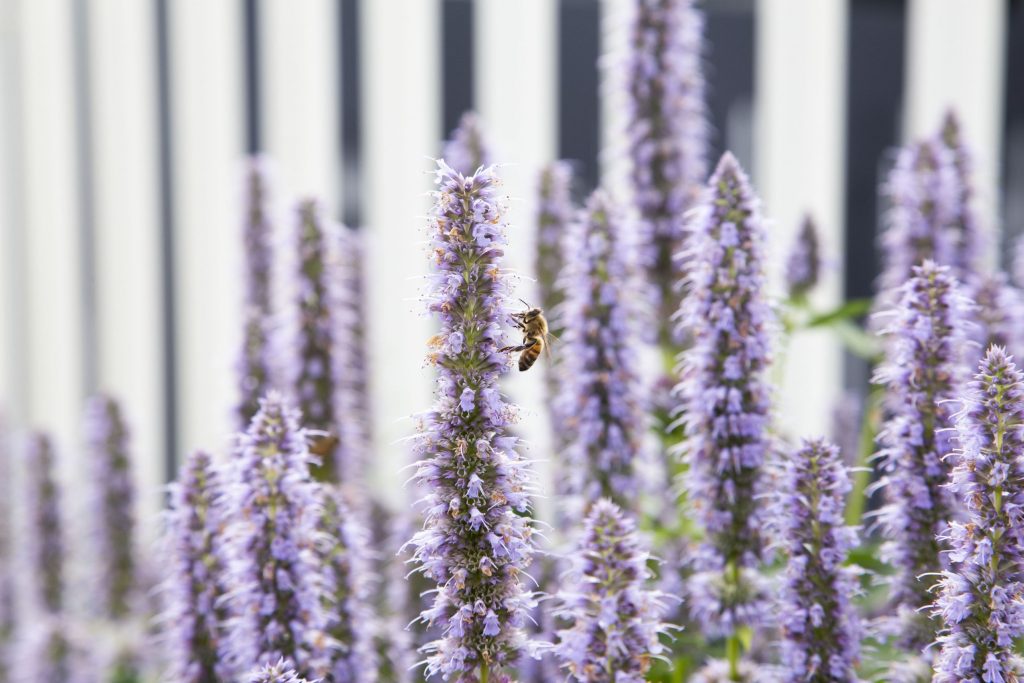
Abejas del invernadero/Greenhouse bees
Fotografías/Photographys: Kirstine Autzen
The flower garden serves as a calm oasis, offering intimate seating areas surrounded by blooming perennials, ornamental grasses, insects, and birds.
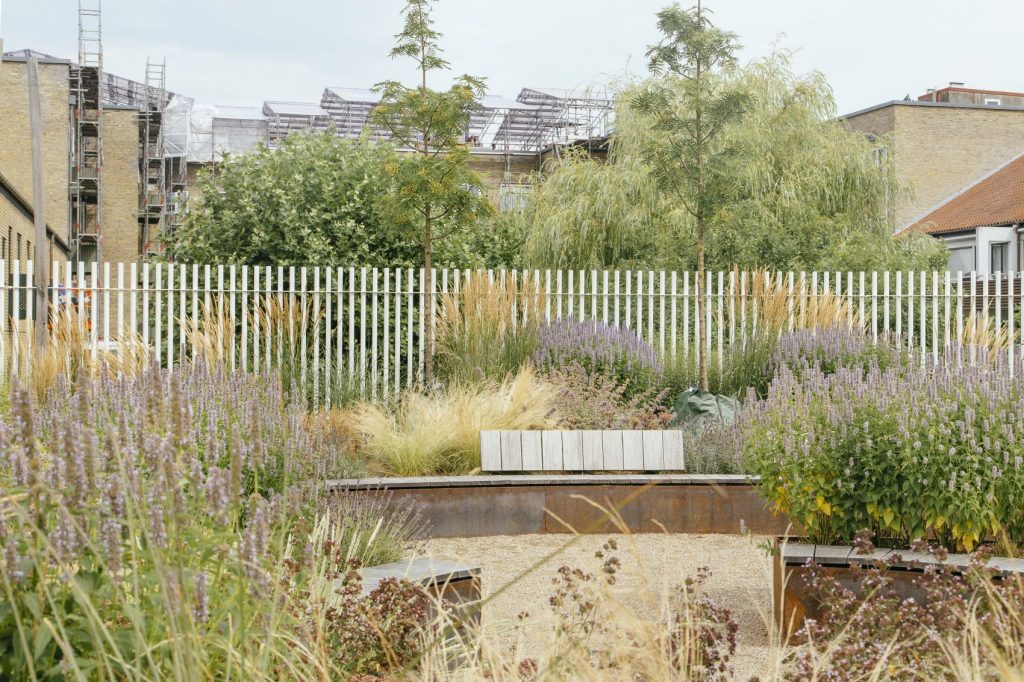
Jardín de flores/Flower garden
Fotografía/Photography: Kirstine Autzen
In the bonfire garden, a small building with a fireplace creates a focal point. A fire is lit almost daily – simply to watch, to pop popcorn, or to grill sausages – and the space also functions as a safe and communal meeting place.
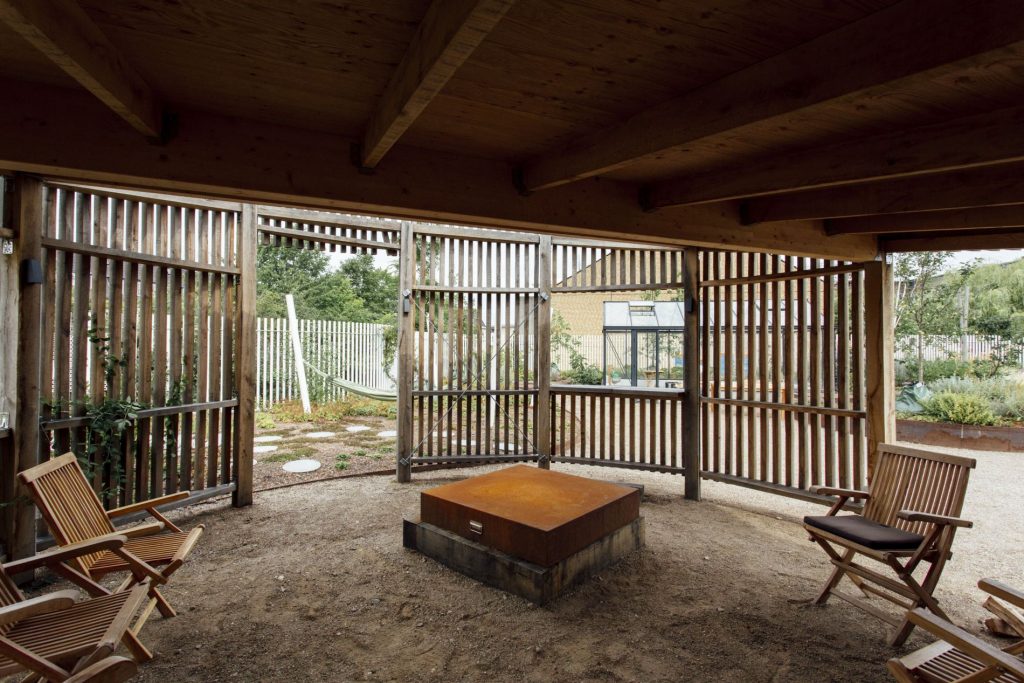
Jardín de las fogatas/Bonfire garden
Fotografía/Photography: Kirstine Autzen
The garden is connected by a challenging pathway with varying ground materials and height differences. The path is designed to challenge and train users’ balance skills, either independently or together with an employee.
A safe and controlled environment
MASU Planning designed the sensory garden with subtle topographic variation to provide manageable challenges while also making the site more engaging.
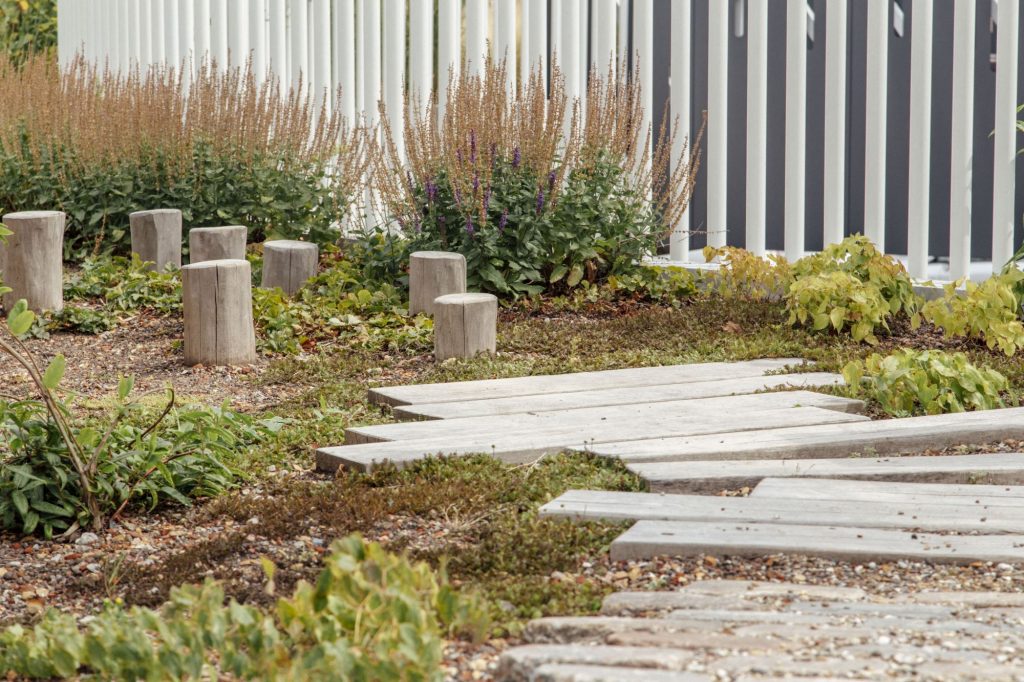
Detalle de las texturas y desniveles de los senderos/Detail of the textures and unevenness of the paths.
Fotografía/Photography: Kirstine Autzen
In the flower garden, the pathways are set at a lower level, creating a feeling of being surrounded by vegetation. This design also makes it easier for wheelchair users to engage directly with the plants.
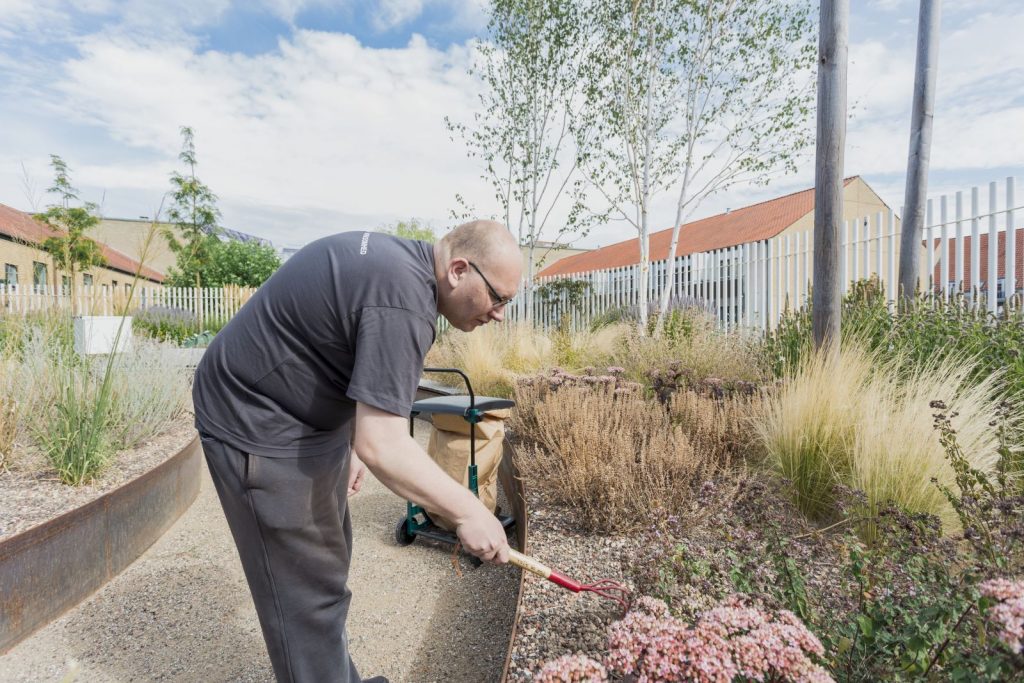
Persona disfrutando del jardín de flores/Person enjoying the flower garden
Fotografía/Photography: Kirstine Autzen
Magneten Sensory Garden provides a controlled environment that supports the treatment methods used at Magneten. Staff can strategically limit sensory input, as too many impressions can overwhelm users. In a calm and controlled setting, individuals are better able to focus on and enjoy specific sensory experiences.
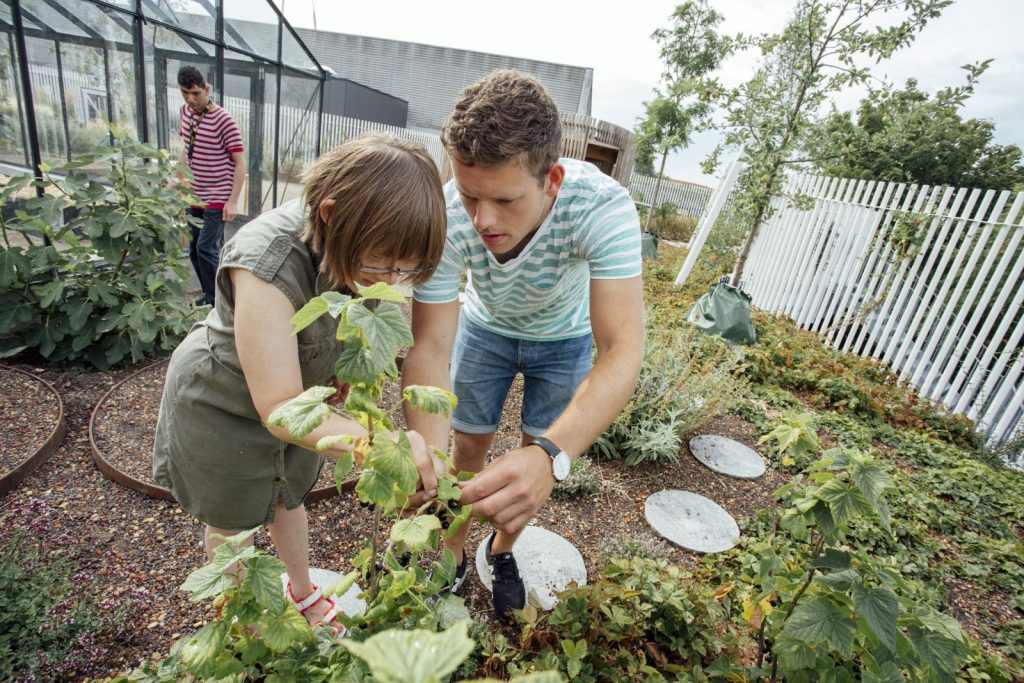
Persona estimulando sus sentidos en el huerto de vegetales/Person stimulating their senses in the vegetable garden
Fotografía/Photography: Kirstine Autzen
For some users, this garden is their only opportunity to experience nature – to smell flowers, feel the rain, and experience the sun and open sky.
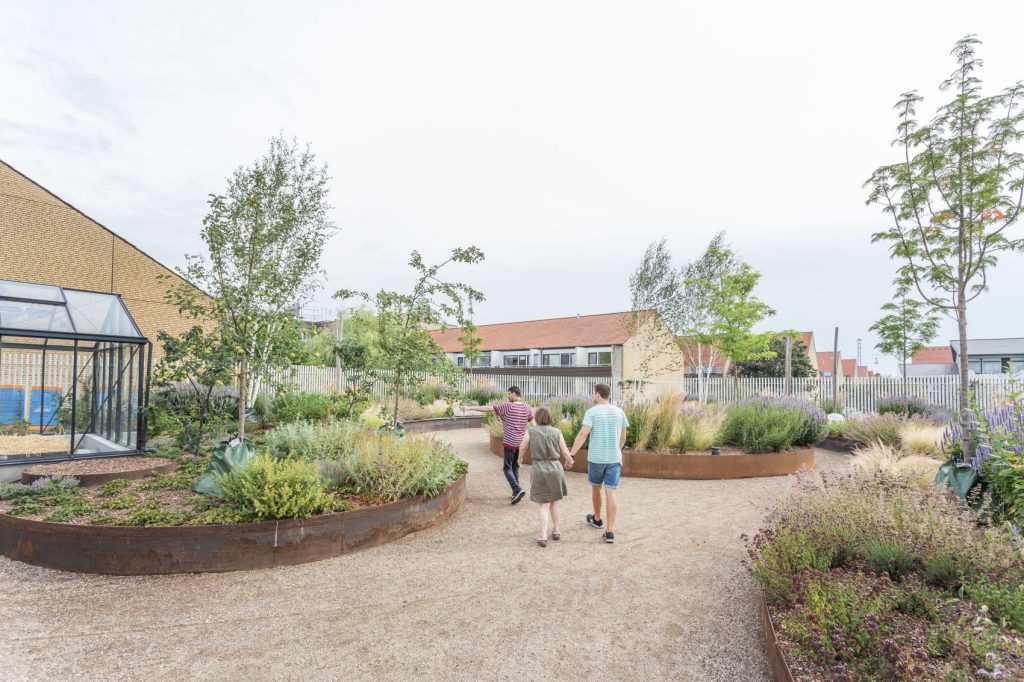
Personas recorriendo el Jardín sensorial Magneten/People walking through the Magneten Sensory Garden
Fotografía/Photography: Kirstine Autzen
Located in the heart of Frederiksberg, a municipality surrounded by Copenhagen, space is a limited resource, and the garden needed to function as a green oasis throughout the year. A rooftop garden made it possible to use the space twice and proved to be the ideal solution to meet the wishes of users, therapists, and staff alike.
Enhanced biodiversity and local stormwater management
In addition to its social and therapeutic value, the project incorporates biodiversity-enhancing measures and local stormwater management.
Rainwater is collected and reused to irrigate the sensory garden’s plants and flowers, contributing to a more sustainable and resilient design.
Landscape Architect/Arquitecto paisajista: MASU Planning
Total Consultant/Consultor Integral: AI Architects & Engineers
Contractor/Contratista: Møllerløkkegaard A/S
Web page/Página web: https://www.masuplanning.com/


-10.28.24.jpg "Anunciate07-13-a-la(s)-10.28.24")

 13.26.42.png "Captura de Pantalla 2023-02-08 a la(s) 13.26.42")