

Senderos Verdes, Rescuing the Essence of Tulum
Zoe Río tells us how Tulum’s Senderos Verdes help mitigate urban heat, prioritize pedestrians, and regenerate a biodiversity sanctuary through community action, in Senderos Verdes, Rescuing the Essence of Tulum.
Just a few steps away, I could hear the noise of cars. Heated by a thermal sensation exceeding 38 °C, typical of this region, I was coming from Tulum Avenue; now I step into the Andador del Sendero Verde, perceiving more calm in the shade of the tree canopy… their “breathing and transpiring” fan me. On the pathway, my gaze meets that of a woman accompanied by her young daughter. We greet each other with a smiling “Good morning.” It is part of the nature of this kind of space: the friendliness and pedestrian priority embedded in its design foster these gestures and interactions among those who pass through. As Jane Jacobs and Jan Gehl have said, more “eyes on the street” and “cities for people.”
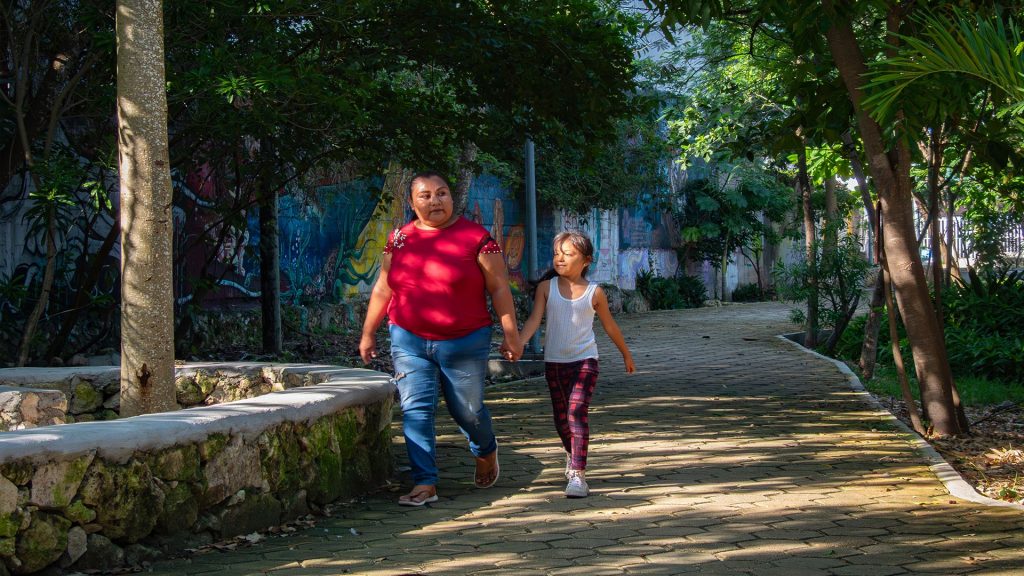
Sendero seguro para las infancias / Safe path for kids
Fotografía / Photography: Igor Cedeno
I had arranged to meet three colleagues from the Sendero Verde Collective: Violeta, Emiliano, and Igor, who accompanies us with his camera. We meet in the center of the pathway, where an eight-year-old Ceiba tree stands, the same amount of time that the community of neighbors has adopted this space to regenerate its landscape. I look at it and cannot help feeling moved as I remember how it all began, when we cleaned the streets of trash and placed tires at the entrances to prevent cars from parking. From there, we began planting native and regional trees that were no taller than a meter… the same trees that are now tall enough to shelter us as we continue our walk along the pathway: Balché trees, Ciricote trees…
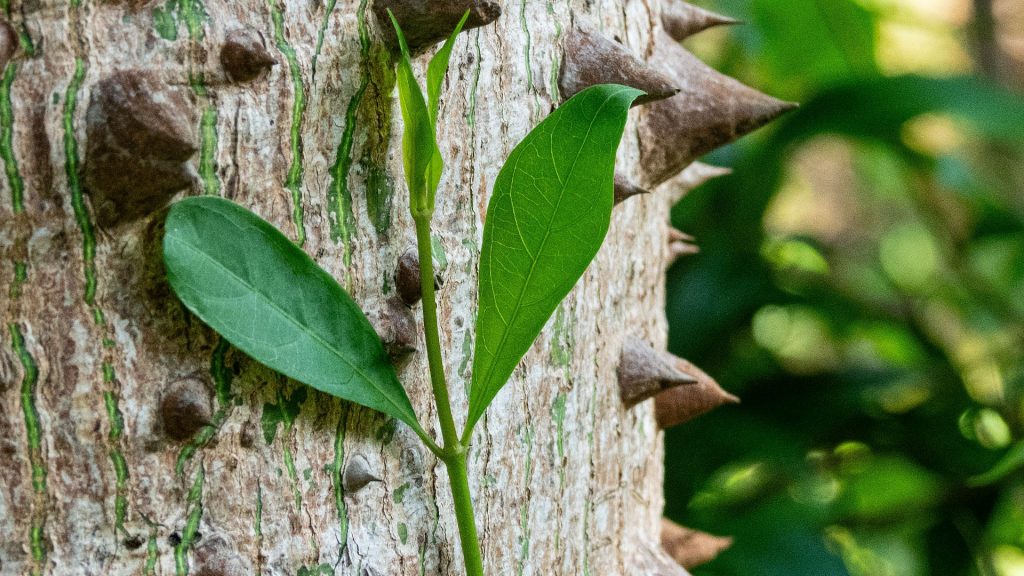
La piel de la Ceiba / The skin of the “Ceiba”
Fotografía / Photography: Igor Cedeno
A Cenzontle rests on the walkway and flies away upon sensing our presence. This is a sanctuary of diverse species of native fauna, flora, and fungi within the city; a refuge that preserves their habitat and an environment that prioritizes their well-being; whether it is the resident family of Sereques that suddenly cross through the bushes, or the recurring visitors such as the Collared Aracari flying in to feed on Guarumo fruit.
A refuge that preserves their habitat and an environment that prioritizes their well-being, created by the community.
Insects and pollinating species flutter about at different times of day due to flowering that occurs across seasons. We pause in the middle of this natural spectacle to observe and photograph some bees on the Huaxim flowers.
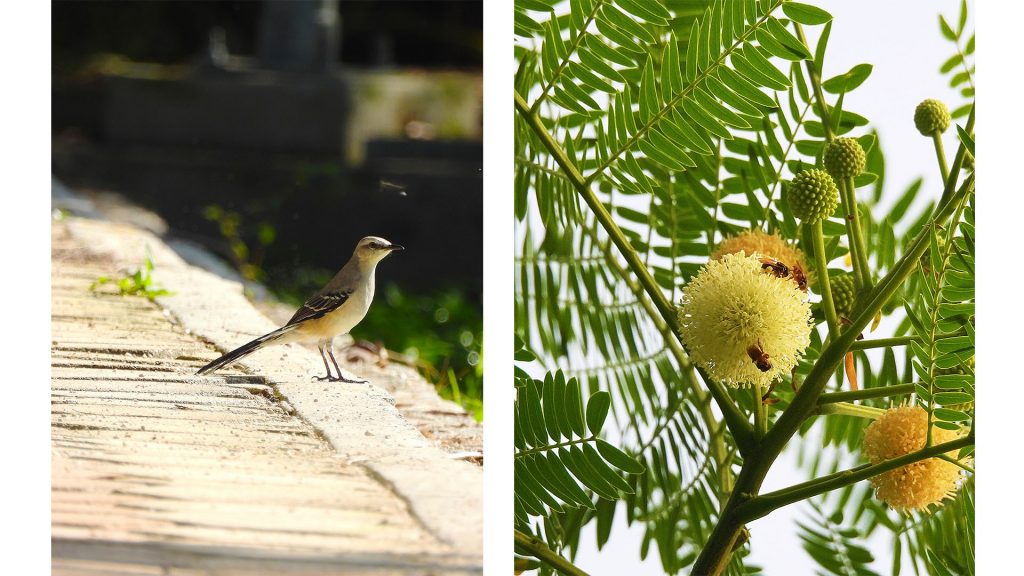
Cenzontle / Polinizando ando
Fotografía / Photography: Igor Cedeno
I wonder, what would have become of this place if there had not been a community to protect it and regenerate what it is today? Or rather, I reframe the question: what would happen to urban communities if there were no more spaces like these?
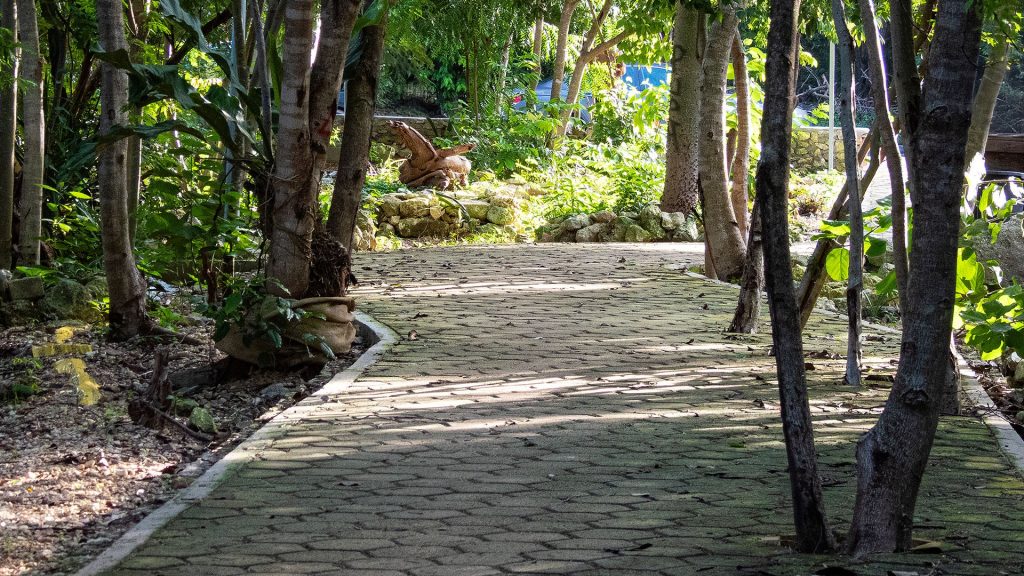
Refugio para todas las especies / A sanctuary for all the species
Fotografía / Photography: Igor Cedeno
Bibliografía/ Bibliography:
- Jacobs, Jane, Muerte y vida de las grandes ciudades (Nueva York: Random House, 1961)
- Gehl, Jan, Ciudades para la gente (Buenos Aires: Infinito, 2014)
Flora mencionada/ Mentioned Flora:
Ceiba (Ceiba pentandra)
Balché (Lonchocarpus longistylus)
Ciricote (Cordia dodecandra)
Guarumo (Cecropia obtusifolia Bertol)
Huaxim (Leucaena leucocephala).
Fauna mencionada/ Mentioned fauna:
Sereque (Dasyprocta punctata)
Cenzontle (Mimus polyglottos)
Tucancillo Collarejo (Pteroglossus torquatus)


-10.28.24.jpg "Anunciate07-13-a-la(s)-10.28.24")

 13.26.42.png "Captura de Pantalla 2023-02-08 a la(s) 13.26.42")


