
Superbloom, Tower of London: Transforming a historic moat into a living landscape
Grant Associates invites us to explore Super Bloom, an immersive experience that transforms a historically inaccessible and carefully protected site into a landscape that invites visitors to walk through and experience it. The intervention demonstrates how a heritage site can continue to evolve in response to contemporary environmental challenges, while incorporating new layers of meaning.
For almost 800 years, the moat surrounding the Tower of London represented separation and defence: a physical barrier designed to keep people away from one of the world’s most famous fortresses. In 2022, this remarkable historic space was reimagined as a place of connection, welcoming people, nature and biodiversity back into the heart of the city.
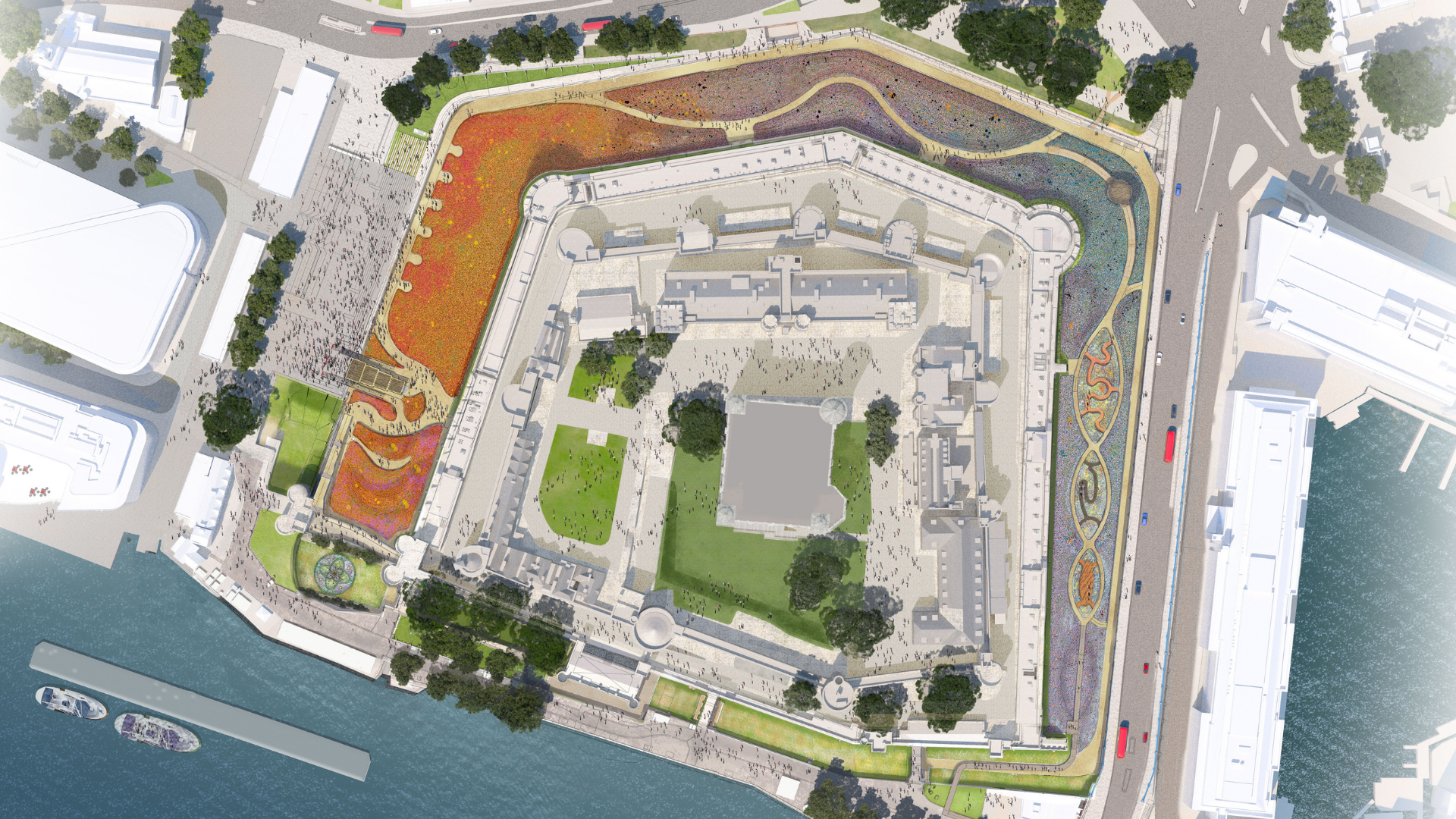
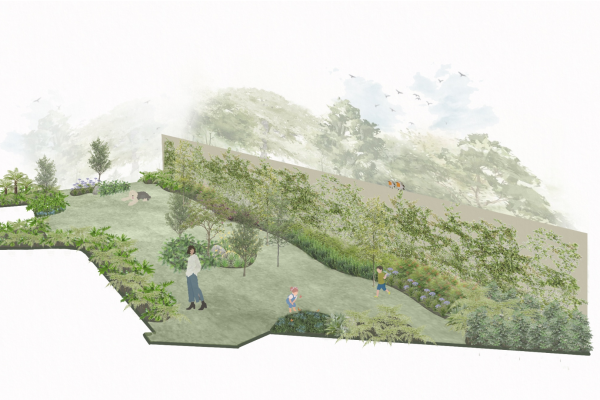
Rendered plan/ Plano renderizado
illustration/ Ilustración: Grant Associates
Created to celebrate HM Queen Elizabeth II’s Platinum Jubilee, Superbloom was the most significant transformation of the Tower of London moat since the 1840s. Led by Grant Associates for Historic Royal Palaces, the project replaced a traditionally managed grass landscape with a spectacular, immersive and evolving natural experience, demonstrating how even the most sensitive heritage landscapes can respond creatively to the challenges of climate change and biodiversity loss.
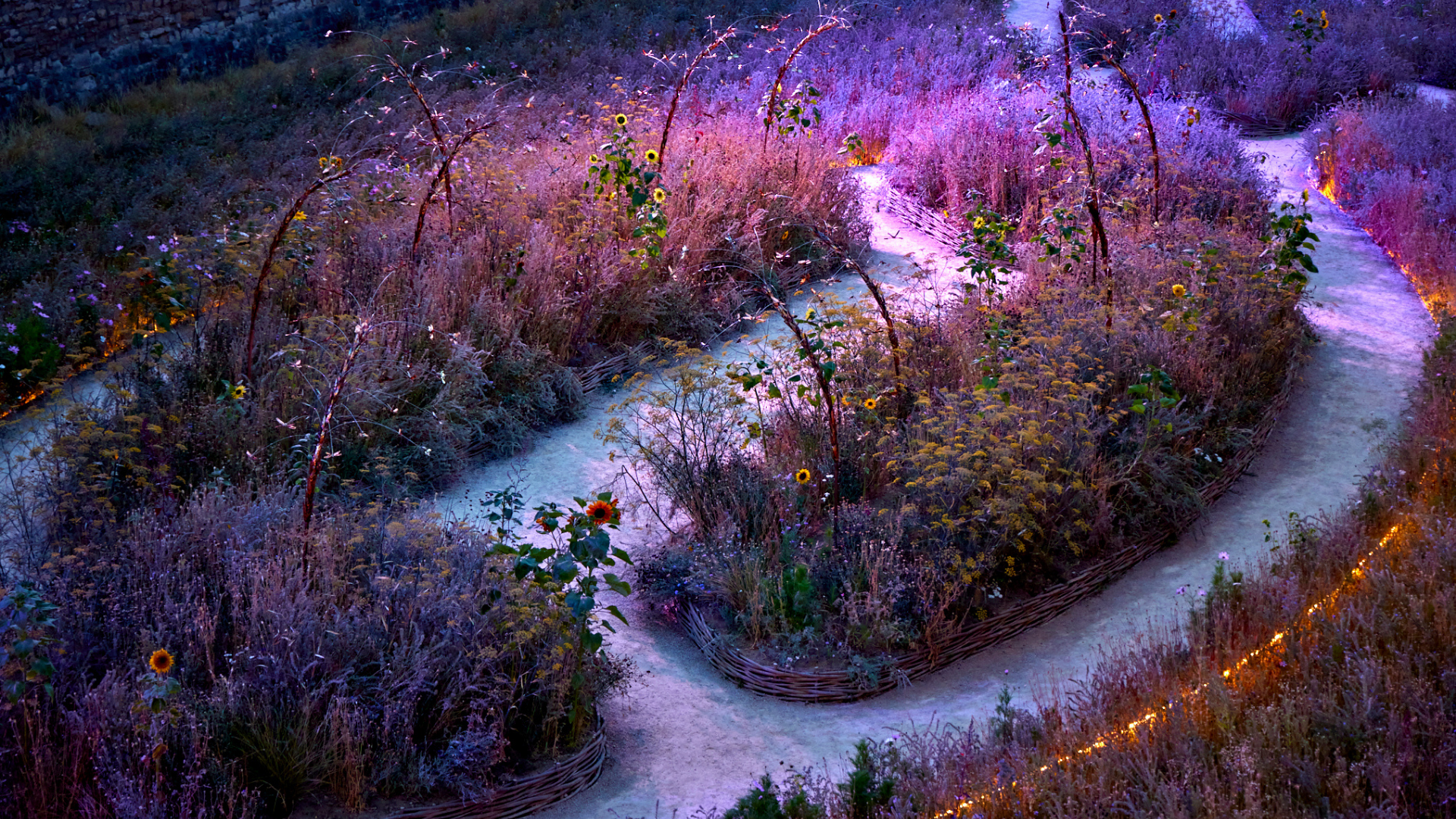
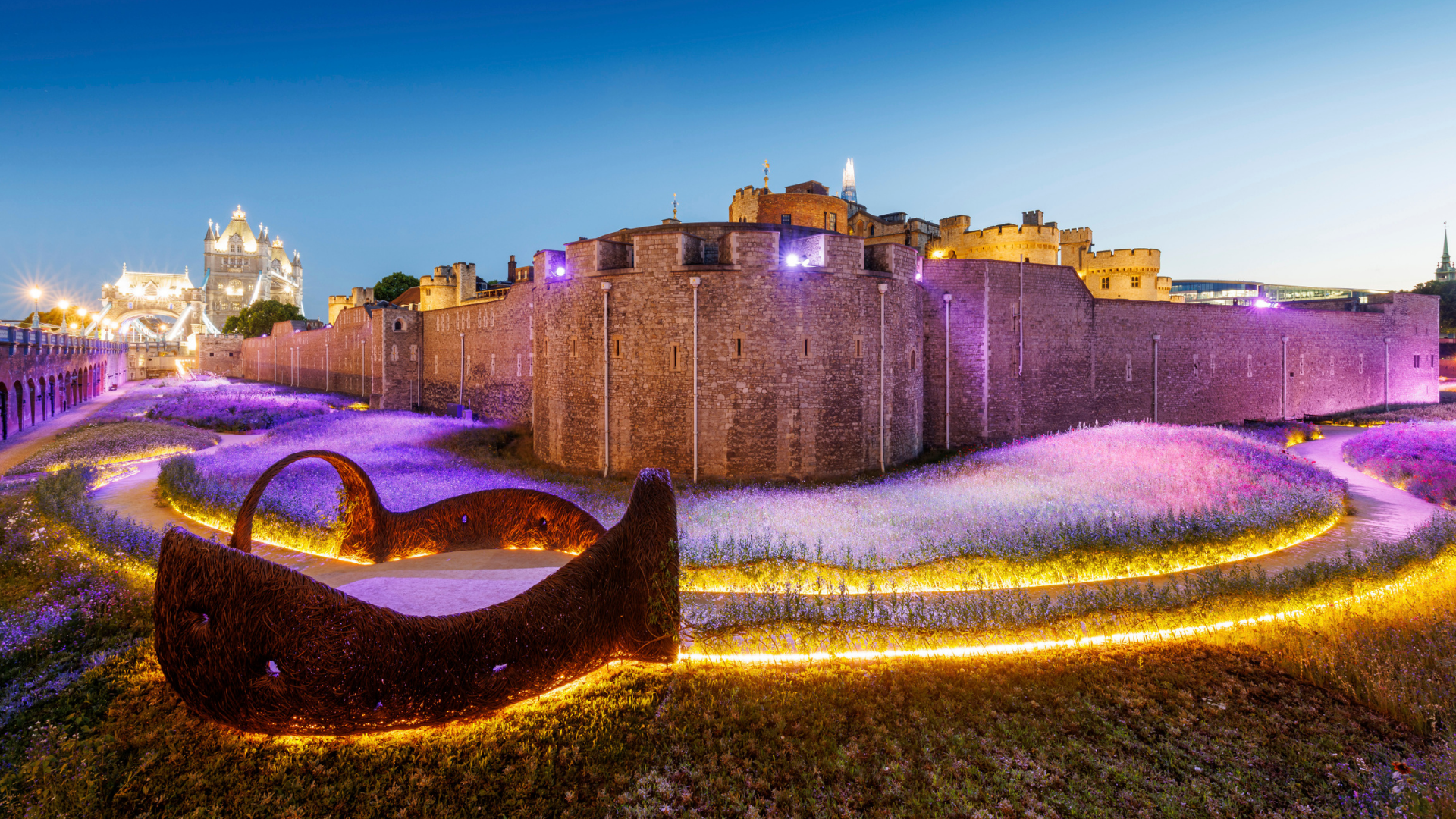
Evening lights/ Iluminación al atardecer
Photography/ Fotografía: Alister Thorpe
The vision was simple but ambitious: to transform a 13th-century defensive structure into a dynamic urban habitat filled with colour, movement and life. Rather than creating a conventional garden, the design team imagined the moat as a living artwork —a landscape that would explode into a riot of colour over a four-month period.
Slide detail/ Detalle del tobogán
Photography/ Fotografía: Alister Thorpe
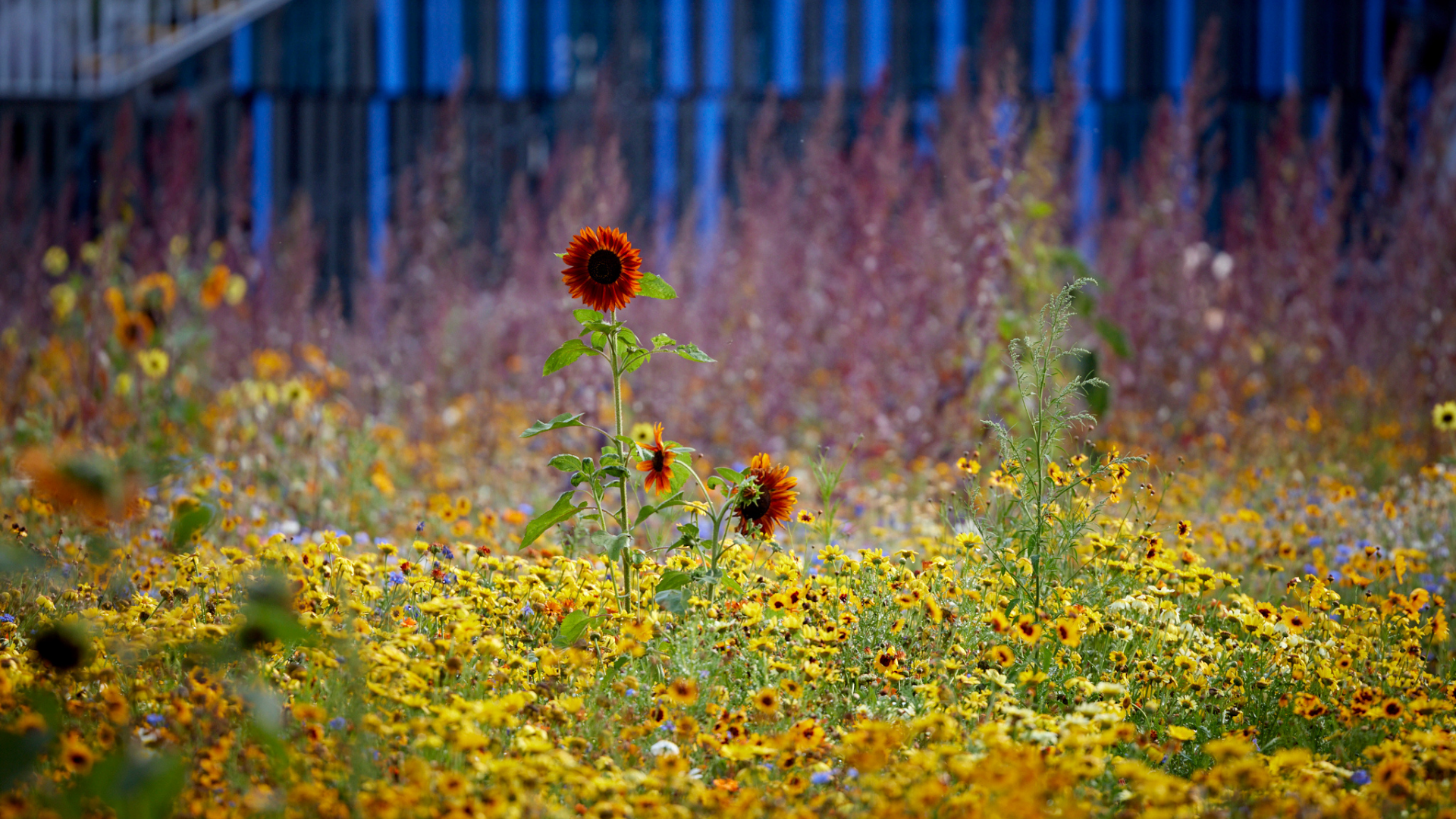
Working with horticulturalist Professor Nigel Dunnett, the design introduced more than 20 million seeds across the moat, combining 48 flower species and 16 carefully composed seed mixes. The intention was to create an impressionistic field of flowers, with waves of colour shifting from June through to September. Familiar species including poppies, cornflowers and corn marigolds combined with longer-flowering plants such as cosmos, sunflowers and rudbeckias to extend the spectacle and support a richer diversity of wildlife.
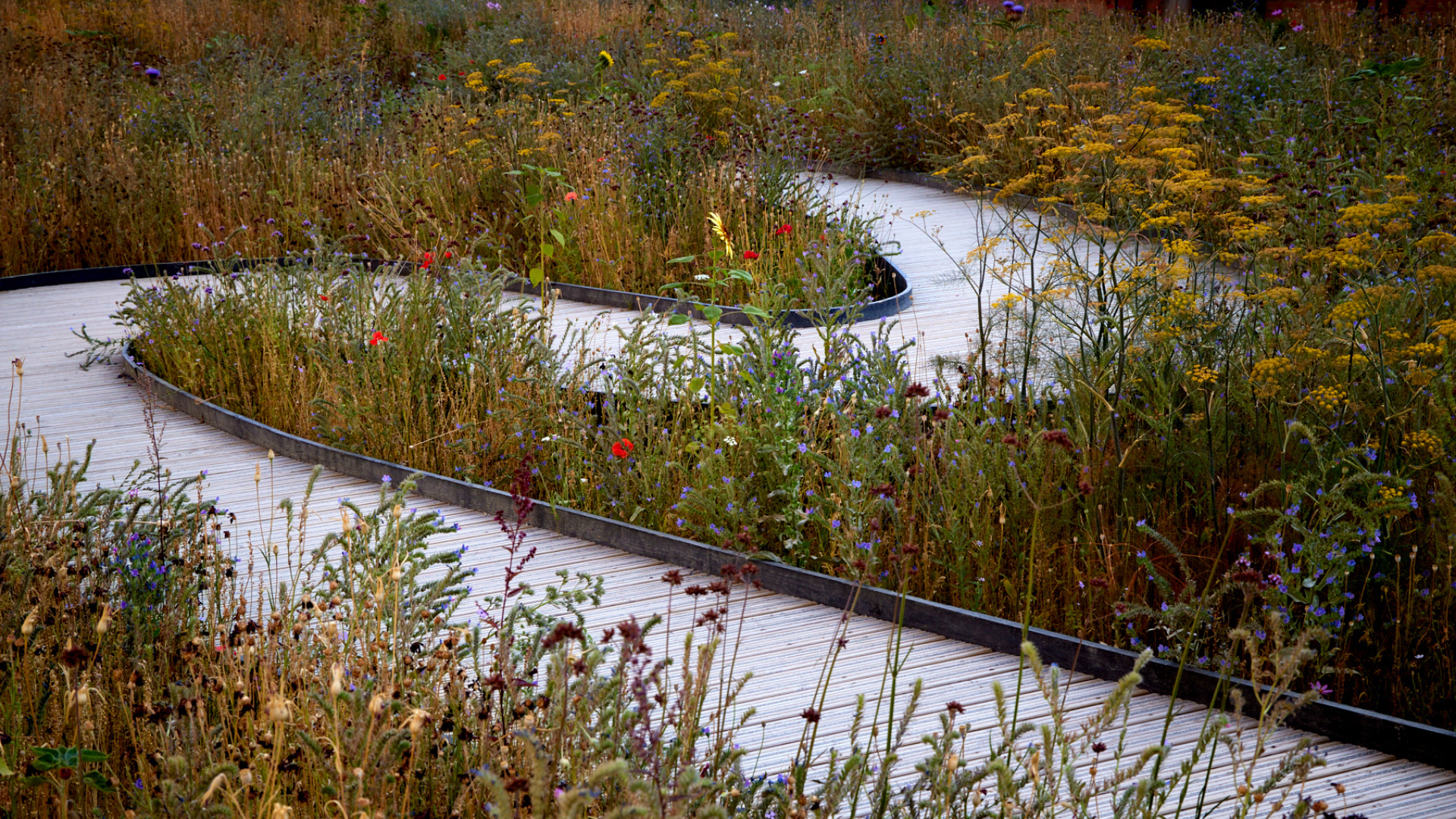
East moat boardwalk/ Paseo del foso este
Photography/ Fotografía: Alister Thorpe
Designing within a UNESCO World Heritage Site and Scheduled Ancient Monument presented extraordinary challenges. Archaeological restrictions limited excavation, existing soils were unsuitable for planting, access was highly constrained, and the microclimate of the moat varied dramatically between sun, shade, wind exposure and shelter.
The response was to create an entirely new landscape system above the historic fabric. More than 10,000m³ of specially engineered soils were introduced, forming new topography, improving drainage and creating the conditions required for the flowering landscape to establish. Subtle changes in landform helped shape visitor routes, frame views of the Tower’s ancient walls and create a more immersive relationship between people and planting.
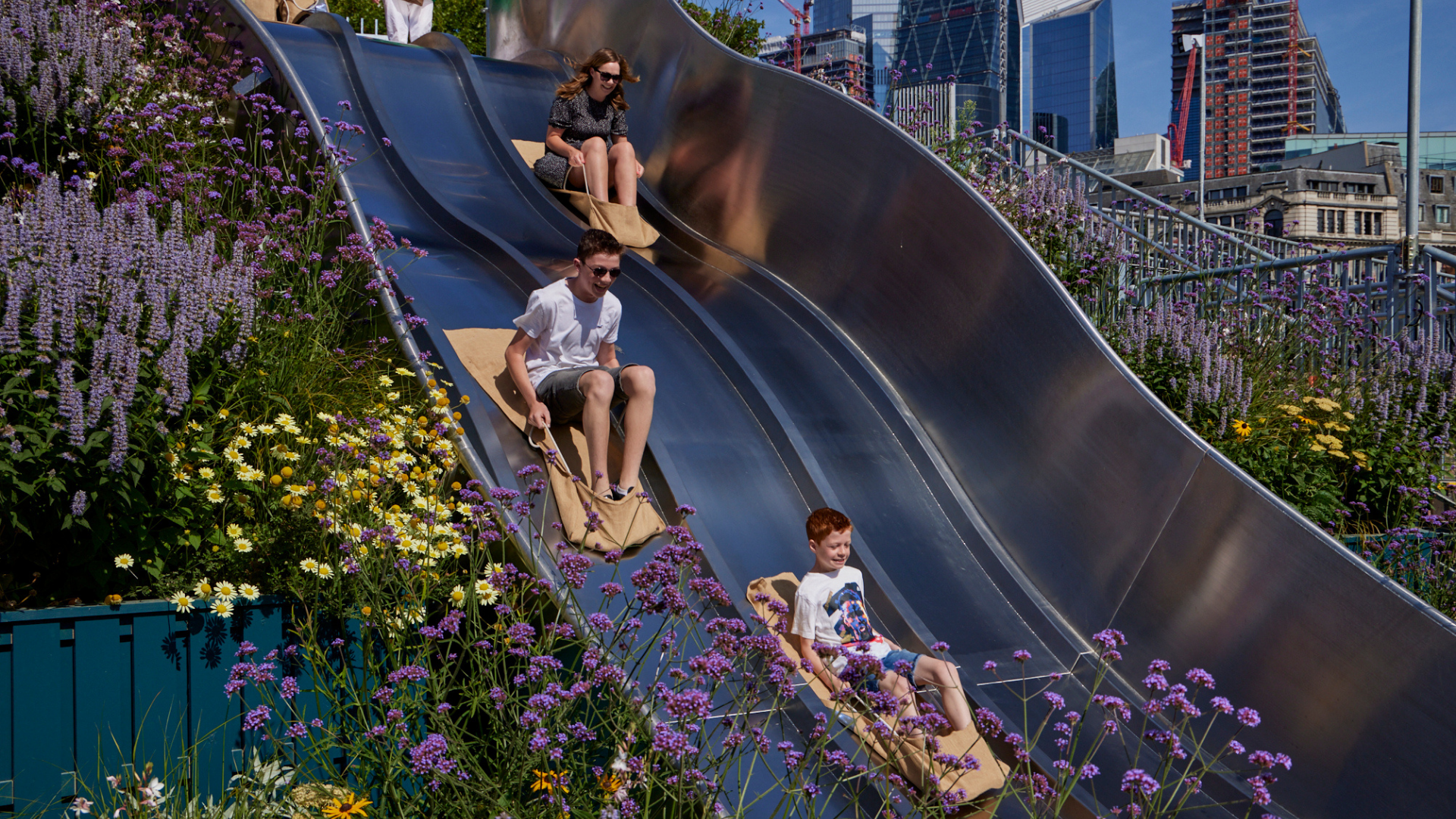
Slide/ Tobogán
Photography/ Fotografía: Alister Thorpe
The visitor journey was central to the concept. New pathways invited people to explore the moat freely, offering a perspective on the Tower that had rarely been experienced before. A repurposed 17.5-metre long 6m high slide provided a playful and unexpected entrance into the landscape, while woven willow structures, artworks and a soundscape by composer Erland Cooper created moments of discovery and reflection.
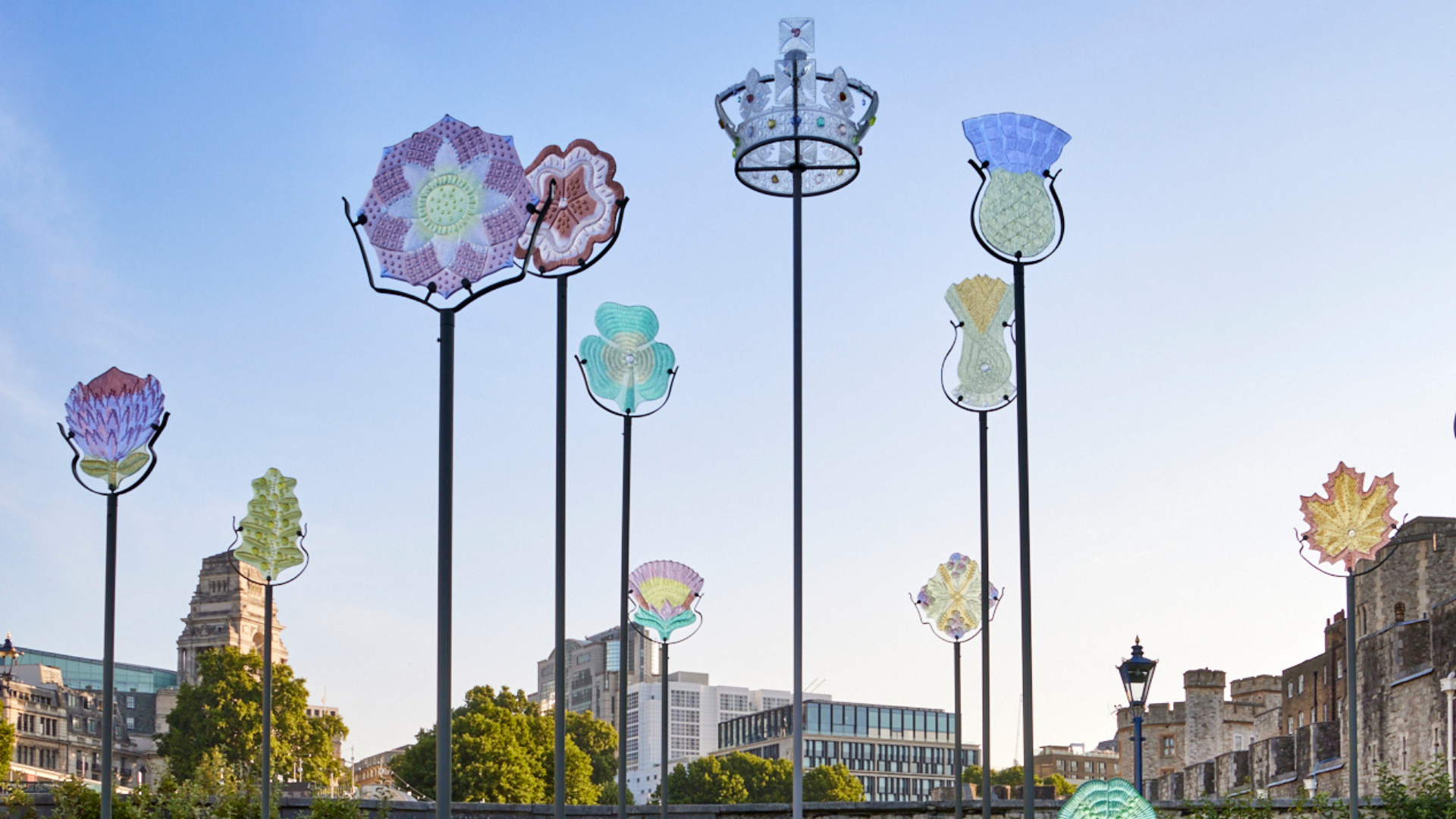
Max Jacquard glass artworks/ Obras de arte en vidrio de Max Jacquard
Photography/ Fotografía: Alister Thorpe
Within the Tower’s historic Bowling Green, Grant Associates also designed the Queen’s Garden: a more intimate space inspired by Sir Norman Hartnell’s Coronation gown created for Queen Elizabeth II in 1953. The garden translated the colours, forms and embroidered motifs of the gown into a contemporary landscape of meadow planting, topiary, grasses and glass artworks by artist Max Jacquard.
While Superbloom was conceived as a celebration, its purpose extended far beyond a temporary floral display. The project explored how urban landscapes can become more biodiverse, resilient and emotionally engaging. Ecological monitoring recorded a significant increase in wildlife activity, demonstrating the potential of transforming simple amenity grass into more complex habitats.
Through landscape design, it demonstrates how urban spaces can become more biodiverse, resilient, and emotionally engaging.
The project also challenged perceptions of heritage landscapes. Rather than preserving history as something static, Superbloom showed that historic places can continue to evolve, responding to contemporary environmental challenges while creating new layers of meaning and experience.
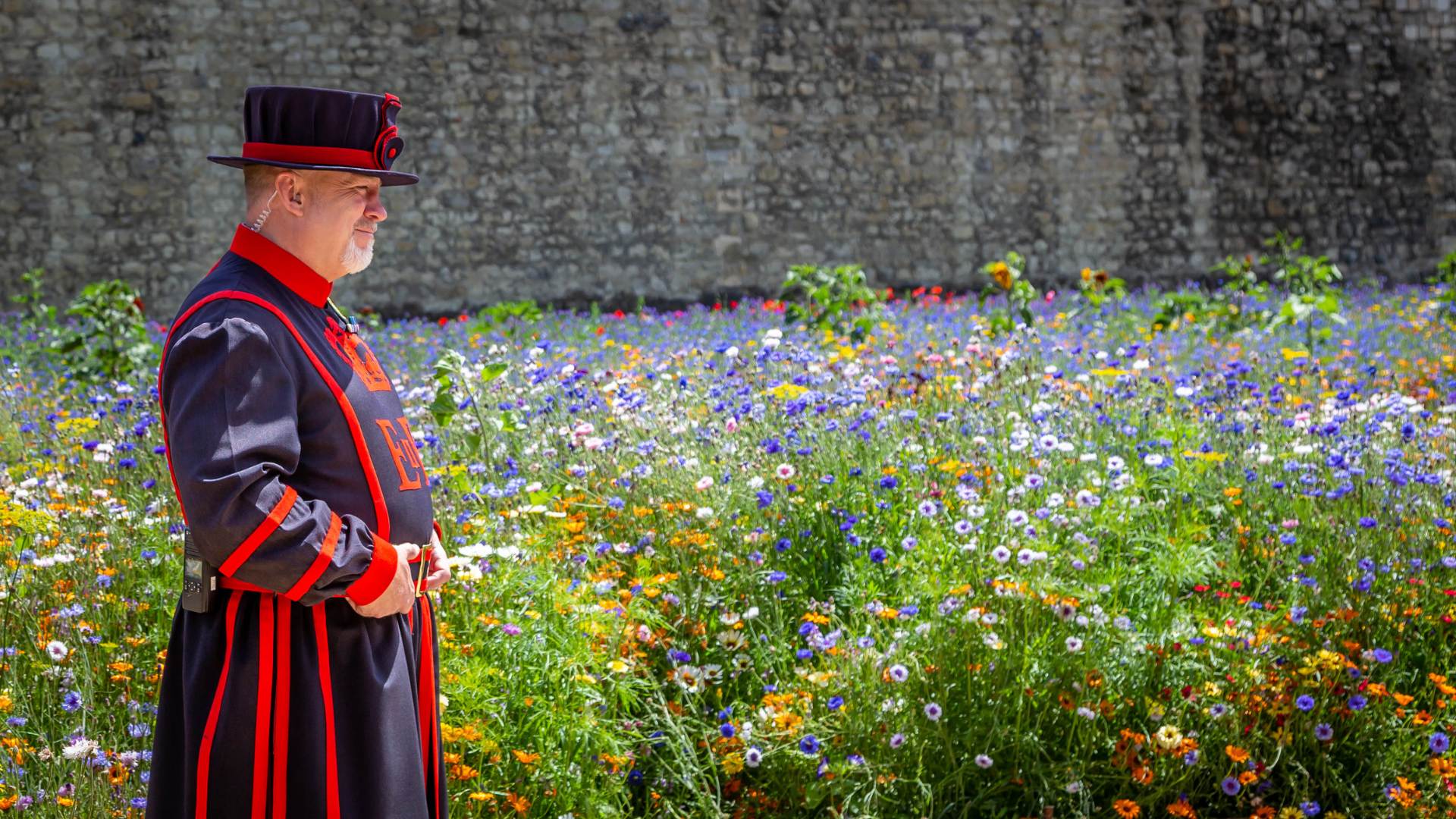
Yeoman Warder/ Guardián de la Torre de Londres
Photography/ Fotografía: Alister Thorpe
For Grant Associates, the project reflects a wider belief: that cities must find new ways to reconnect people with nature. Superbloom revealed the hidden potential within overlooked urban spaces and demonstrated how landscape design can combine ecology, storytelling and human experience.
From a moat originally designed to exclude, Superbloom created a landscape of welcome: a place where flowers, insects, birds and people could gather together beneath the ancient walls of the Tower of London. Its legacy continues as a powerful reminder that even the most historic urban environments can be reimagined for a more nature-rich future.
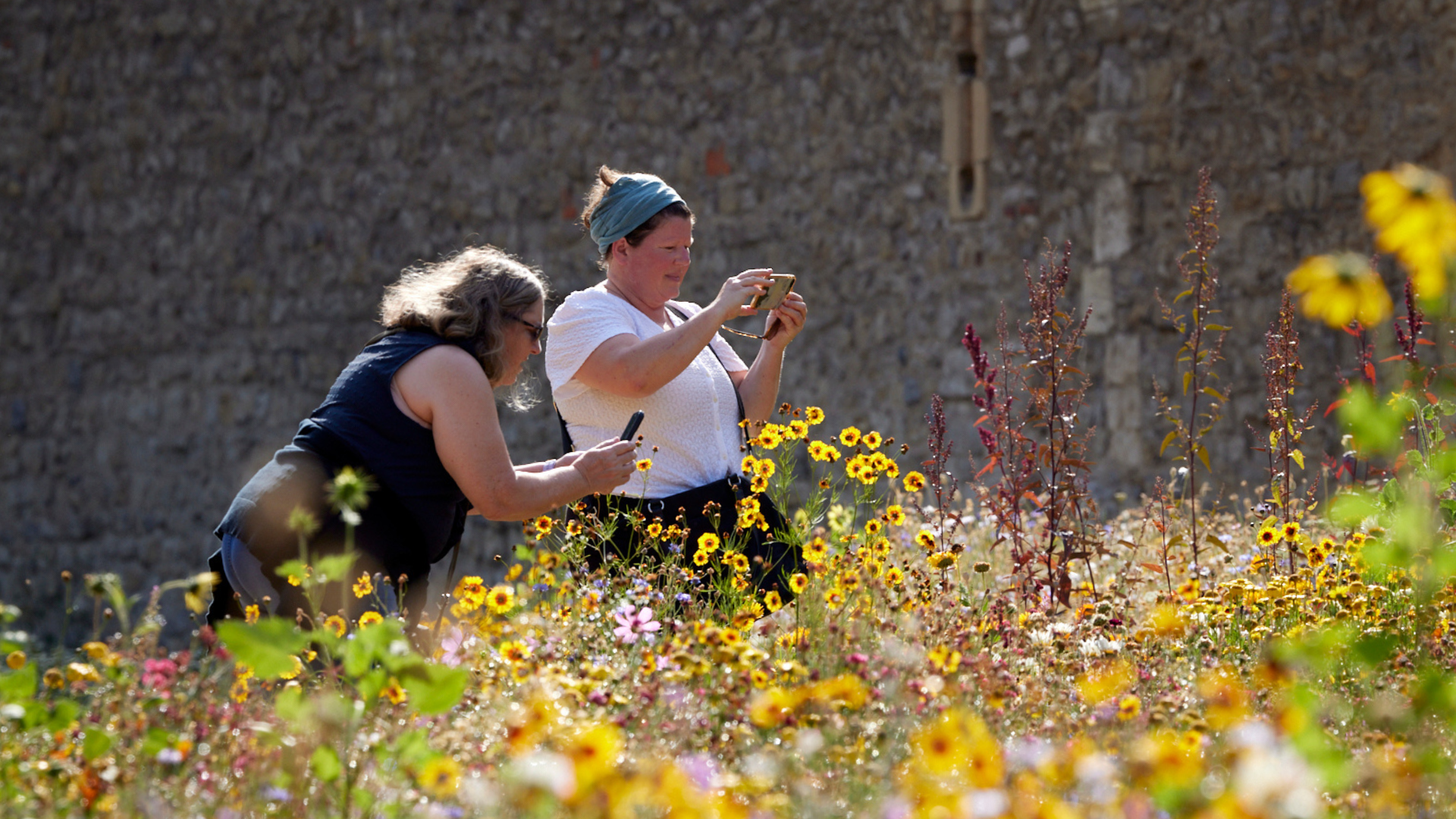
People in flowers/ Personas entre flores
Photography/ Fotografía: Alister Thorpe
Studio profile:
Grant Associates is an international landscape architecture practice creating distinctive, regenerative landscapes that reconnect people with nature while responding to the global challenges of climate change, biodiversity loss and urbanisation. www.grant-associates.uk.com


-10.28.24.jpg "Anunciate07-13-a-la(s)-10.28.24")

 13.26.42.png "Captura de Pantalla 2023-02-08 a la(s) 13.26.42")