
Oasis urbano: Parque de la Ciencia La Paz
Discover “Urban Oasis: La Paz Science Park” by Megumi Andrade. This landscape architecture project reinterprets the geometry of DNA to design a recreational area that transforms the metropolitan periphery into a space for encounter and identity.
An urban oasis is not merely a green space; it is a pause within the city, a place where daily life finds respite. This vision guided the conception of the La Paz Science Park, designed and built between 2022 and 2023 for the State of Mexico, in collaboration with the construction firm ESCARPIO.
Located east of Mexico City in the municipality of La Paz—an area characterized by high population density and a marked scarcity of green areas—the project was part of a state program for the rehabilitation and creation of “Science Parks.” Its core concept was DNA, with a focus primarily directed toward childhood. Based on this, the design integrated play systems, a go-kart track, zip lines, interactive fountains, multi-purpose areas, and commercial spaces.
An urban oasis is not defined solely by its vegetation, but by its capacity to generate permanence, encounter, and appropriation.
The site borders a natural canyon, which allowed the incorporation of an eco-trail built with local materials, stretching nearly 2 km. Even during construction, neighbors began reclaiming the trail for running, walking, and dog-walking, foreshadowing the park’s community-driven vocation.
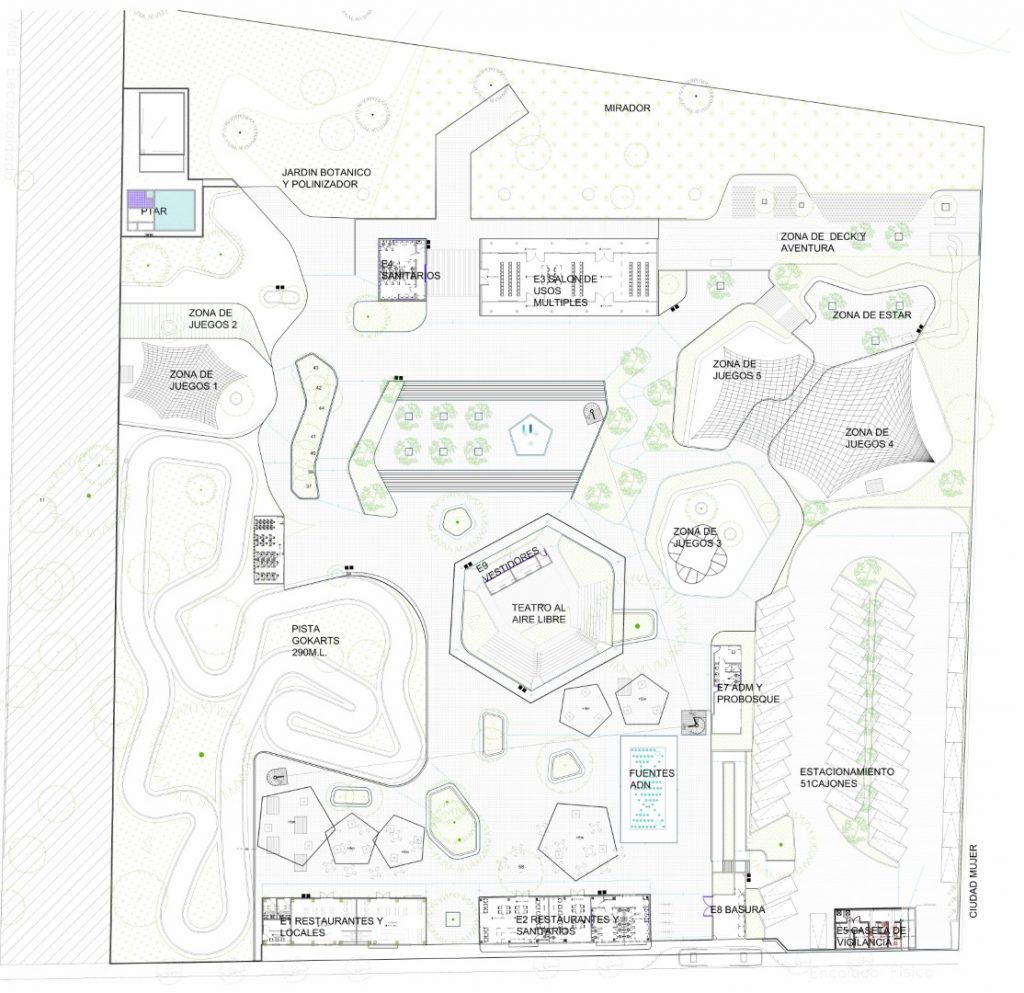
Planta de conjunto/Site plan
Ilustración/Illustration: Megumi Andrade Hashimoto
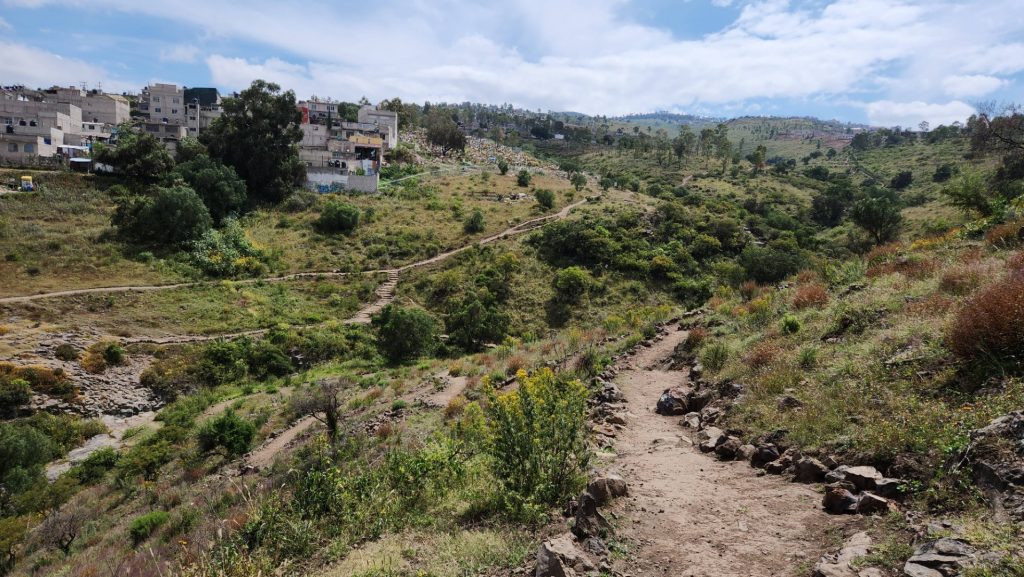
Ecosenderos en la cañada colindante/Eco-trails in the adjacent canyon
Fotografía/Photography: Megumi Andrade Hashimoto
The terrain presented a rugged topography with slopes exceeding 12 percent, along with a significant presence of eucalyptus and peruvian pepper trees. Far from seeing them as obstacles, these elements were embraced as catalysts for the project. Instead of leveling the land and removing existing vegetation, the decision was made to preserve the largest trees, integrating them as spatial nodes that anchor platforms and pathways, creating dynamic sequences. The elevation changes were addressed through strategically placed stairs and ramps, ensuring universal accessibility and enabling full navigation of the park without barriers.
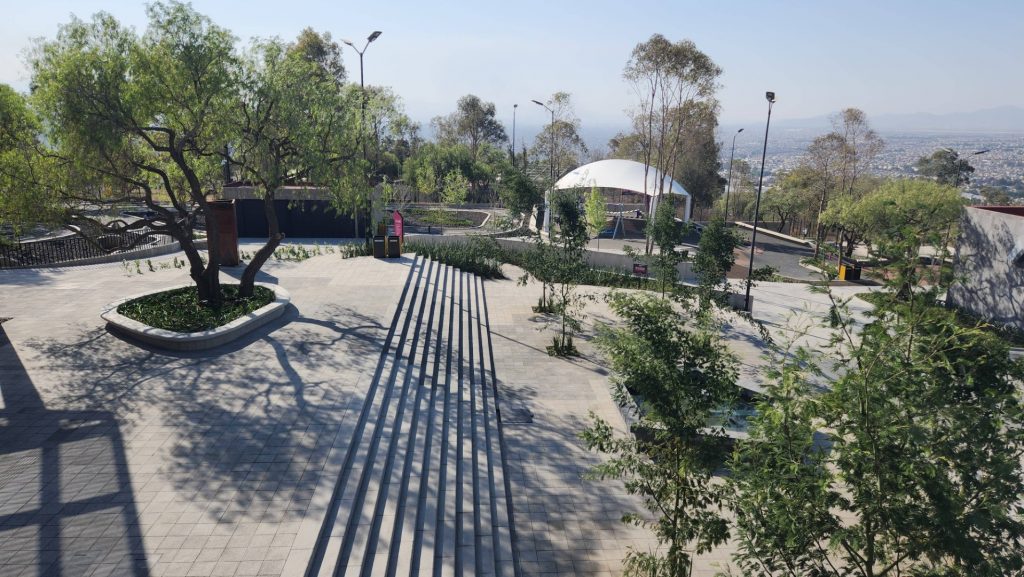
Árboles existentes y nuevos/Existing and new trees
Fotografía/Photography: Megumi Andrade Hashimoto
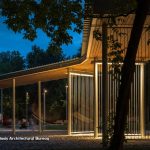
The DNA concept was formally reinterpreted. The pentagonal and hexagonal geometries found in its molecular structure were translated into the design of pergolas, pavements, fountains, and play elements. These pergolas not only materialize the concept but also fulfill a strategic environmental function: providing shade in high-traffic areas, particularly those intended for dining and family gatherings. In a context of intense sunlight, these structures are essential for ensuring thermal comfort.
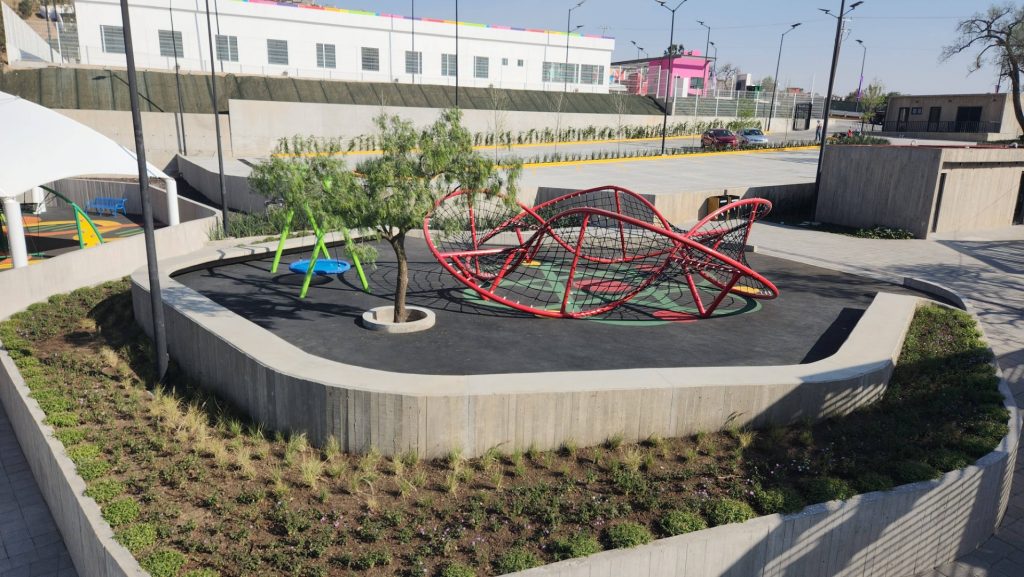
Juego de ADN/DNA play structure
Fotografía/Photography: Megumi Andrade Hashimoto
Across a one-hectare surface, a wide variety of activities for different ages were concentrated. The program includes a nearly 700-meter go-kart track, two children’s zip lines, and a large-scale slide. Establishing an unconventional park within the local public space system.
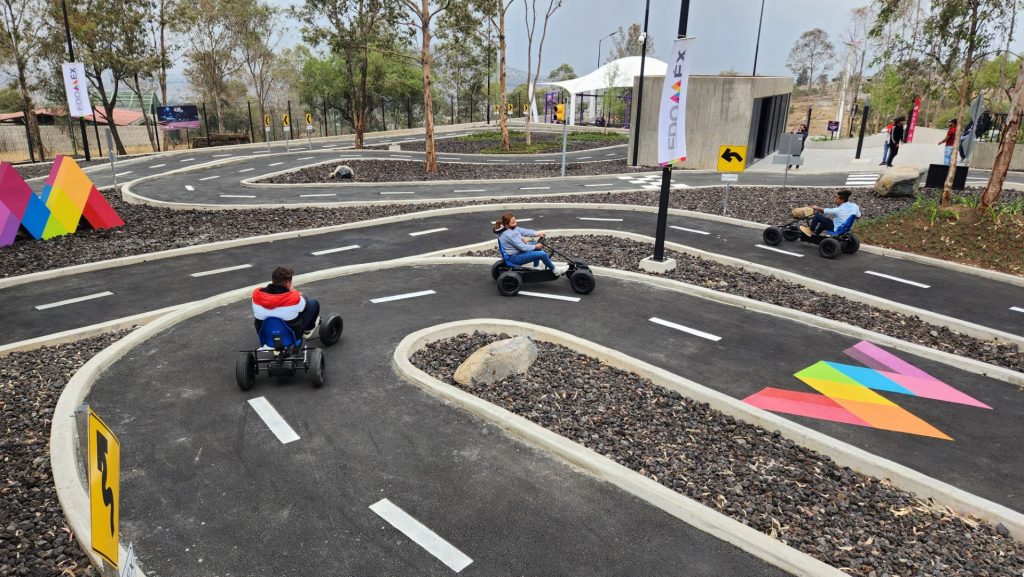
Pista de go-karts/Go-kart track
Fotografía/Photography: Megumi Andrade Hashimoto
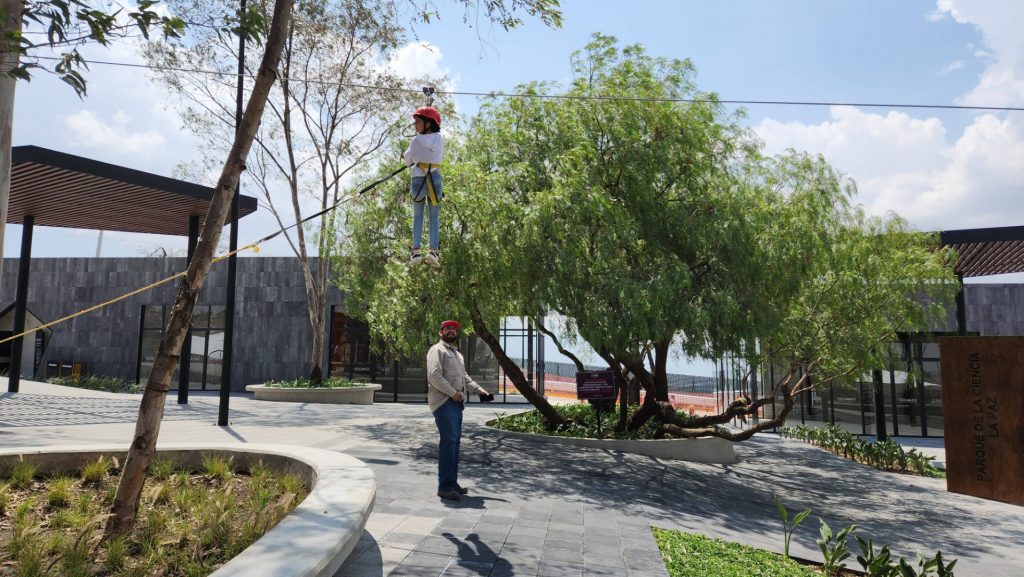
Tirolesa infantil/Children’s zip line
Fotografía/Photography: Megumi Andrade Hashimoto
While the project features specific green pockets, its primary vocation is recreational. Therefore, extensive seating areas were created using perimeter benches (rodetes) around existing trees, taking advantage of their natural shade. In areas lacking canopy cover, tensile structures (velarias) were installed to enhance habitability.
The architectural program also includes an outdoor forum located at the center of the complex, topped by a hexagonal pergola. The bleachers were conceived as spaces for daily use, extending beyond formal events.
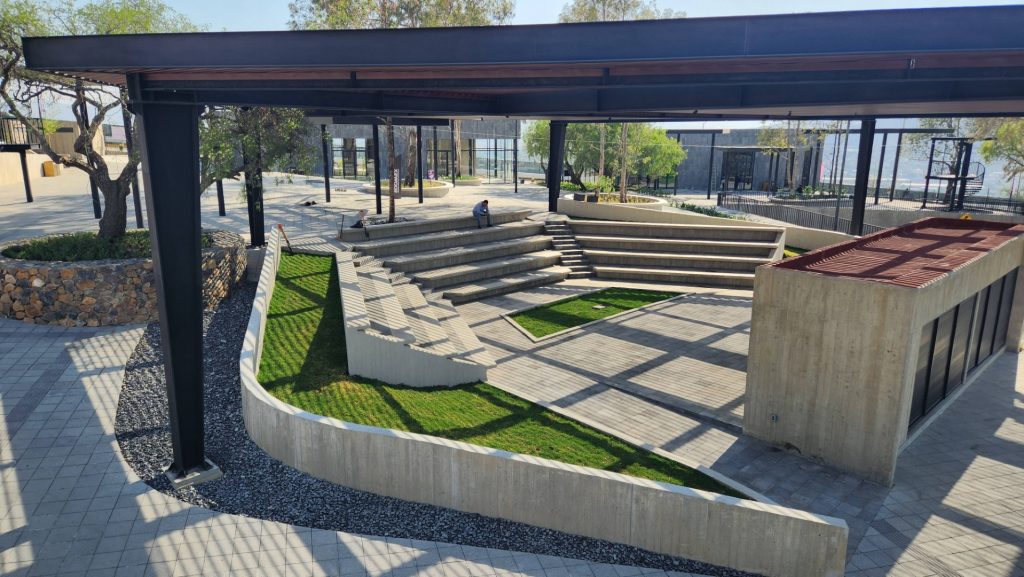
Foro al aire libre/Outdoor forum
Fotografía/Photography: Megumi Andrade Hashimoto
In metropolitan peripheries, where urban sprawl often precedes green infrastructure, every intervention in public space gains particular value. An urban oasis is defined not only by its vegetation but by its capacity to foster permanence, encounter, and appropriation.
The La Paz Science Park fits into this context as a piece that seeks to balance density and collective space, offering the community a place for shade, play, and coexistence within a territory of limited green areas.
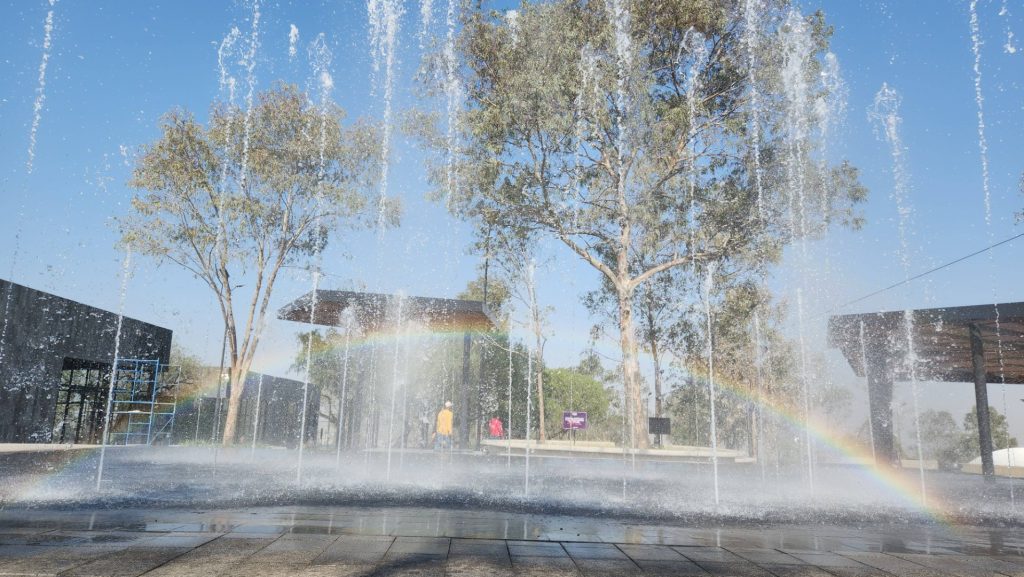
Fuentes danzantes/Dancing fountains
Fotografía/Photography: Megumi Andrade Hashimoto


-10.28.24.jpg "Anunciate07-13-a-la(s)-10.28.24")

 13.26.42.png "Captura de Pantalla 2023-02-08 a la(s) 13.26.42")