
Hummingbird Naturalist Garden
Gladiola Estudio de Paisaje tells us about the Colibrí Naturalistic Garden, winner of the Ammodo Architecture Award—a project that transforms an unused median into a biodiverse refuge for pollinators and the community, inviting us to rethink the urban landscape through the lens of nature.
Jardín Naturalista Colibrí originates from a master’s thesis research in landscape architecture aimed at addressing an urgent urban issue: the loss of biodiversity in cities and the rewilding of deteriorated urban spaces. It emerges from a key question: why, if Mexico is among the countries with the greatest floristic diversity in the world, is the urban plant palette usually reduced to a minimal number of repeated species? From this inquiry, the garden proposes a shift in the way urban landscape is conceived.
The project is located on a median that hosts a stormwater drainage canal that flows into the Santa Catarina River. Prior to the intervention, the site functioned solely as hydraulic infrastructure and a transit strip, with two pedestrian walkways, two crossing bridges, and a very limited presence of trees, lacking any recreational or landscape vocation. Through a process of management, site adoption, and continuous work led by Gladiola Estudio de Paisaje, the space was transformed into a living, resilient, and community-oriented landscape through an exercise in experimental in situ landscape design, supported by the collection of plants rescued from urban clearings, as well as the integration of rocks, gravel, and logs, activating a logic of reuse of the site’s own resources and gathering plant species with potential as food for pollinators.

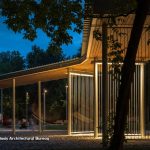
Andadores del Jardín naturalista colibrí / Walkways of the Jardín naturalista colibrí
Fotografía / Photography: Gladiola Camacho Díaz
The design is inspired by the principles of naturalistic landscape design and by the creation of a biodiverse garden, where the primary material is not concrete or equipment, but vegetation as the main structural element of the project. Jardín Naturalista Colibrí functions as an open-air laboratory that explores the boundaries between the urban and the wild, allowing the observation of processes of adaptation, plant succession, and interaction among species including spontaneous vegetation or so-called “weeds” within an intensely urbanized environment. The canal, once perceived as a physical and visual barrier, is re-signified as an ecological corridor.
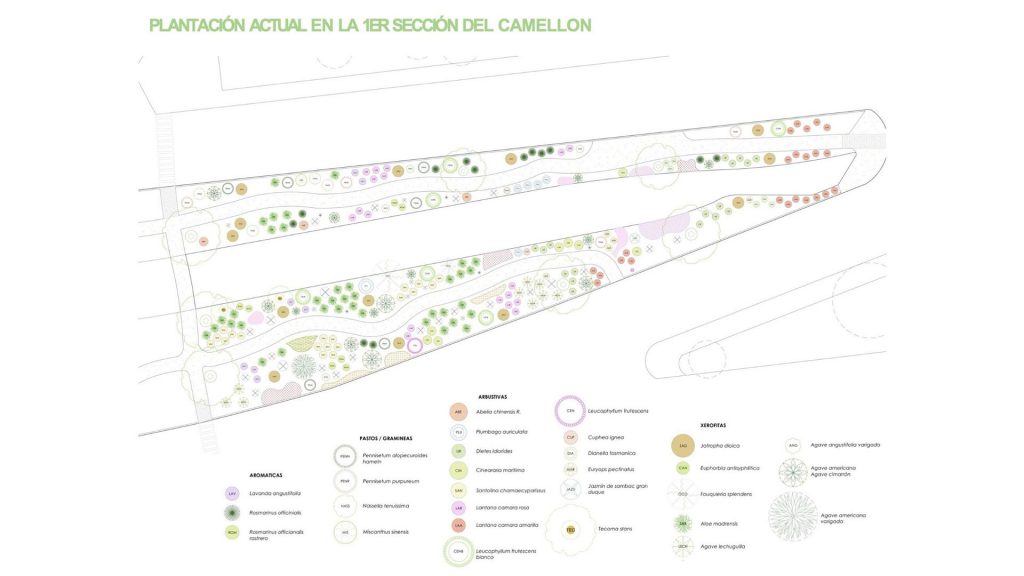
Paleta vegetal / Planting palette
Ilustración / Illustration: Gladiola Camacho Díaz
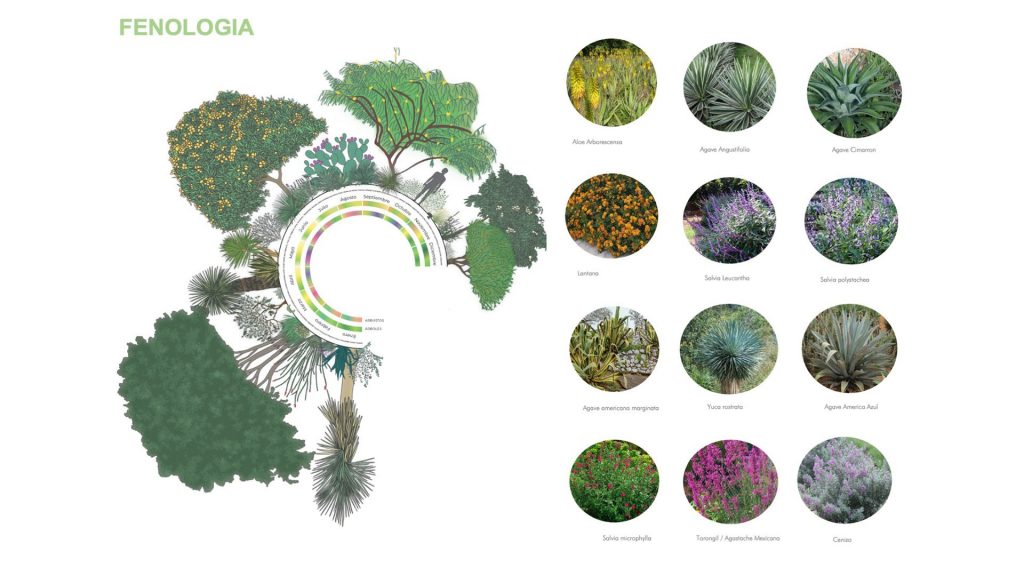
Fenología / Fenology
Ilustración / Illustration: Mariana y Maria José Soule, Gladiola Camacho
The uniqueness of the project lies in the creation of a biodiverse space embedded within the urban fabric of a densely populated and industrialized city. The garden is conceived as a refuge for local flora and fauna, especially birds, hummingbirds, butterflies, and pollinating insects. Over the course of one year, more than 2,000 plant specimens have been established, beginning their first complete spring cycle in 2025.
The uniqueness of the project lies in the creation of a biodiverse space embedded within the urban fabric of a densely populated and industrialized city.
Plant selection prioritized criteria of low water consumption, ecological value, floral attractiveness, and adaptation to a semi-arid climate. Its conservation is supported by a collaborative scheme with the local government, which also participated in the initial cleaning of the canal and the installation of a localized drip irrigation system. Today, the community has taken on an active role in the daily care of the garden, while the municipal government has expressed its interest in supporting its conservation and replicating these criteria in other areas of the city, thus expanding its environmental and social impact.

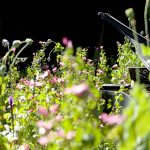
Especies florales / Floral species
Fotografía / Photography: Gladiola Camacho Díaz
The intervention reinforces an ethos of landscape that questions the traditional model of public space based on visual homogenization and “orderly” monoplantation. In contrast, it advocates for a landscape that requires observation, time, and collective care; one that invites recognition of natural cycles and the value of the spontaneous, the wild, and the local.
In its social dimension, Jardín Naturalista Colibrí has been transformative. Through nature, the community reclaims a previously inhospitable space and turns it into a place of encounter and belonging. The landscape brings freshness from the roadway, integrates the sound of birds into everyday life, and adds warmth through its colors, aromas, and textures.
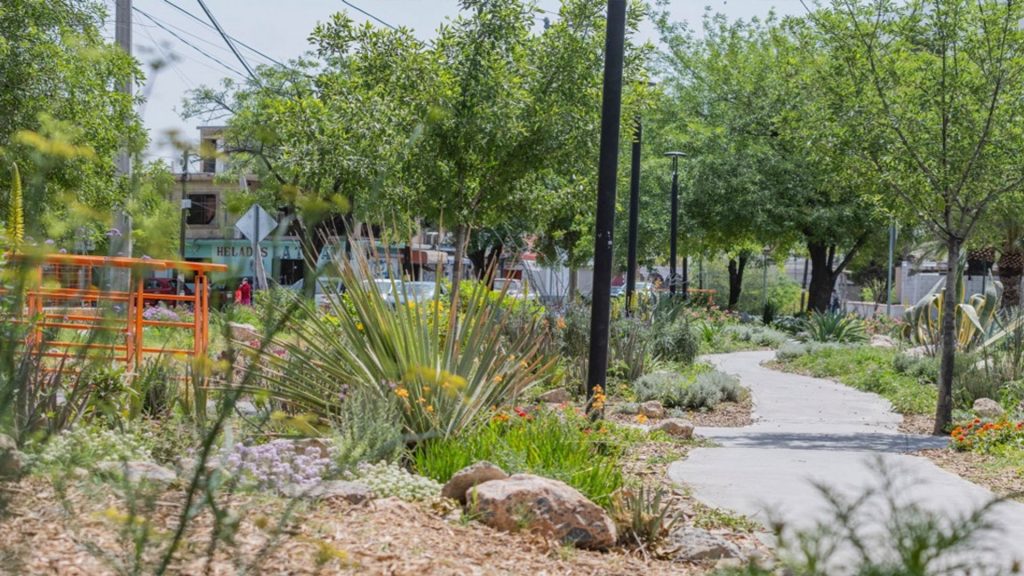
Andadores / Walkways
Fotografía / Photography: Gladiola Camacho Díaz
Jardín Naturalista Colibrí was awarded the Ammodo Architecture Award 2025 at the local scale, an international recognition that distinguishes projects with ecological and social impact and commitment. The award will be used to strengthen its educational vocation through interpretive signage that encourages observation, learning, and active community participation in the care of the space, as well as the incorporation of equipment for fauna, such as bird feeders and drinking stations, hummingbird shelters, and insect hotels, reinforcing its function as an urban habitat.
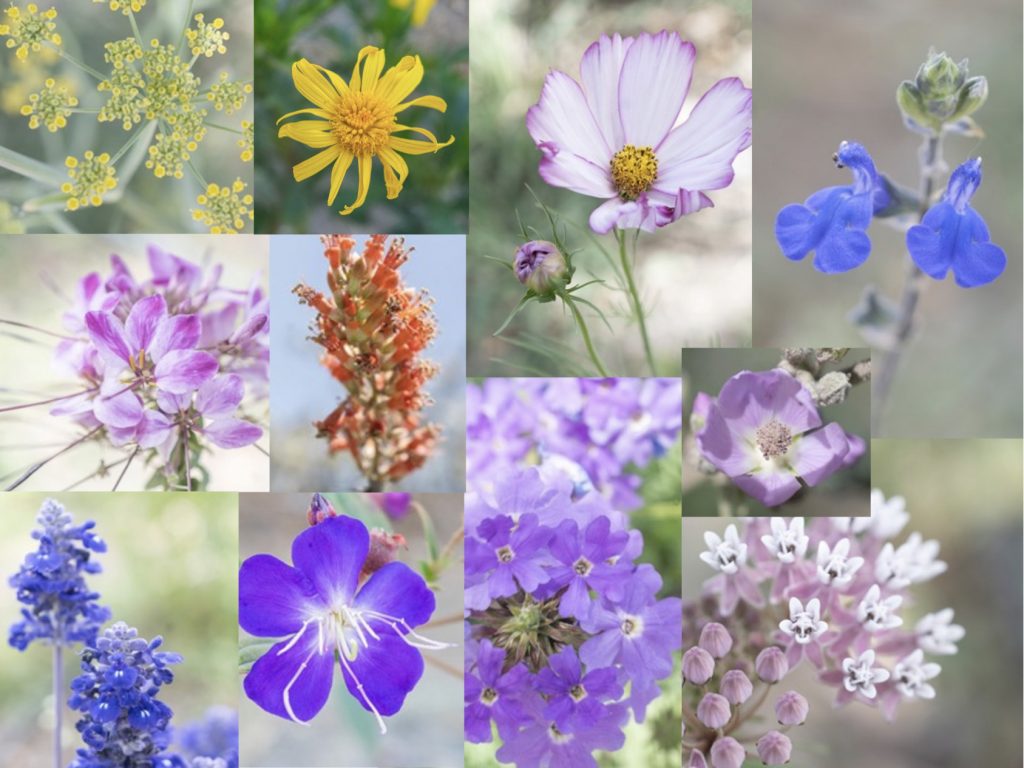
Diversidad florística / Floral diversity
Fotografía / Photography: Gladiola Camacho Díaz
Beyond its physical condition, Jardín Naturalista Colibrí is an invitation to rethink the way we build our cities. It demonstrates that even residual spaces can become powerful tools for revitalizing the territory, reconciling the urban with the natural, and building more sensitive, resilient, and biodiverse urban futures.
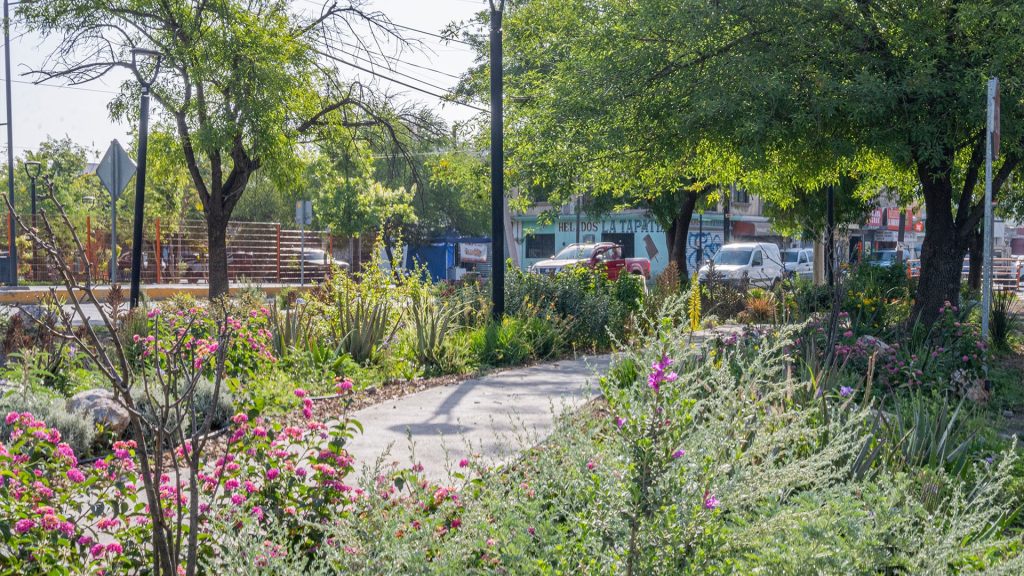
Andadores del Jardín naturalista colibrí / Walkways of the Jardín naturalista colibrí
Fotografía / Photography: Gladiola Camacho Díaz


-10.28.24.jpg "Anunciate07-13-a-la(s)-10.28.24")

 13.26.42.png "Captura de Pantalla 2023-02-08 a la(s) 13.26.42")