
Grandmother’s house: Planting shared memories
Sordo Madaleno invites us to discover Grandmother’s house: Planting shared memories, a project that explores how landscape can awaken memories and evoke shared recollections. A contemporary courtyard, both open and intimate, where the sensory experience becomes the seed of new memories.
There are memories that do not belong to a single person. The cities where we grew up change, homes change, and family stories change. Yet, somehow, many of us share similar memories: a bougainvillea spilling over a wall, clay pots that seem to have always been there, the scent of herbs from the garden, an open door, and that feeling of arriving at a home where there was never any need to announce your visit. Simple places that remain within us, not because of their form, but because of the way they made us feel.
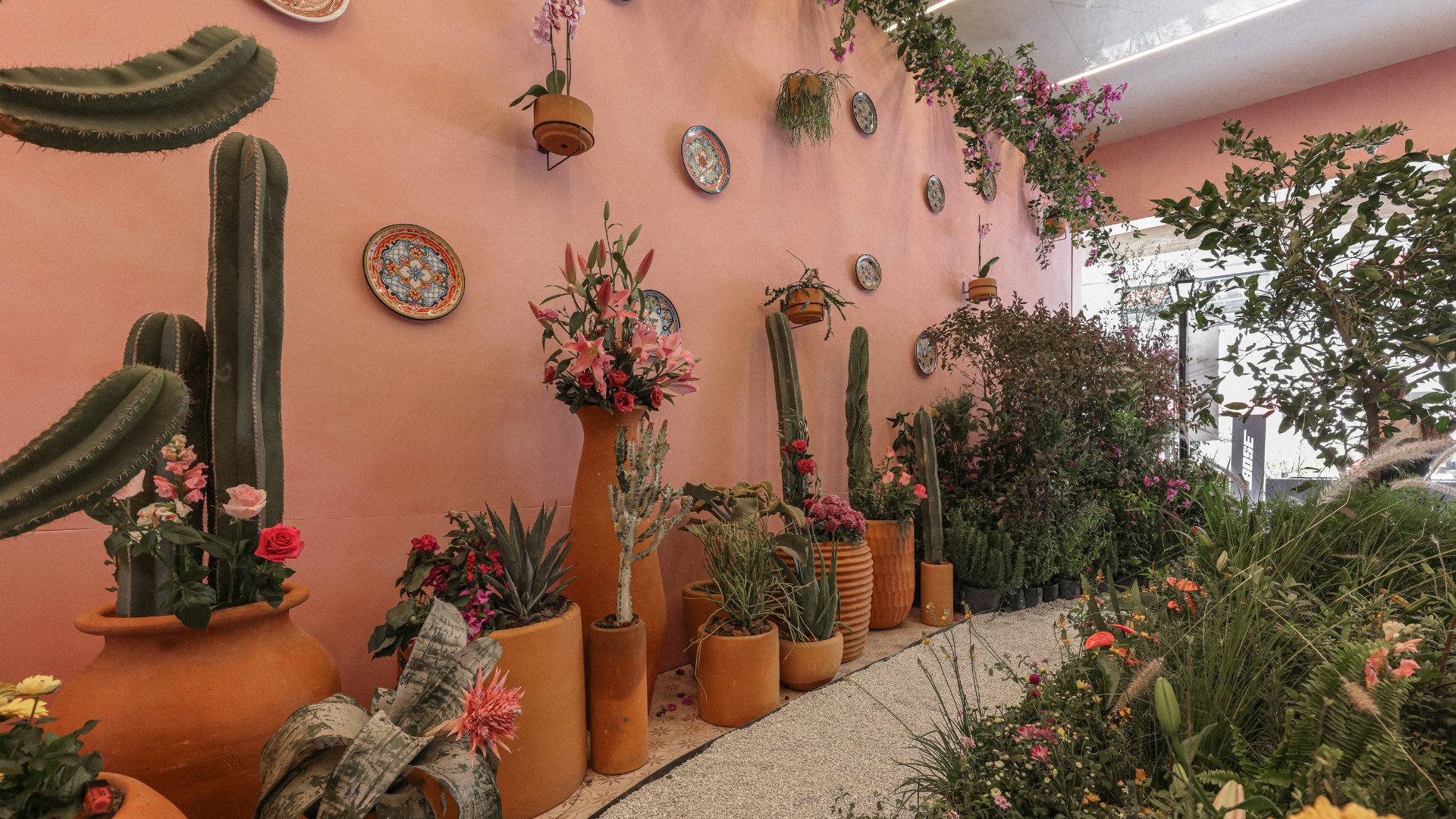
Pasillo de gravas, muro rosa, macetas de diferentes tamaños a lo largo del pasillo/ Gravel walkway, pink wall, and clay pots in different sizes placed along the walkway
Fotografía/Photography: Pablo Manjarrez
“Grandmother’s house” was born from the realization that memory also has a landscape. The project began as a conversation between colleagues. We did not have a defined image; we started by sharing memories. Little by little, colors, materials, plant species, objects, and scenes that we associated with a deeply Mexican garden began to emerge.
As the process progressed, we understood that, although we grew up in different places and our family histories were different, we were talking about the same patio. It was then that we understood that we were not designing the house of our own grandmothers, but rather a place capable of awakening the memories of many other people.
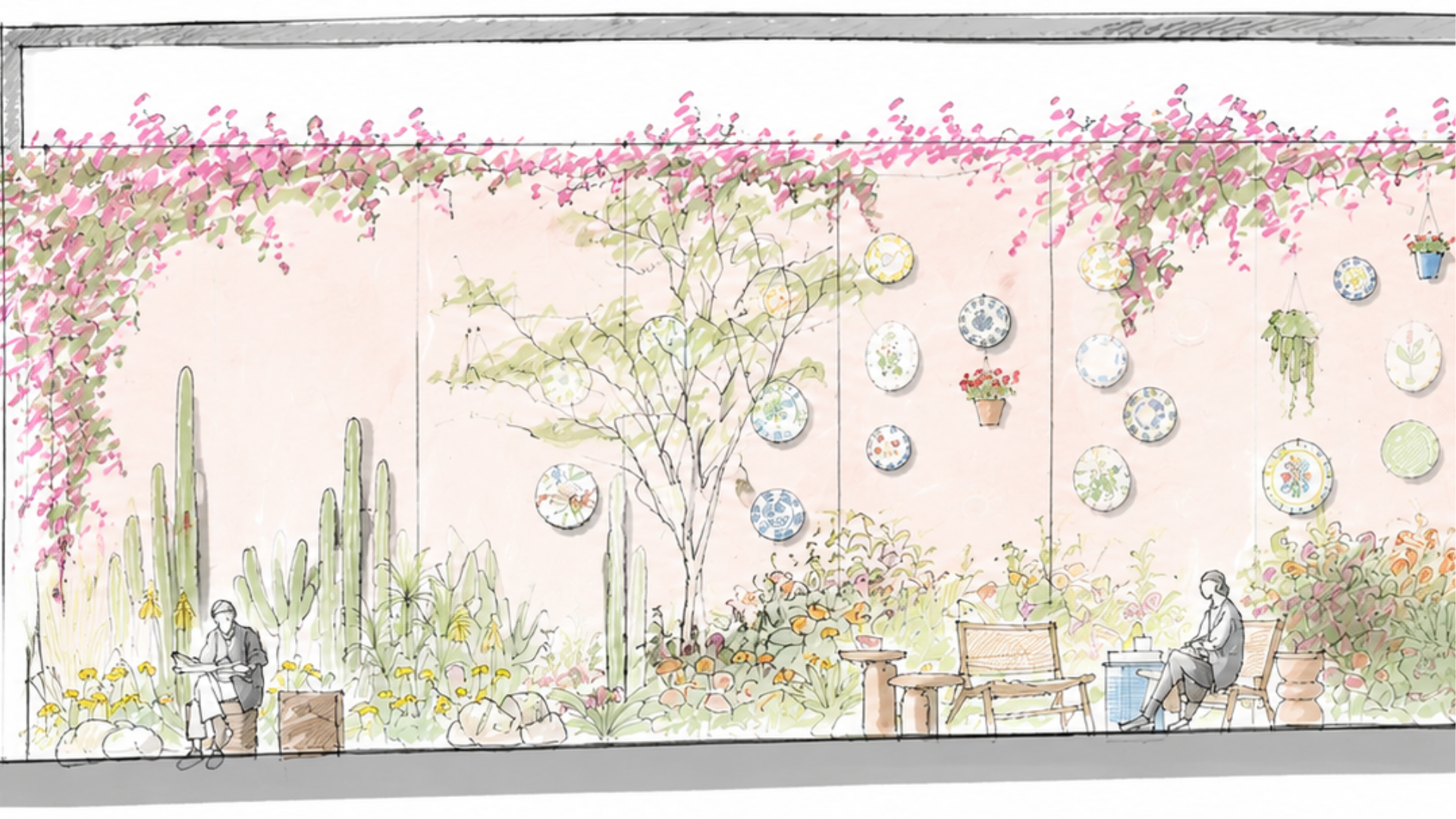
Dibujo de sección de espacios en el túnel de Antara/ Section drawing of spaces in the Antara tunnel
Presented as a temporary installation during the “Festival de Flores y Jardines” (FYJA) at Antara, the proposal responded to a very particular condition: creating a temporary landscape that would remain in memory long after physically disappearing. The project was conceived as a contemporary Mexican patio, open and intimate at the same time, where the sensory experience was more important than the literal representation of a dwelling.
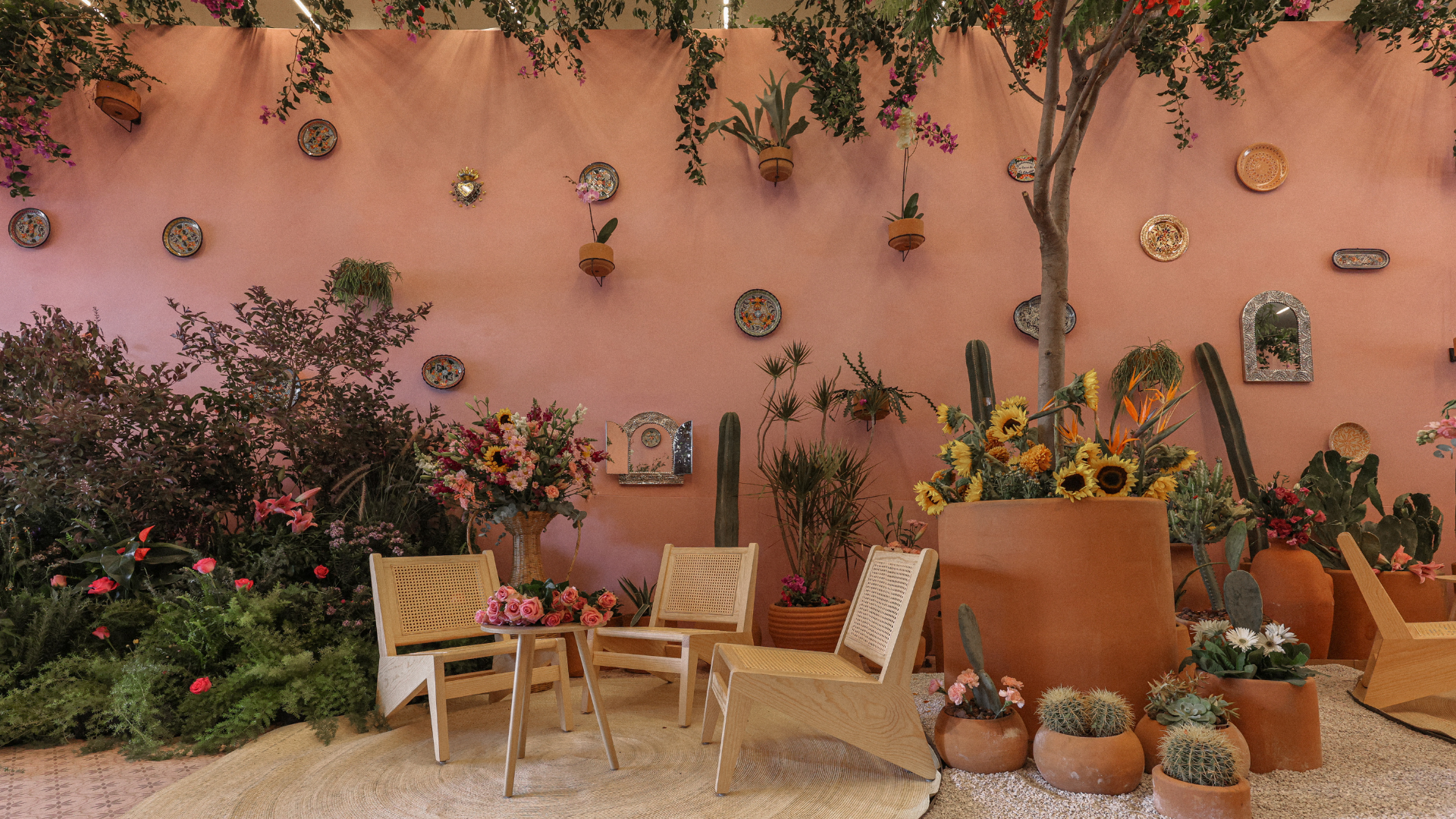
Sala de estar y flores, muro rosa con piezas de cerámica y macetas colgantes, macetas de diferentes tamaños de lado derecho/ Lounge area with flowers, pink wall featuring ceramic pieces and hanging planters, and clay pots of varying sizes on the right side
Fotografía/Photography: Pablo Manjarrez
Every design decision stemmed from that intention. The bougainvillea became the heart of the installation, because of the strength with which it inhabits the Mexican collective imagination. Around it, flowering species, aromatic herbs, and plants representative of our landscapes, such as the nopal and agave, created a familiar atmosphere through color, texture, and scent. Terracotta pots, gravel paths, ceramic pieces, furniture, and a pink wall, inspired by Mexican domestic architecture, accompanied the journey without imposing themselves upon it. Each element existed to awaken a memory.
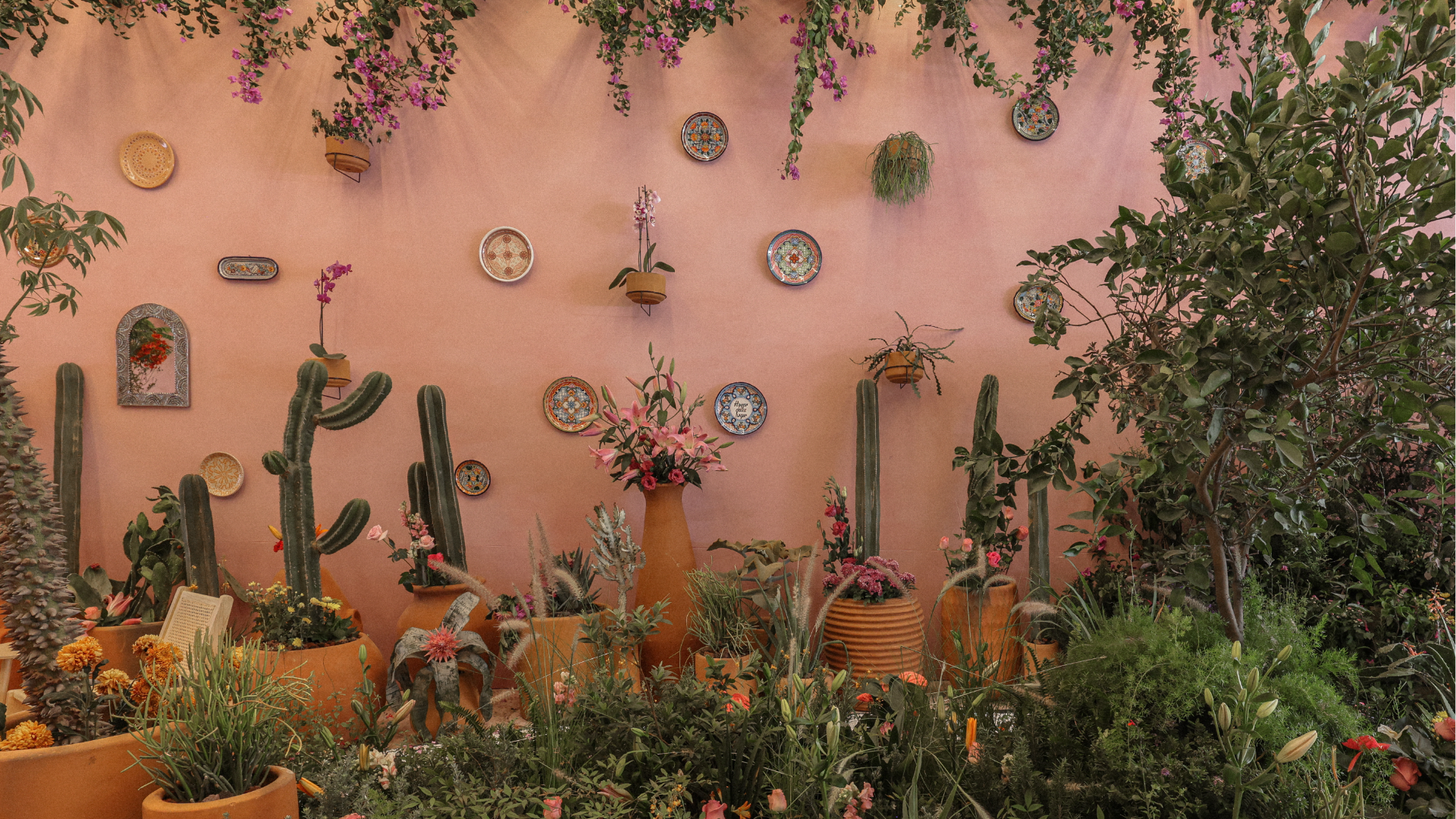
Muro rosa, bugambilias, macetas, follaje y paisaje. Todo en una imagen/ Pink wall, bougainvilleas, planters, foliage, and landscape. All in one image
Fotografía/Photography: Pablo Manjarrez
However, there was one element that, for us, held the soul of the project. From the very beginning, we knew the space also needed a voice. We wrote a text to accompany the journey, and when the time came to record it, we realized we didn’t want to hear just any voice. We wanted a familiar one, one capable of making us imagine what our own mother’s voice might sound like when she became a grandmother. We then transformed it to imagine how it might sound one day. As we listened to it, we thought that, with time, that voice would also become part of our memories. That was when we understood that to plant is also to care, with love, for the memories we are still creating.
We understood that to plant is also to care, with love, for the memories we are still creating.
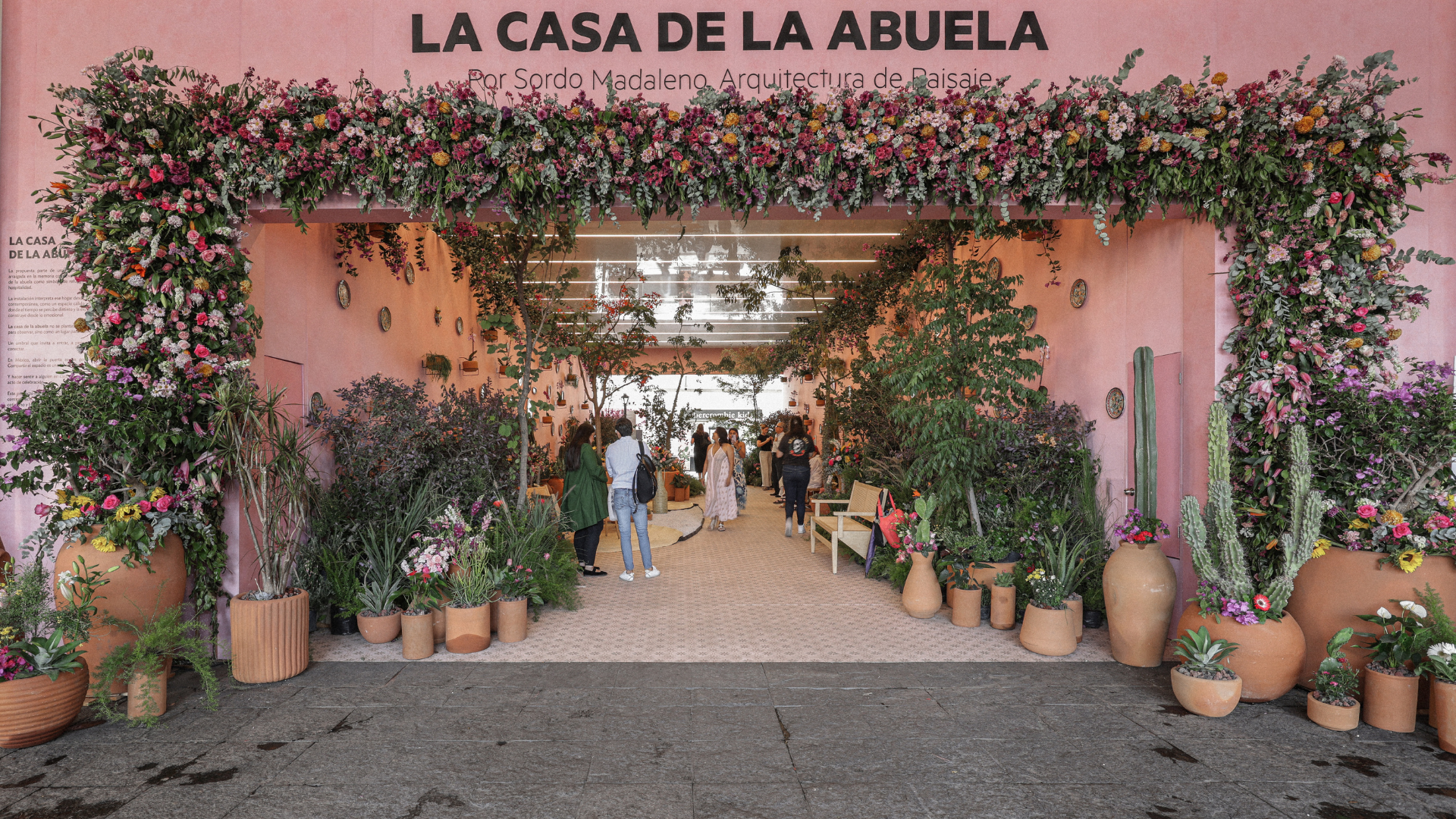
Acceso principal, arco floral, macetas de barro en diferentes tamaños y formatos/ Main access, floral arch, clay pots in different sizes and shapes
Fotografía/Photography: Pablo Manjarrez
During FYJA, many people approached us to share stories from their childhood, memories of their grandparents, or places they had thought were long forgotten. Some told us, through tears, that the journey had reminded them of their mother or grandmother; others, smiling, playfully blamed us for those very tears, as though we had opened a drawer of memories that had remained closed for years. In that moment, we realized the project no longer belonged to us. Each visitor completed it with their own story. In the end, we understood that this same intention is present in every project we create.
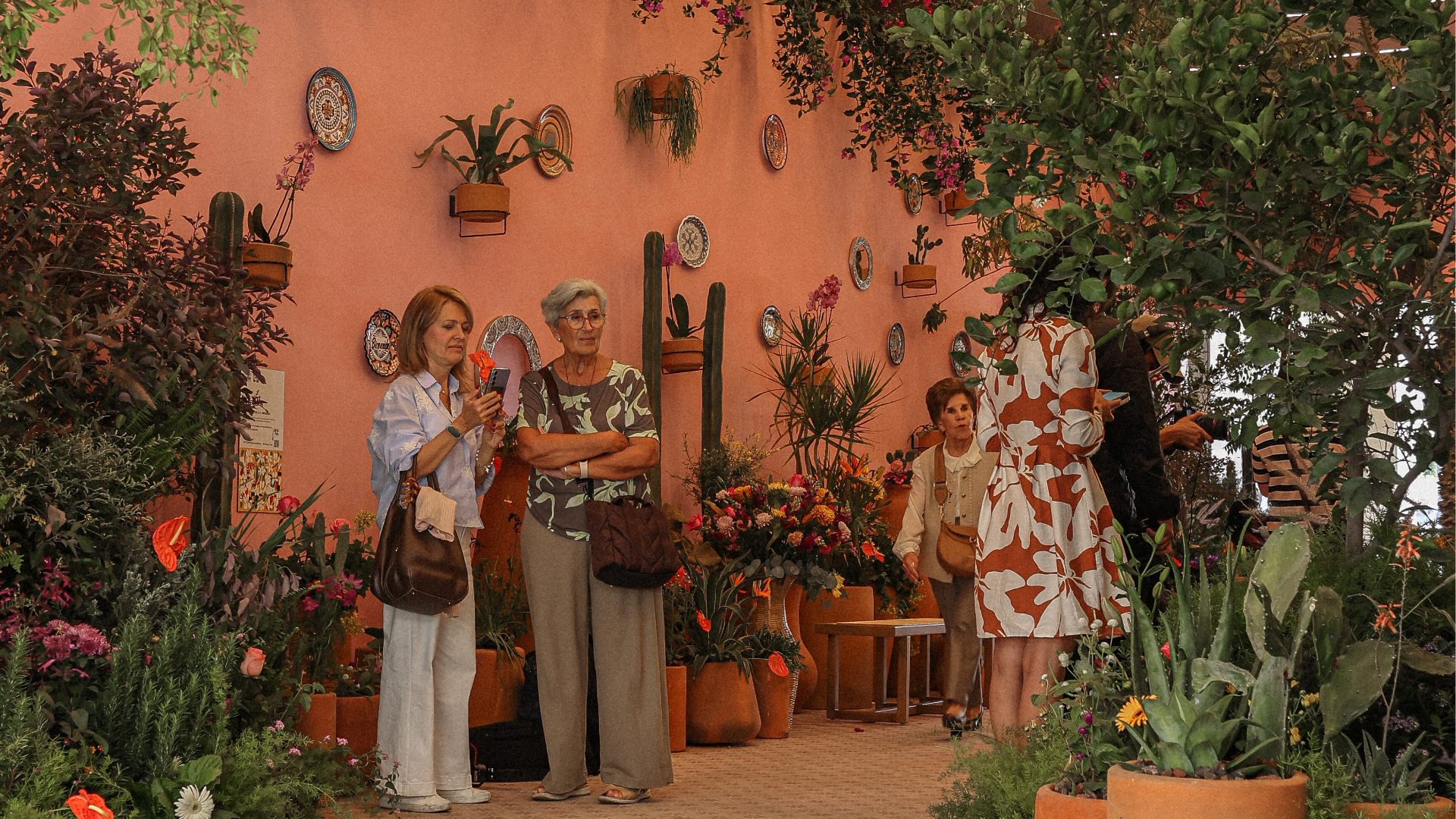
Abuelitas observando la instalación/ Grandmothers observing the installation
Fotografía/Photography: Pablo Manjarrez
In every space we imagine, there is a seed planted: the possibility of creating places that accompany people’s lives, embrace their stories, and, over time, become the setting for new memories. At Sordo Madaleno, we seek to design spaces that are not only meant to be experienced through movement, but truly lived: places capable of sowing experiences that, with the passage of time, will blossom as part of the memories of those who inhabit them, today and in the future.
In an edition dedicated to seeds, we came to understand that to sow was never only about planting. It was also about leaving a part of ourselves in a place, so that someone else could recognize themselves in it.
Sowing is more than planting; it is leaving a part of ourselves in a place, so that someone else may recognize themselves in it.
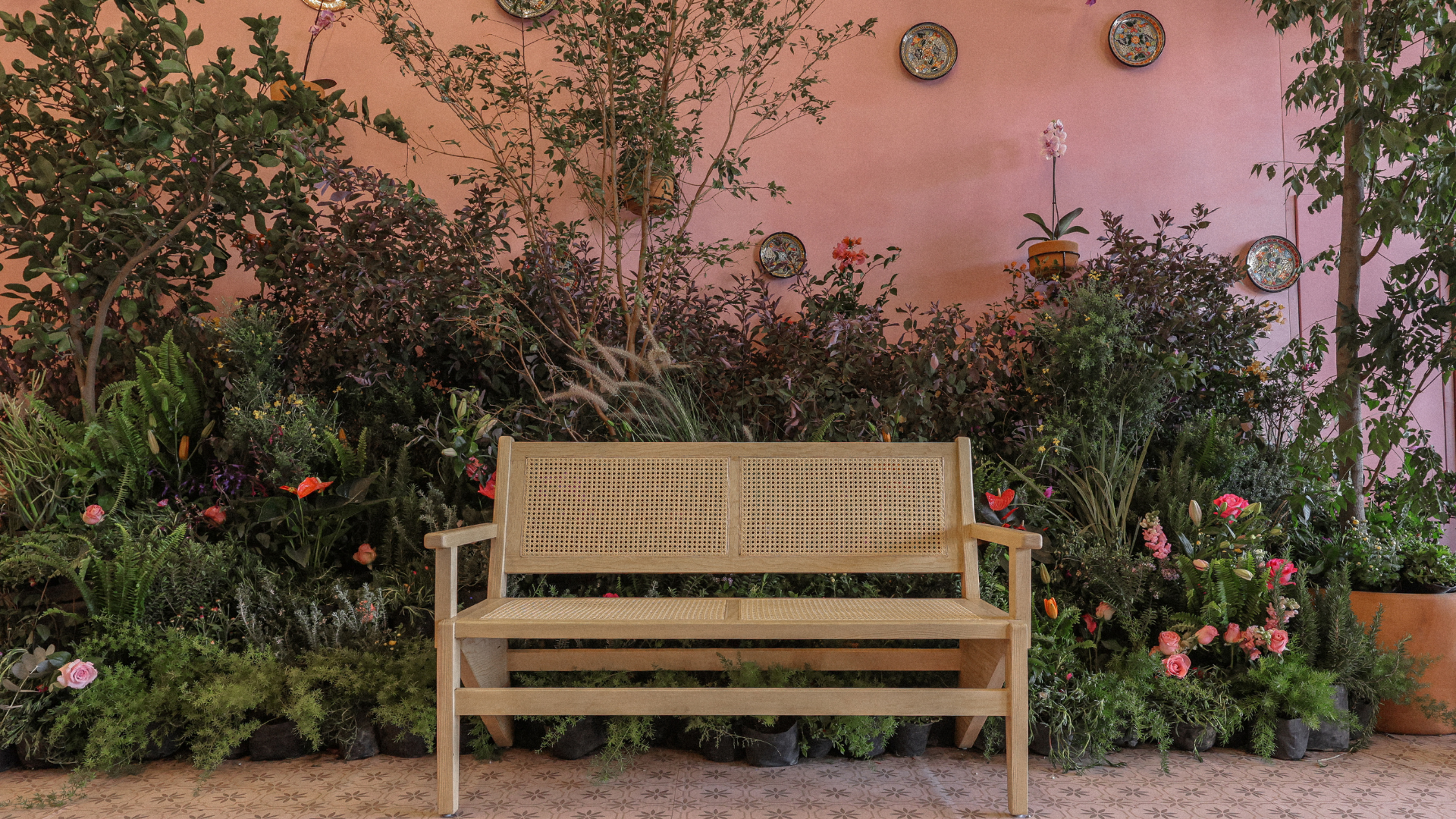
Banca de madera de frente, follaje y paisaje/ Front view of the wooden bench, foliage, and landscape
Fotografía/Photography: Pablo Manjarrez
Bio of the Studio:
Kassandra Mendívil, Paulina Acevedo, and Jessica Navarrete are members of the landscape architecture team at Sordo Madaleno. They share an approach to landscape rooted in observing, reading, and respecting the character of each place, creating spaces where nature and architecture engage in a sensitive dialogue with the people who inhabit them.


-10.28.24.jpg "Anunciate07-13-a-la(s)-10.28.24")

 13.26.42.png "Captura de Pantalla 2023-02-08 a la(s) 13.26.42")