

Cultivated Impermanence: Lots of Bulbs
Dietmar Straub and Anna Thurmayr invite us to explore Cultivated Impermanence: Lots of Bulbs, a horticultural intervention project developed at the University of Manitoba, Canada. The introduction of 18,500 spring-flowering bulbs gave rise to a vibrant seasonal display of color, texture, and plant diversity.
Landscape architects are choreographers of change. We work with living materials whose growth, flowering, decline, and renewal unfold over time. Over the past few years, fourteen grass species and purple prairie clover have transformed the land south of the John A. Russell Building, the Faculty of Architecture’s home at the University of Manitoba in Canada, into a dense native grassland.
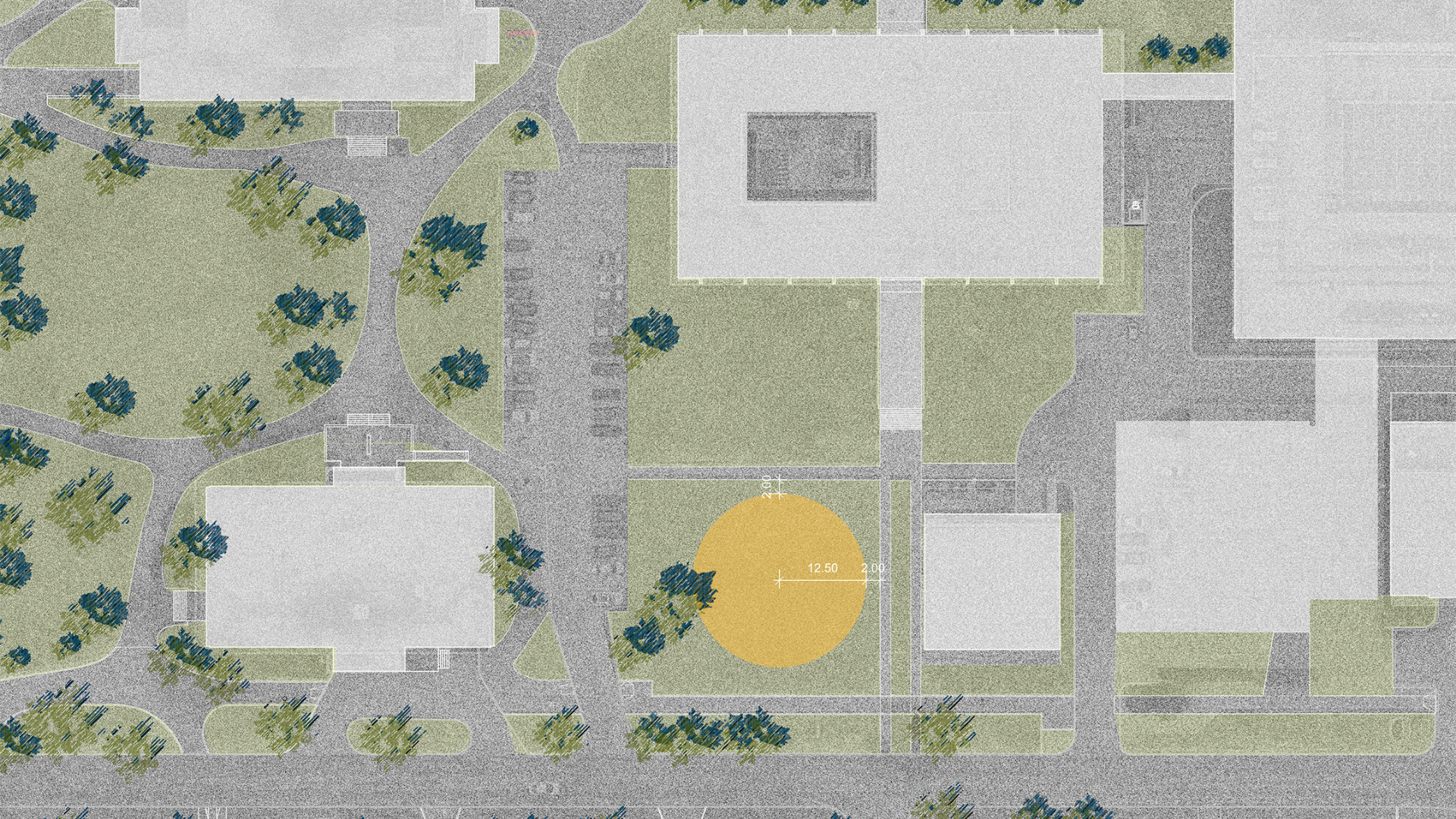
The Academic Circle/ El círculo académico
illustration/ Ilustración: Anna Thurmayr
In 2022, the Master of Landscape Architecture (MLA) program celebrated its fiftieth anniversary. This milestone prompted us to imagine how this young prairie landscape, prominently positioned along one of the campus’s principal arrival routes, might be temporarily enriched with colour and seasonal intensity, creating a shared moment of celebration for the wider campus community.
Lots of Bulbs emerged as a multifaceted design experiment and a contribution to this anniversary. 18,500 spring-flowering bulbs arrived on the Fort Garry campus in Winnipeg, Manitoba, after a long journey from the Netherlands. Their destination was a circle nested within the developing native prairie landscape south of the John A. Russell Building, a temporary intervention intended to explore the coexistence of introduced geophytes and a developing native prairie grassland.
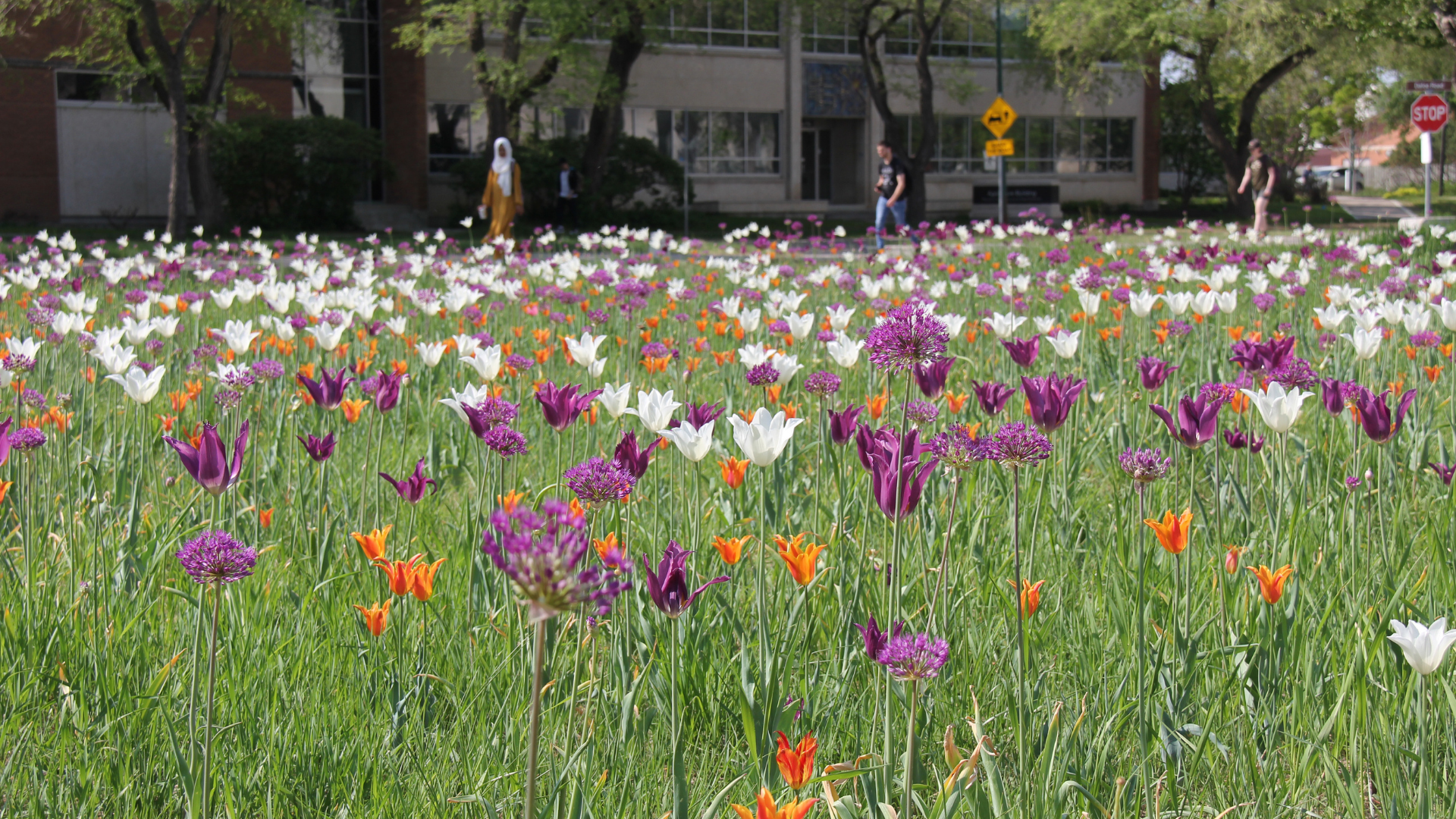
En Passant/ De paso
Photography/ Fotografía: Dietmar Straub
In October 2022 a horticultural activity was carried out. A 500-square-metre circle was precisely mown into the tall-grass prairie. The site was divided into 48 sections, each up to 12.5 square metres. Depending on the section size, between 300 and 500 bulbs were planted per area, collectively accounting for the entire shipment of bulbs, planted by many hands.
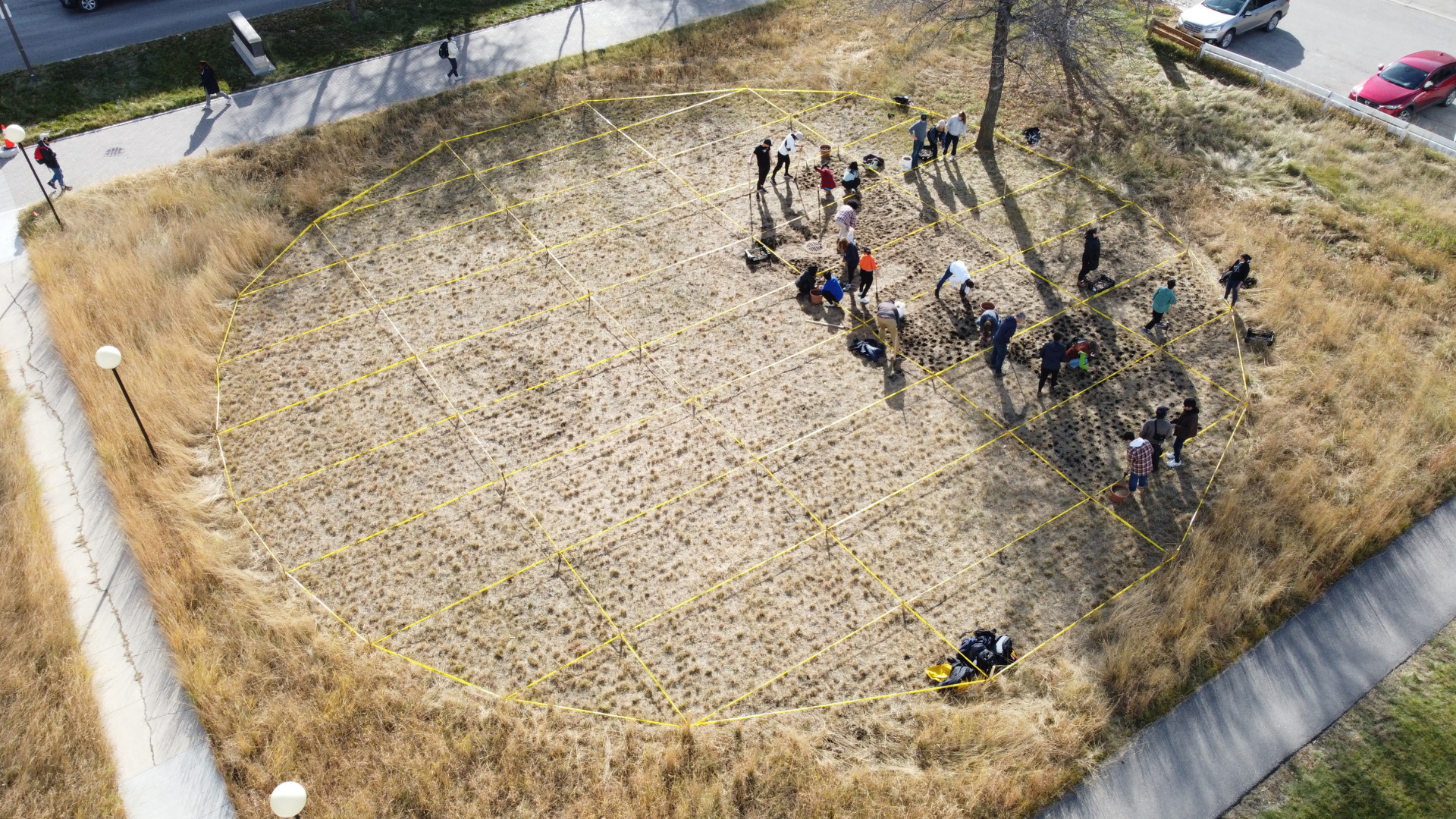
Planting community/ Sembrando comunidad
Photography/ Fotografía: Jonathan Watts
To ensure careful treatment of the prairie soil and root systems, a set of custom planting tools was developed. The tuLIPstick, a simple, back-friendly device with a wooden handle, metal tip, and foot bracket, was designed and manufactured for this task. Shortly after planting, a blanket of snow covered the site. Over the long winter that followed, Lots of Bulbs gradually receded from view, falling into seasonal oblivion.
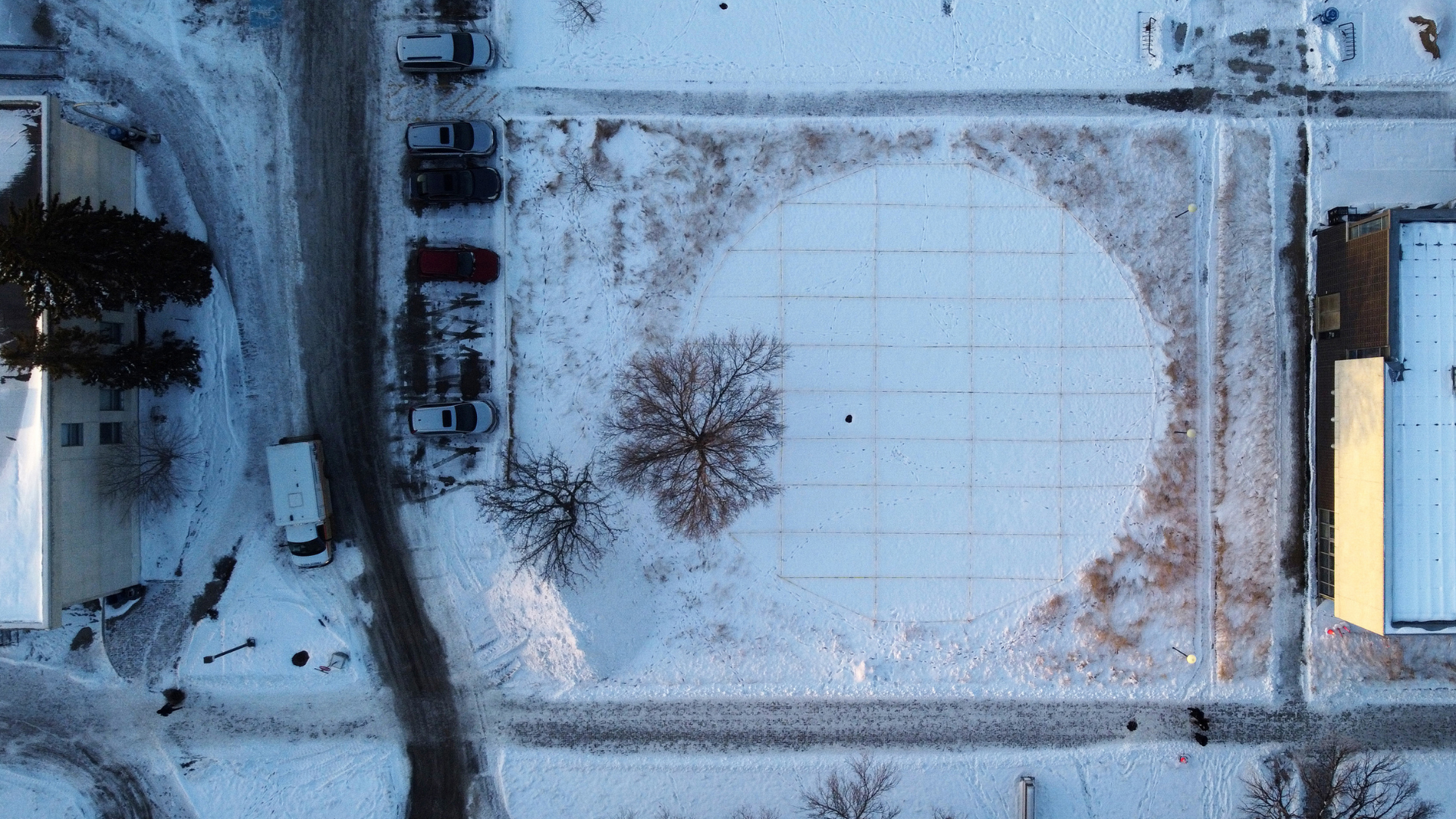
Hibernating Beauty/ Belleza en hibernación
Photography/ Fotografía: Zhenggang Li
Winters are long in our prairie climate, and springtime always feels too short. With growing impatience, we waited for the snow to melt. The breathtaking display of spring-flowering bulbs began with the summery temperatures at the end of April 2023. After a late snowfall, the first shoots started nosing their way through the soil. At first, they seemed shy and hardly noticeable to uninitiated visitors, but gradually more of them emerged and made public appearances.
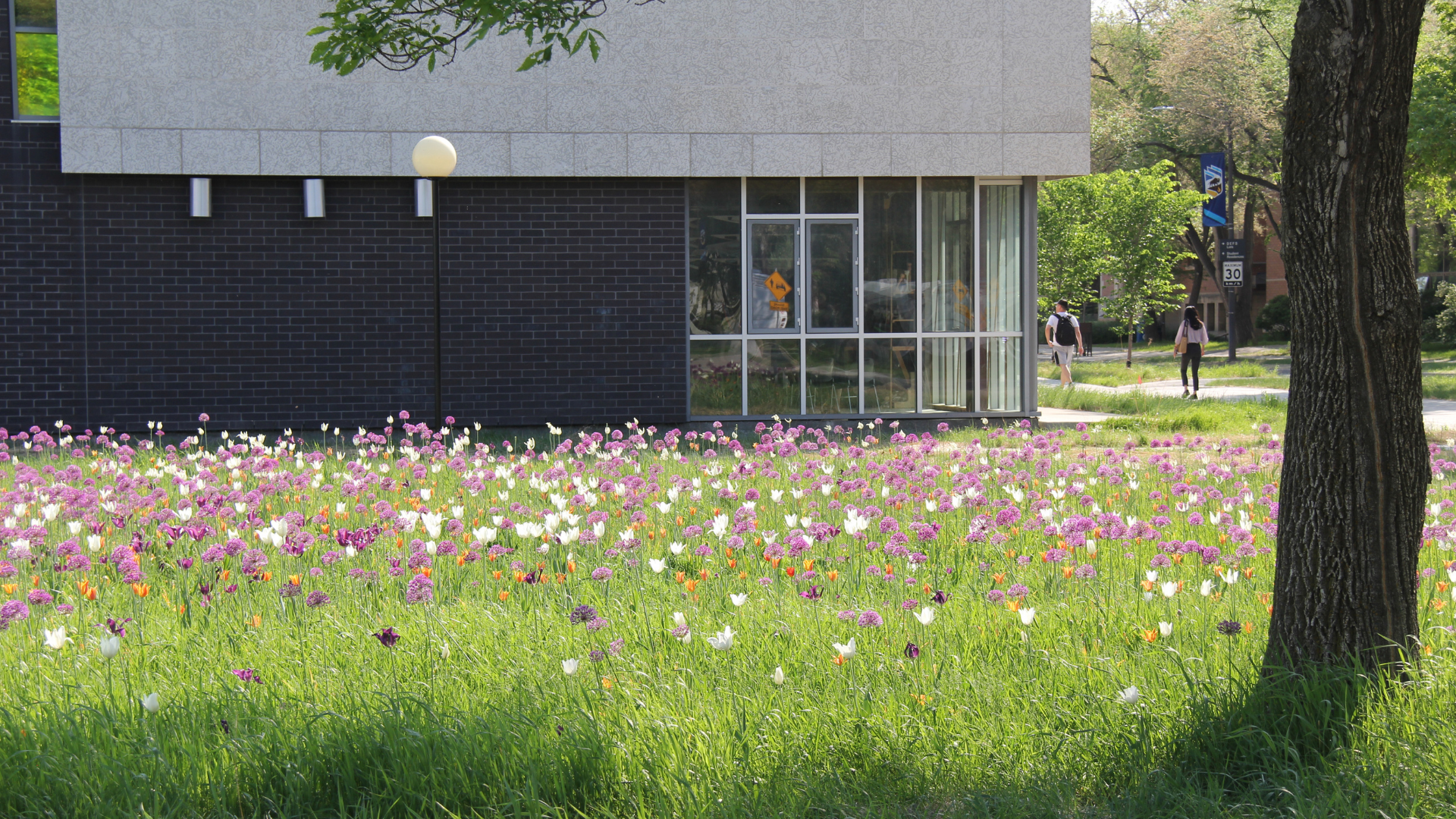
Limelight/ En el centro de atención
Photography/ Fotografía: Dietmar Straub
The lily-flowered tulip ‘Purple Dream’ opened the festival season with its vivid purple blossoms. Gradually, the other bulbs joined the ensemble. Just a few days after the initial bloom, the tulips ‘White Triumphator’ and ‘Ballerina’ pirouetted throughout the meadow in a vibrant duet of white and tangerine. Following this spectacular prelude, Allium ‘Purple Sensation’ joined the performance in the last week of May, transforming the circle into a firework of colour and texture.
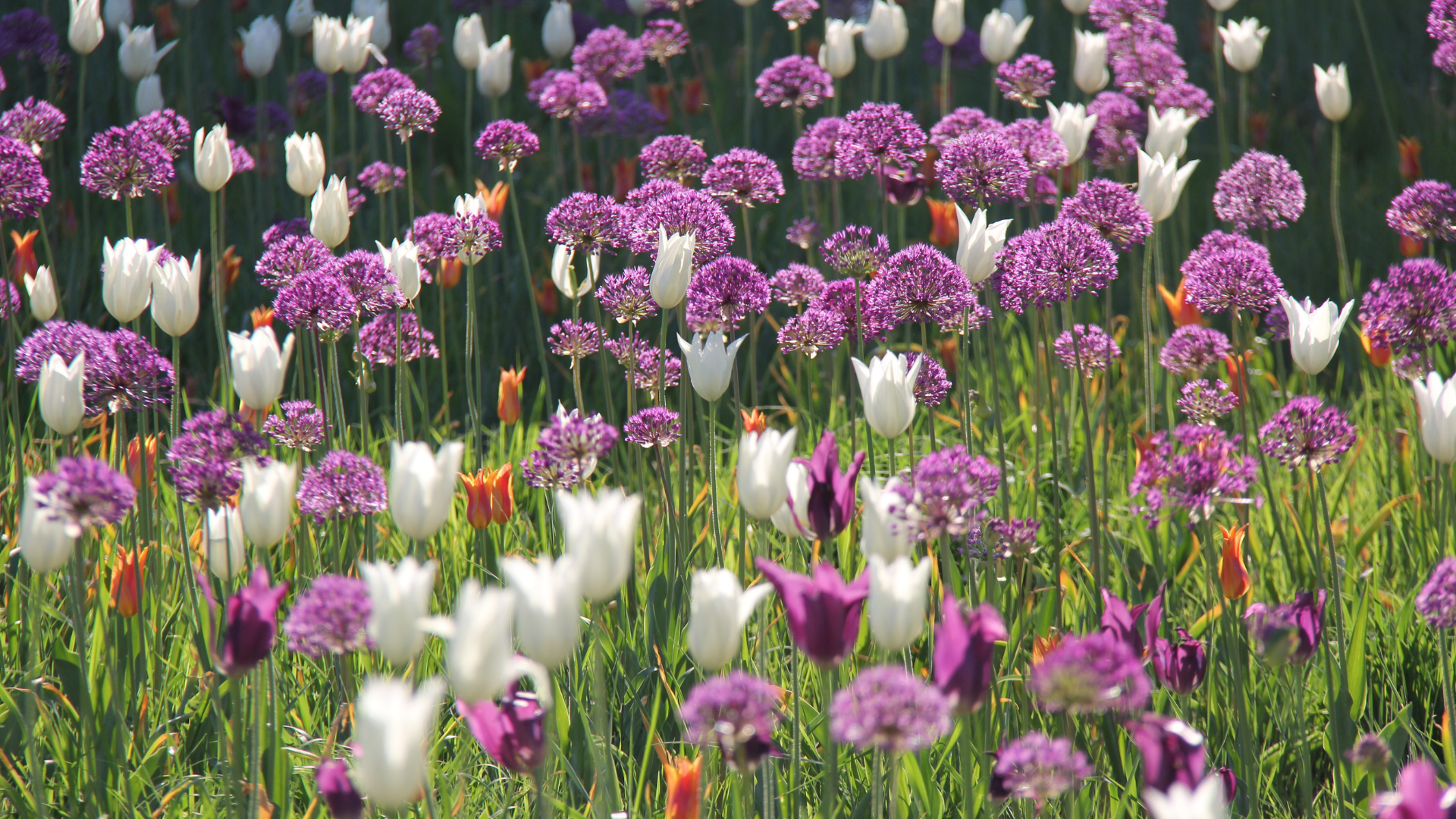
Tricolour and Chlorophyll/ Tricolor y clorofila Photography/ Fotografía: Dietmar Straub
Within a few days, the tulips’ colours gradually faded, setting the stage for the alliums to become the leading actors. Their deep purple globes towered over the slumbering prairie grasses and the sky-blue, star-shaped flowers of Camassia quamash, which emerged across the lower grassland layer. The vibrant green of the grasses within the 500-square-metre circle complemented the colourful spectacle.
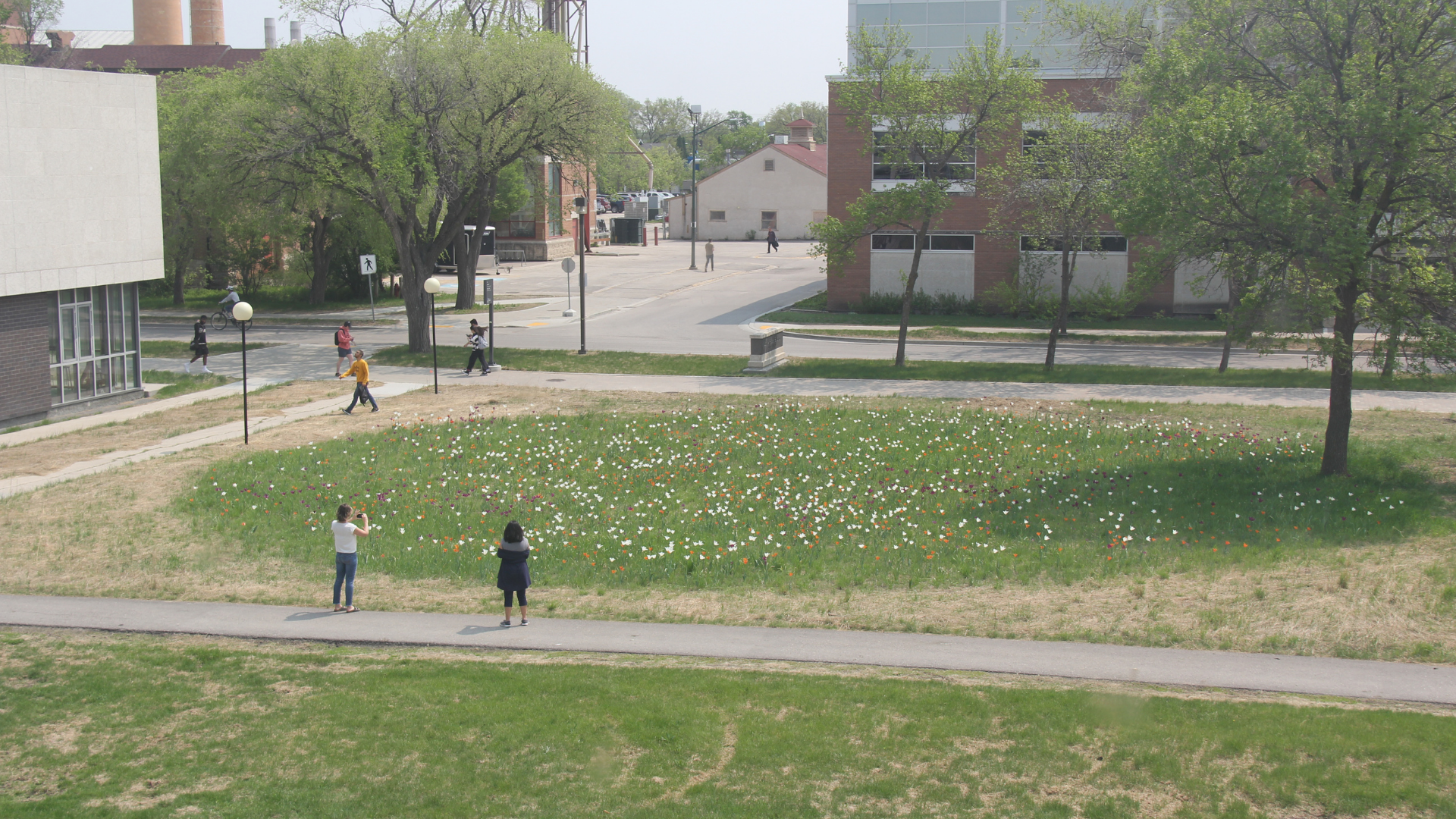
Full Circle/ Círculo completo
Photography/ Fotografía: Dietmar Straub
As we had hoped, the October mowing acted as a rejuvenating treatment. Before the prairie grasses fully developed, Allium nigrum, a white-flowering onion known as black garlic, completed the floral succession. The skeletal remains of the tulips and alliums lingered after flowering, while the prairie grasses matured throughout the summer. The elegant petals and delicate hearts of the tulips, alliums, and Camassia proved a delight to both people and pollinators. The burst of colour lasted only a few precious weeks, making it all the more appreciated by passersby, who paused to admire, photograph, and engage with the display.
Instagrammability was never an explicit goal of the project; however, there was hope that this floral celebration of the MLA program’s anniversary, expressed through plants and pollinators, would attract students and visitors, and resonate beyond campus. Lots of Bulbs became one of the most photographed landscapes on campus in 2023, generating a dense field of narrative imagery. The circulation of these images across various media channels extended the project’s reach, drawing attention to landscape architecture and the MLA program at the University of Manitoba.
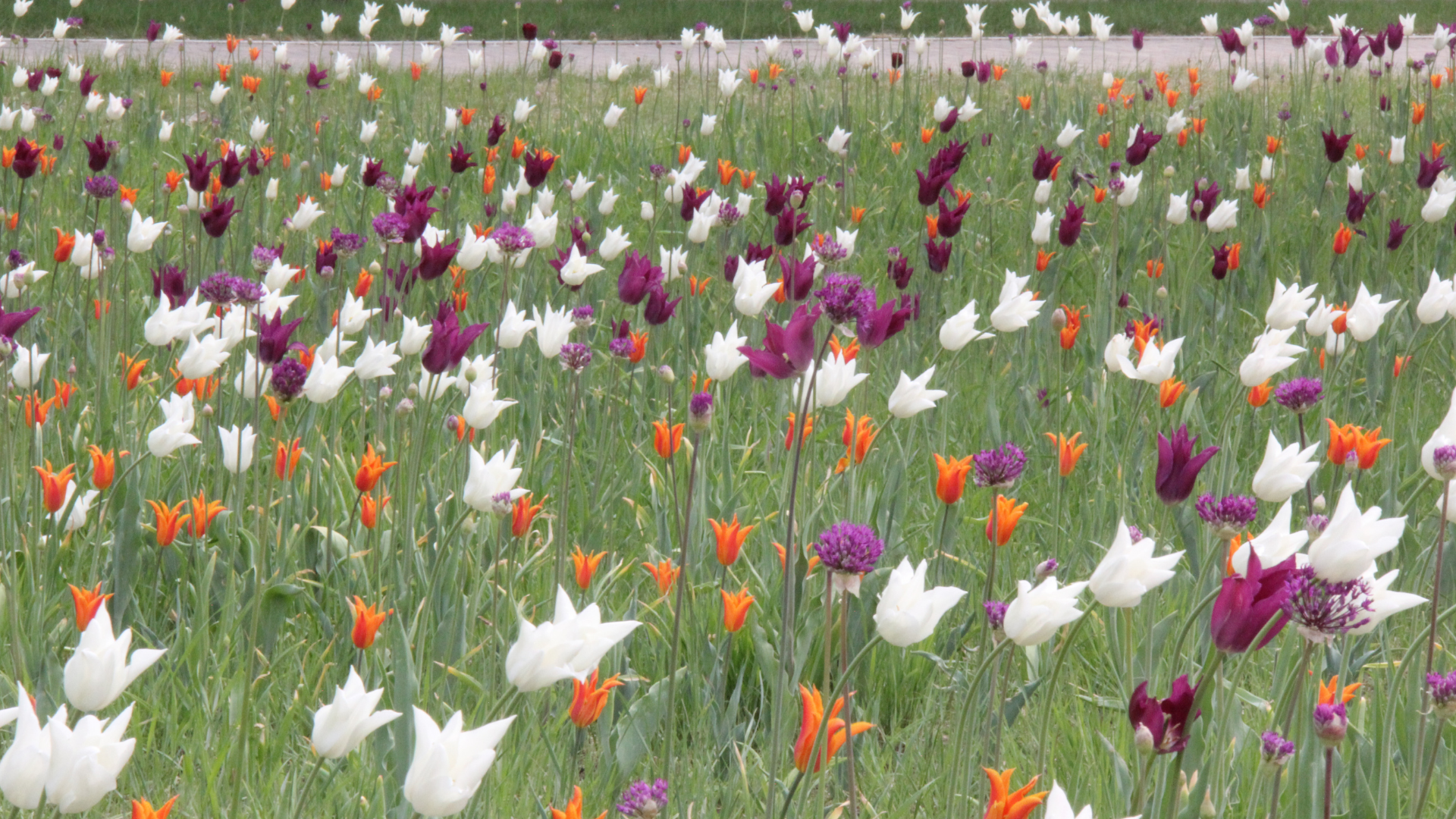
Pirouetting with the Wind/ Pirueteando con el viento
Photography/ Fotografía: Dietmar Straub
Authors profile:
Dietmar Straub is a landscape architect and urban designer, professor at the University of Manitoba’s Department of Landscape Architecture, and co-founder of Straub Thurmayr Landscape Architects.
Anna Thurmayr is a landscape architect, professor at the University of Manitoba’s Department of Landscape Architecture, and co-founder of Straub Thurmayr Landscape Architects.
They like to think their designs never succumb to dogmatism or formalism but rather provide humour, irony, sarcasm, and perhaps even poetry. Their golden rule is to find beauty in chlorophyll, spontaneity, and imperfection.


-10.28.24.jpg "Anunciate07-13-a-la(s)-10.28.24")

 13.26.42.png "Captura de Pantalla 2023-02-08 a la(s) 13.26.42")