

Casa K’ankab
Casa K’ankab is a 662 m² residential project, designed by Taller de Arquitectura Reyes Rosiñol in collaboration with Andrea Páez in 2025. Located in the town of Chicxulub, in the state of Yucatán, Mexico, this work establishes a profound connection with the landscape, where the intrinsic relationship between nature and inhabiting is materialized through a hexagonal grid, monolithic geometric elements, and openings that frame the natural surroundings.
Within a Dzidzilché forest, and with the intention of disturbing the existing landscape as little as possible, a hexagonal grid was laid out to rigorously preserve the existing vegetation footprint while defining the placement of the house. Beyond representing one of nature’s most efficient structural geometries, this pattern directly references bees—the primary pollinators of the Dzidzilché flower—establishing both a symbolic and structural connection with the surrounding environment.
Casa K’ankab: residential architectural design that articulates a symbolic and structural connection with the natural environment
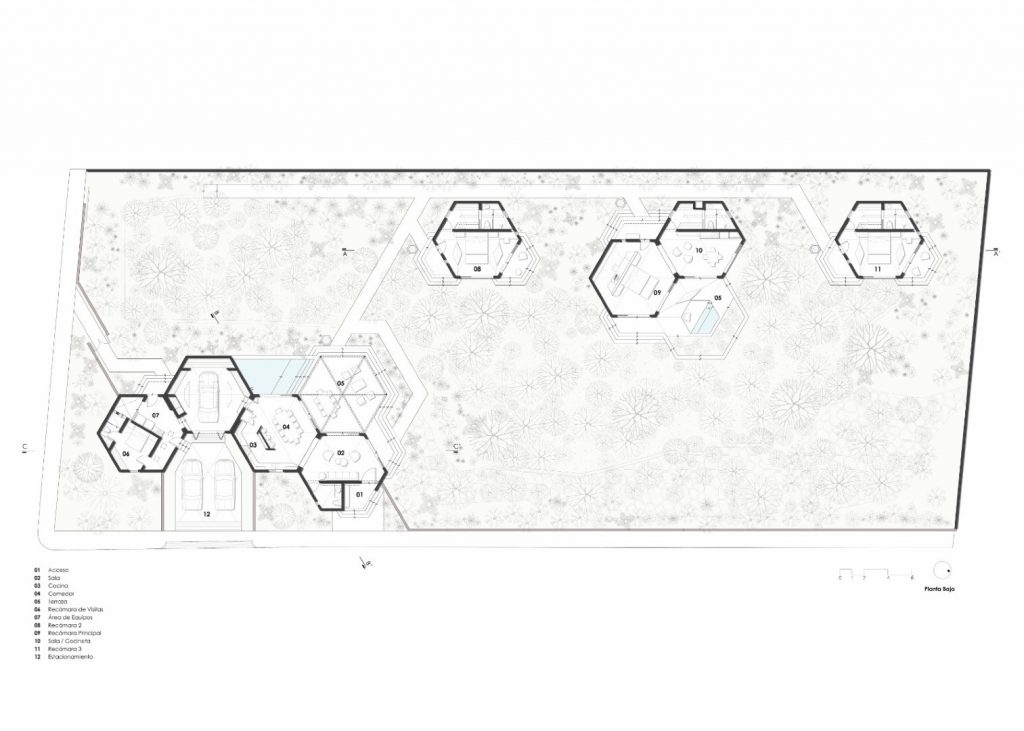
Planta arquitectónica se traza a partir de una retícula hexagonal que identifica los claros libres de vegetación, logrando el mínimo impacto sobre el bosque de Dzidzilché existente/ The architectural plan is laid out from a hexagonal grid that identifies vegetation-free clearings, achieving the minimum impact on the existing Dzidzilché forest
Fotografía/Photography: Taller de arquitectura Reyes Rosiñol
Due to the dense vegetation, the house disperses across the site, seeking out clearings of light; thus, bodily paths intertwine with the forest, and views traverse the space. The result is a garden that contains a house, rather than a house that contains a garden.
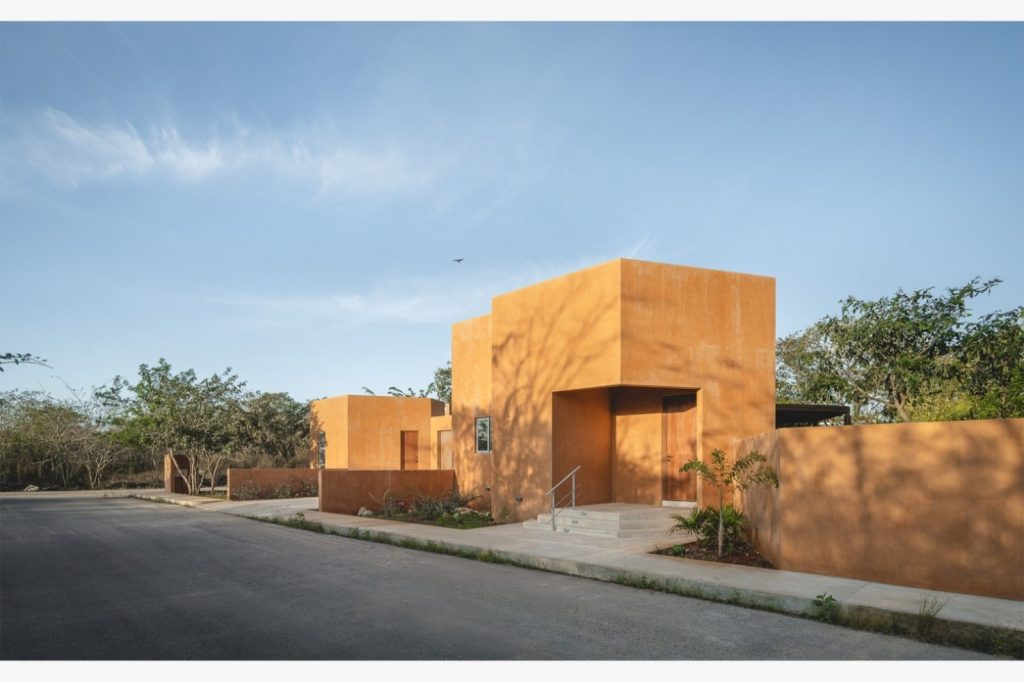
Sobre la tierra roja del K’ankab, los volúmenes se elevan a diferentes alturas, expresando la jerarquía y vocación de cada espacio/ Above the red K’ankab soil, the volumes rise to different heights, expressing the hierarchy and vocation of each space
Fotografía/Photography: Manolo R. Solís
The volumetry, composed of monolithic geometric elements, appears to emerge from the ground through a monochromatic materiality that evokes the color of the region’s red earth —K’ankab—. The openings are arranged to frame the landscape, dissolving the threshold between the interior and the exterior and reinforcing the intrinsic relationship between nature and dwelling. The interior scale of the volumes creates a thermally comfortable microclimate and a space of silence, thereby enhancing the experience of communion with the natural surroundings.
Monolithic geometry and monochromatic materials that frame the natural landscape of the K’ankab region
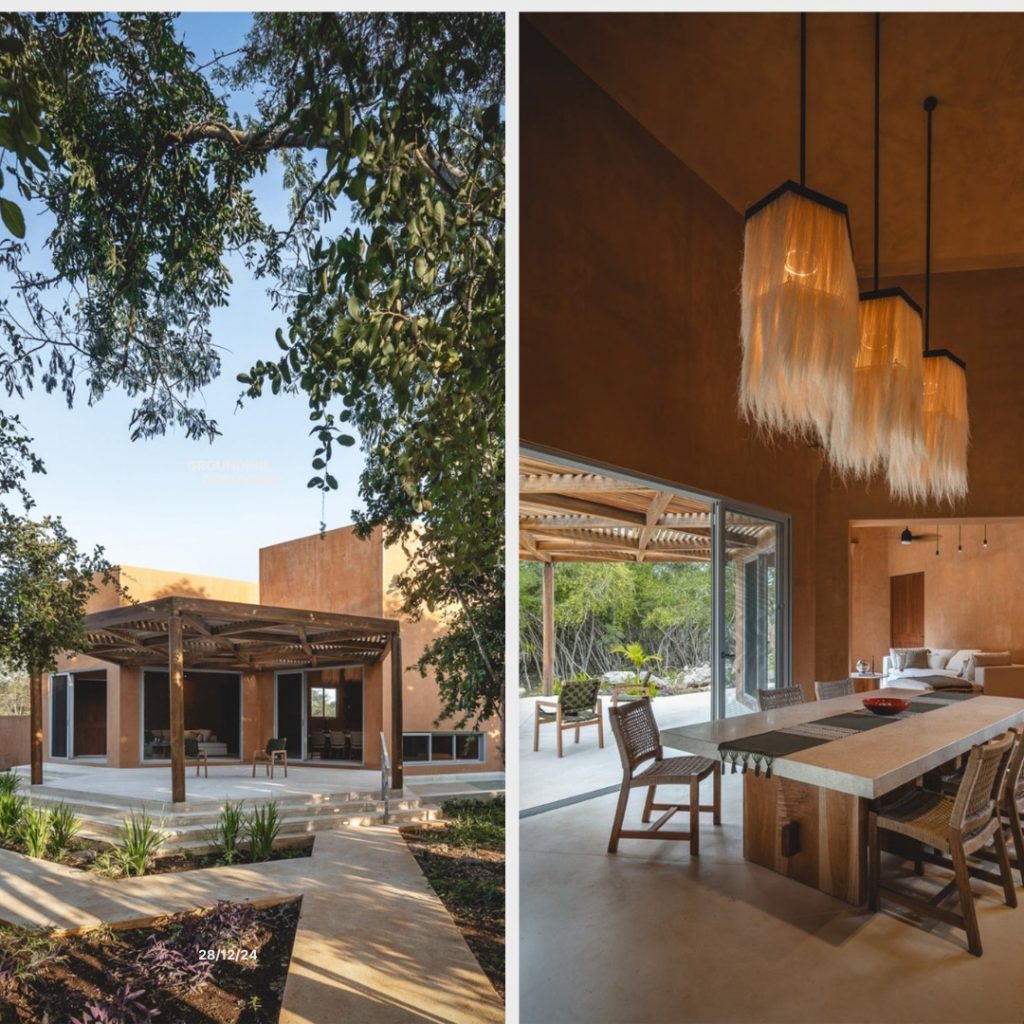
El proyecto promueve una integración entre el paisaje y el habitar/ The project promotes an integration between the landscape and the act of inhabiting
Fotografía/Photography: Manolo R. Solís
The reforestation of the few arid areas was encouraged through the incorporation of endemic species and bodies of water, thereby fostering local biodiversity. To preserve the urban image, a low wall was designed to establish a visual boundary without obstructing the perception of the interior forest. Likewise, a void was left at the corner of the site, creating a connection between the adjoining streets and enhancing the volumetry, conceived as a sculptural element integrated into the landscape.
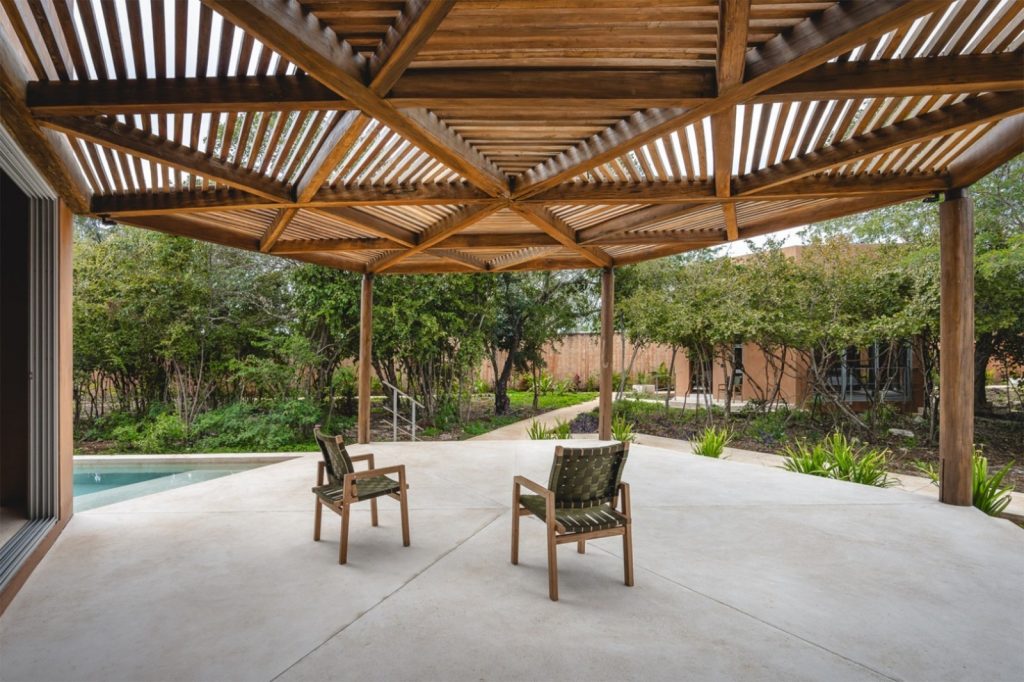
Conservación de la biodiversidad local mediante una aproximación de diseño que reconoce y respeta las preexistencias del sitio/ Conservation of local biodiversity through a design approach that acknowledges and respects the site’s existing conditions
Fotografía/Photography: Manolo R. Solís
Team profile
At Reyes Rosiñol, through the design of integrated projects, we seek to contribute to improving the quality of life of people and their surroundings. Our goal is for every project to reflect a sensitive and respectful architecture, committed to the design process and to its social and environmental impacts.


-10.28.24.jpg "Anunciate07-13-a-la(s)-10.28.24")

 13.26.42.png "Captura de Pantalla 2023-02-08 a la(s) 13.26.42")