
Languages of Water: Water as a Landscape of Encounter in the Finnish Lakeland Region
In Languages of Water: Water as a Landscape of Encounter in the Finnish Lakeland Region, Iván Juárez (x-studio) invites us to reflect on the relationships between water, territory, and life, exploring how aquatic landscapes foster environmental awareness, collective memory, and forms of coexistence among the diverse forms of life that inhabit the territory.
Languages of Water explores the connections between water and territory within the landscape of the Finnish Lakeland Region, considered the largest lake district in Europe. This network of lakes, rivers, wetlands, and forests shapes a territory where water plays a fundamental role in ecological processes, biodiversity, and everyday life. Throughout the different seasons of the year, the transitions between the liquid and solid states influence this territory, manifesting themselves in the dynamics of species, human activities, and relationships with the environment.
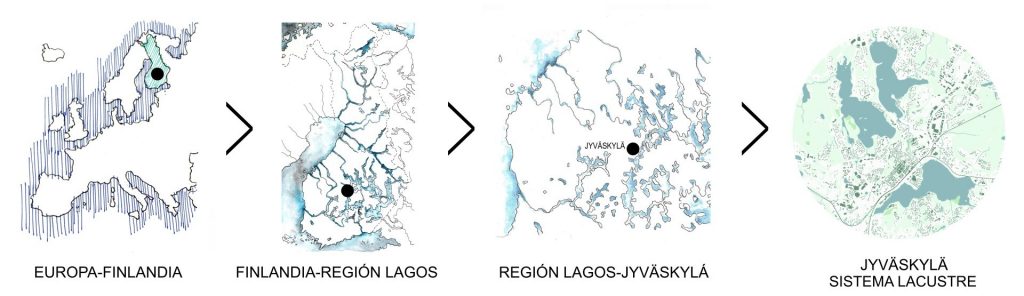
Secuencia de escalas territoriales que muestra la localización de Jyväskylä en Finlandia, dentro de la Región de los Lagos y en relación con su sistema lacustre/ Sequence of territorial scales showing the location of Jyväskylä in Finland, within the Lakeland Region and in relation to its lake system
Fotografía/Photography: Iván Juárez
At the heart of this region lies Jyväskylä, a city closely connected to Lakes Jyväsjärvi, Tuomiojärvi, and Palokkajärvi. This lake system plays a fundamental role in the territorial structure and everyday life of the city. The lakes serve as spaces for gathering and connecting with the landscape, contributing to the physical and emotional well-being of their inhabitants while also supporting a great diversity of species and habitats. These bodies of water connect urban environments, forested areas, wetlands, and ecological corridors, forming part of a broader environmental network.
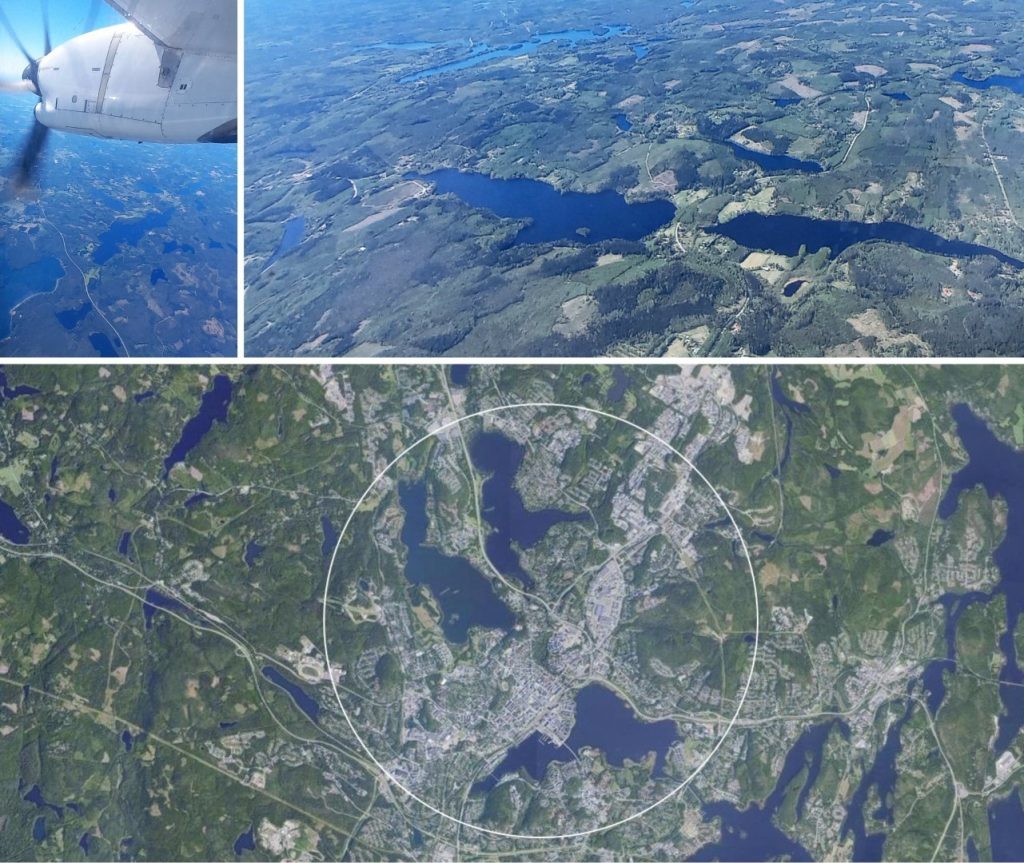
Vista aérea de la Región Finlandesa de los Lagos y fotomapa de Jyväskylä, destacando la presencia de lagos como elemento estructurante del territorio/ Aerial view of the Finnish Lakeland Region and orthophoto map of Jyväskylä, highlighting the presence of lakes as a structuring element of the territory.
Fotografía/Photography: Iván Juárez
Restoration Processes
The relationship between the city and its lakes also reflects processes of environmental transformation that have taken place over recent decades. Various bodies of water that had been affected by industrial activities, particularly by the timber industry, have undergone ecological restoration, enabling the recovery of hydrological dynamics, the improvement of environmental quality, and the return of biological communities and habitats. These processes have reinforced the role of the lakes as active ecological systems that are fundamental to the city’s urban configuration.
Environmental restoration processes strengthen the role of lakes as essential ecological elements in the urban landscape.
Seasonal Rhythms
As the seasons change throughout the year, the relationships between the lakes, the city, and its inhabitants are constantly transformed. During the summer, the lakes become central settings for numerous activities that are part of the social and recreational dynamics of the local population. In winter, the formation of ice alters the uses, routes, and ways of inhabiting these landscapes, expanding the possibilities for interaction with the environment. At the same time, seasonal rhythms influence ecological cycles, bird migration routes, and the dynamics inherent to aquatic ecosystems.
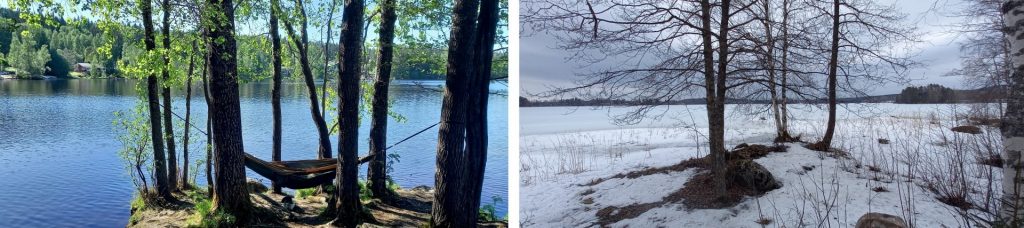
Estacionalidades de los lagos de Jyväskylä: paisaje lacustre durante el verano y el invierno/ Seasonalities of the lakes of Jyväskylä: lake landscapes during summer and winter
Fotografía/Photography: Iván Juárez
Project Framework
From these concepts emerges Languages of Water, a project developed at the University of Jyväskylä during a research stay. The project examines how aquatic landscapes can foster the development of environmental awareness, shared narratives, and forms of coexistence between communities and ecological systems. From this perspective, lakes are understood as shared spaces where ecological processes and experiences connected to the territory converge. Their cycles and seasonal transformations reveal the relationships that connect biodiversity, culture, and urban life.
The project examines how aquatic landscapes can foster the development of environmental awareness, shared narratives, and forms of coexistence between communities and ecological systems.
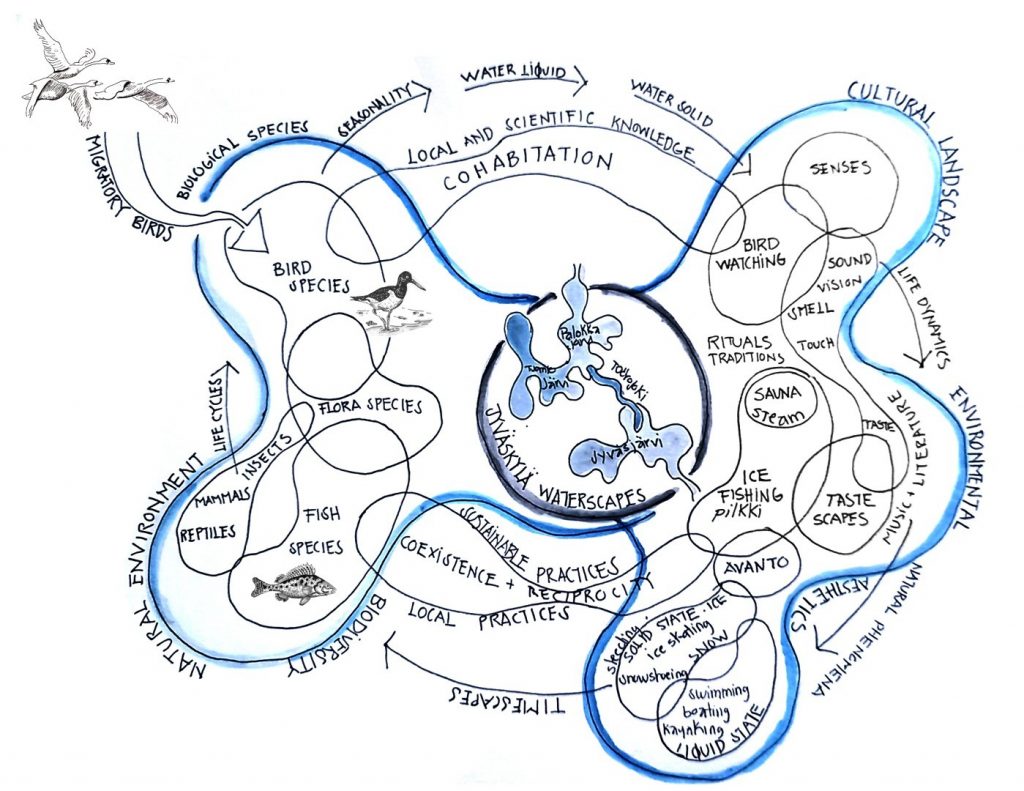
Diagrama conceptual de coexistencia en los lagos de Jyväskylä, que integra especies biológicas, dinámicas estacionales, prácticas culturales y conocimientos locales relacionados al agua/ Conceptual diagram of coexistence in the lakes of Jyväskylä, integrating biological species, seasonal dynamics, cultural practices, and local knowledge related to water
Fotografía/Photography: Iván Juárez
Listening to the Languages of Water
The research was carried out through in situ walks and mapping, complemented by interviews with researchers, biologists, specialists in environmental philosophy, and members of local communities dedicated to birdwatching. These walks and encounters, conducted at different times of the year, made it possible to understand how the lakes articulate relationships between species, habitats, and local communities, as well as the importance of ecological restoration for the recovery of biodiversity. In this way, water, ice, atmospheric conditions, and the movements of species reveal how seasonal transformations modify ecological dynamics and the ways in which these aquatic landscapes are perceived.
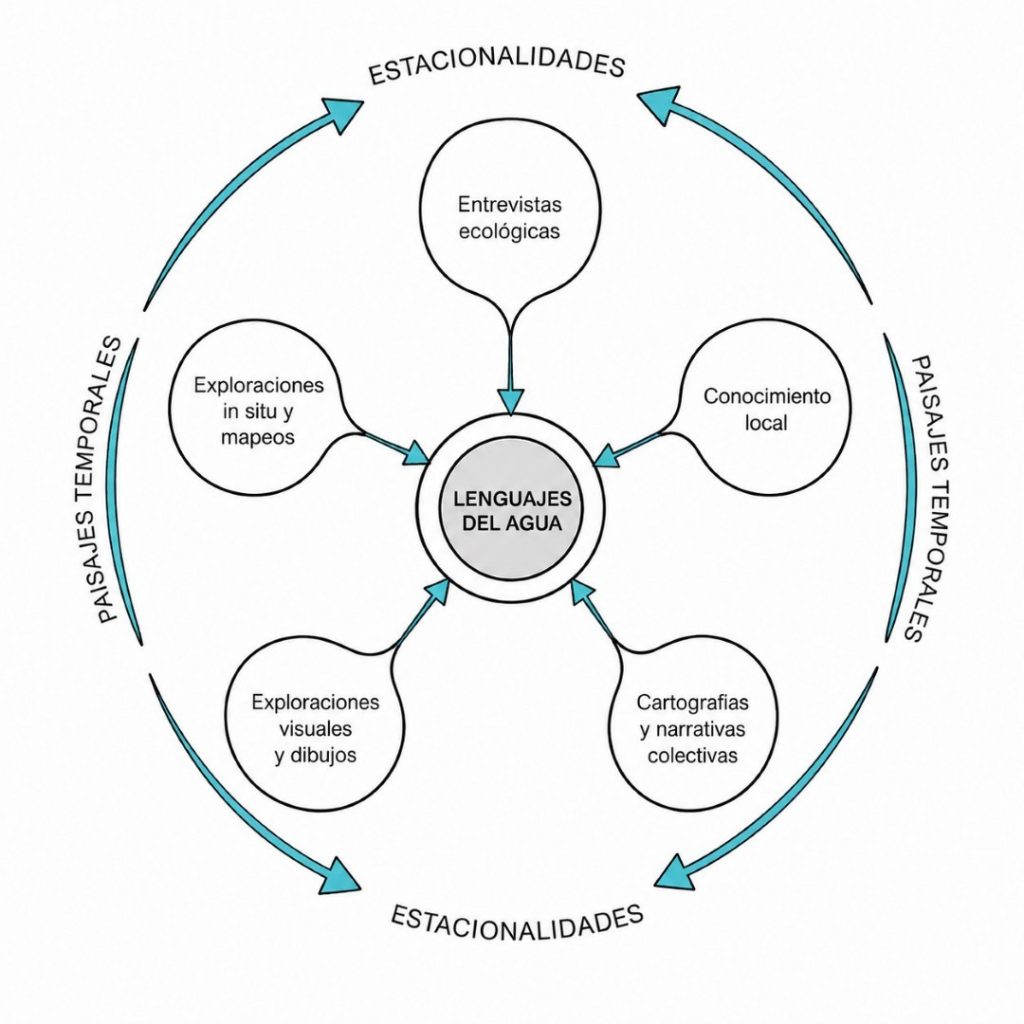
Esquema metodológico del proyecto Lenguajes del Agua/ Methodological framework of the Languages of Water project
Fotografía/Photography: Iván Juárez
Inhabiting Water: Visual Records
As part of the process, the main characteristics of the biodiversity of lake environments were identified, including birds, fish, and mammals, whose species were subsequently studied and represented through a series of drawings that explored their relationships with the surrounding environment.
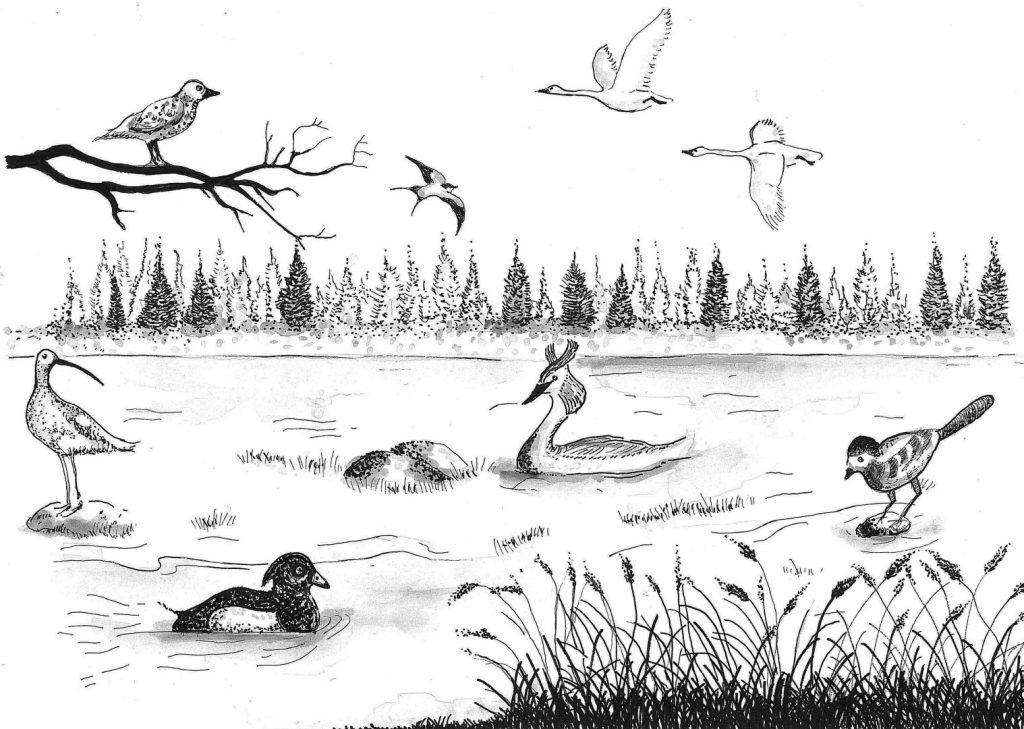
Representación visual del ecosistema lacustre mediante dibujos a tinta/ Visual representation of the lake ecosystem through ink drawings
Fotografía/Photography: Iván Juárez
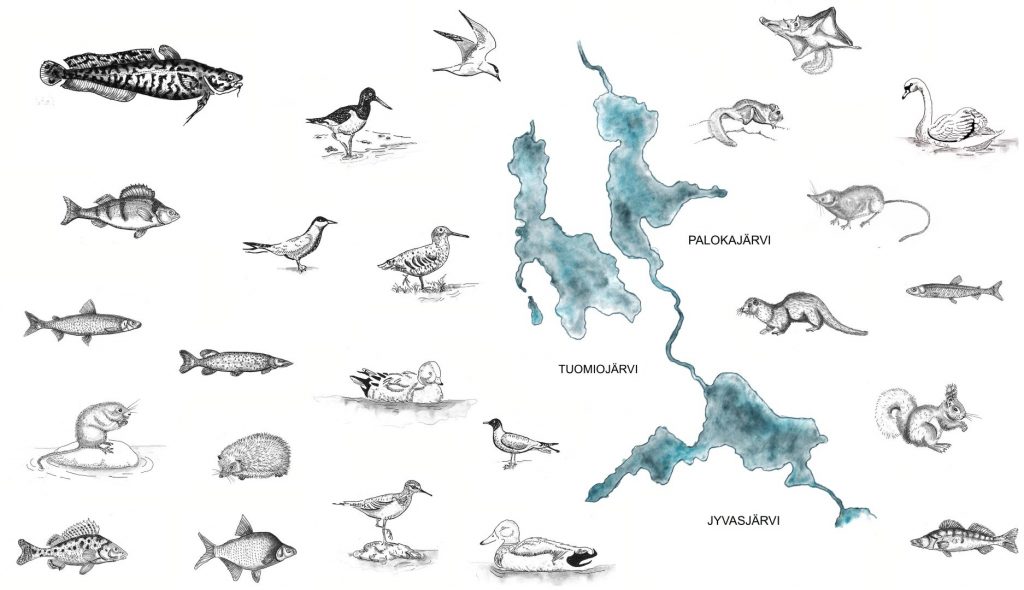
Cartografía ilustrada de especies asociadas a los lagos de Jyväskylä, realizada mediante técnicas de tinta y acuarela/ Illustrated cartography of species associated with the lakes of Jyväskylä, created using ink and watercolor techniques
Fotografía/Photography: Iván Juárez
Likewise, the activities associated with the lakes during different seasons of the year were identified, and representations were developed of practices such as swimming, kayaking, sauna bathing, and other water-related activities, as well as winter practices including skiing, ice skating, ice fishing, and ice swimming, incorporating details about the ways in which the lake landscape is used, occupied, and experienced throughout the year.
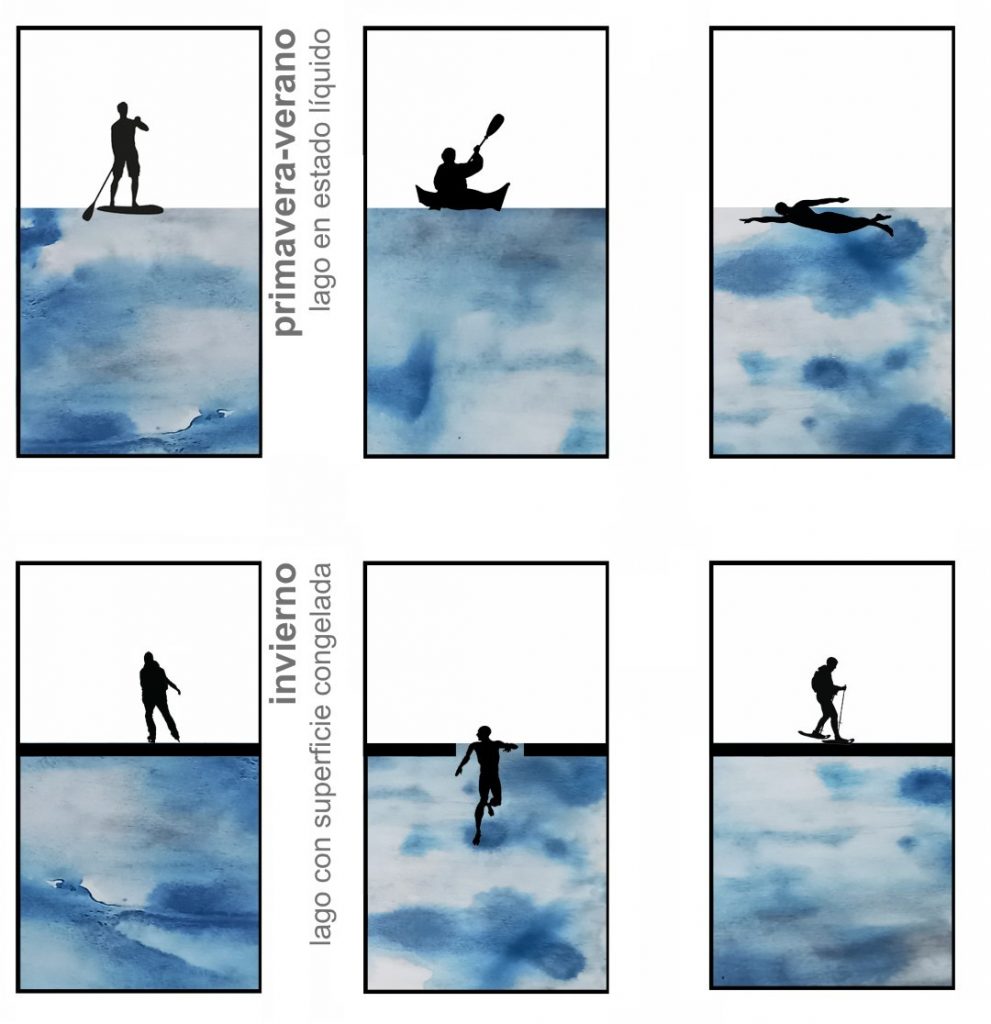
Actividades desarrolladas en los lagos de Jyväskylä durante distintas estaciones del año/ Activities taking place in the lakes of Jyväskylä during different seasons of the year
Fotografía/Photography: Iván Juárez
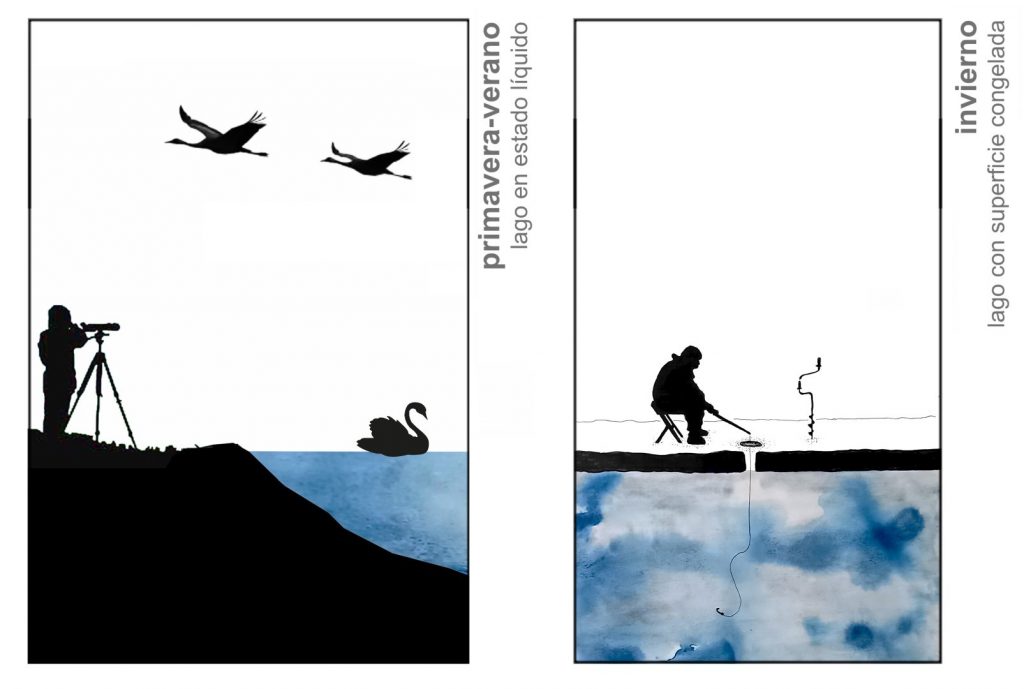
Prácticas estacionales vinculadas a la observación de aves y la pesca en hielo en los lagos de Jyväskylä/ Seasonal practices associated with birdwatching and ice fishing in the lakes of Jyväskylä
Fotografía/Photography: Iván Juárez
Cartographies of Shared Experiences
One of the project’s main activities consisted of developing narrative exercises with young inhabitants of the region. Using the outlines of the lakes as a starting point, the participants created personal maps that brought together memories, everyday experiences, meaningful places, and perceptions connected to water.
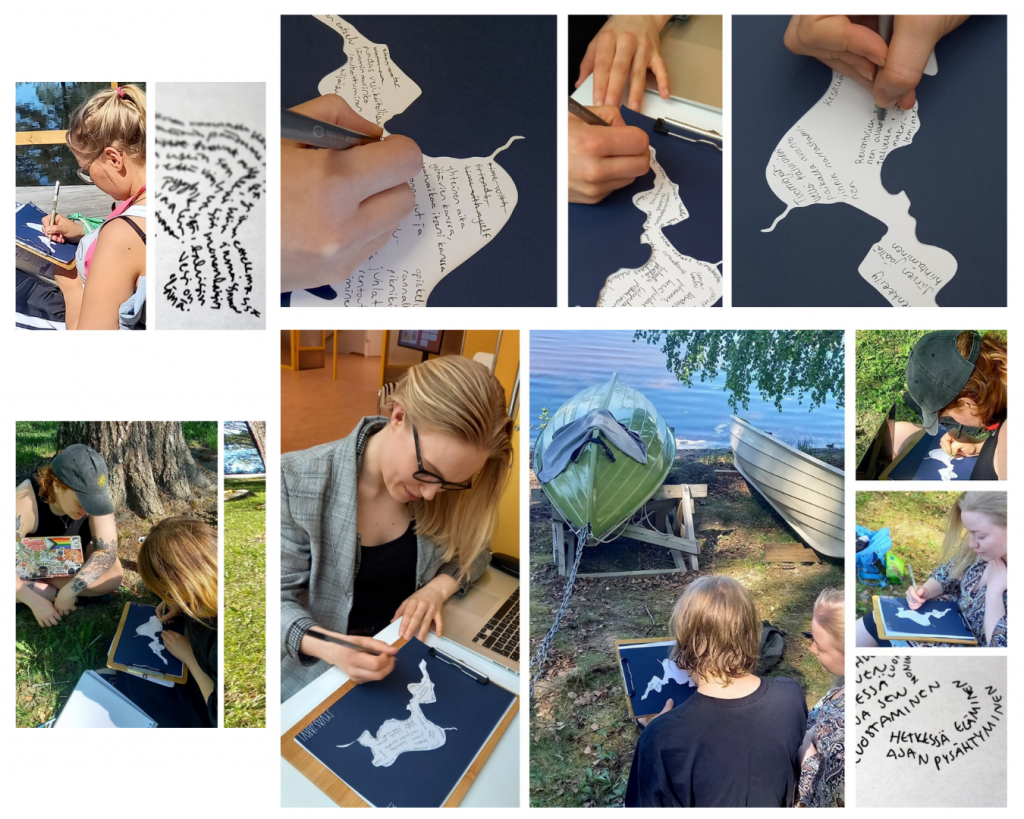
Desarrollo de cartografías narrativas participativas sobre los lagos de Jyväskylä/ Development of participatory narrative cartographies of the lakes of Jyväskylä Fotografía/Photography: Iván Juárez
These maps make visible the different relationships that people establish with the lakes. They include recurring references to recreational activities, social gatherings, everyday practices, and places associated with memories and personal experiences, as well as to species and seasonal landscapes. These maps make it possible to visualize how the lakes are part of everyday life, collective memory, and local identity, becoming territories where individual experiences and shared understandings come into dialogue.
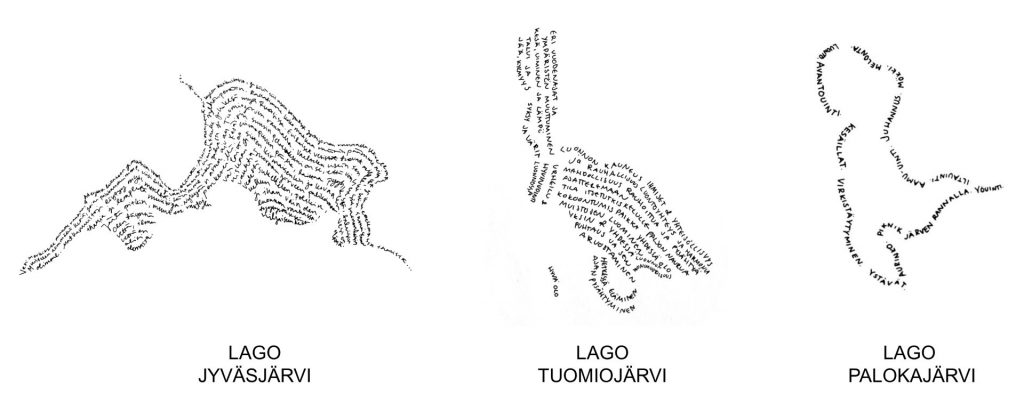
Resultados de las cartografías narrativas desarrolladas en torno a los lagos de Jyväskylä/ Results of the narrative cartographies developed around the lakes of Jyväskylä
Fotografía/Photography: Iván Juárez
Narratives of the Aquatic Landscape
Building on these approaches, the interviews, field walks, visual studies, and participatory activities generated a body of narratives and records that expanded the perceptions and meanings of the lakes from ecological, cultural, and social perspectives.
Dissemination: Dialogues with the Landscape
With the aim of fostering dialogue with the landscape, the project was shared through two complementary approaches. The first took place in the lobby of Capitolium, the main building of the University of Jyväskylä, located on the campus designed by Alvar Aalto. The exhibition brought together a variety of records, studies, and cartographies developed throughout the research, in a space where architecture and landscape maintain a close relationship.
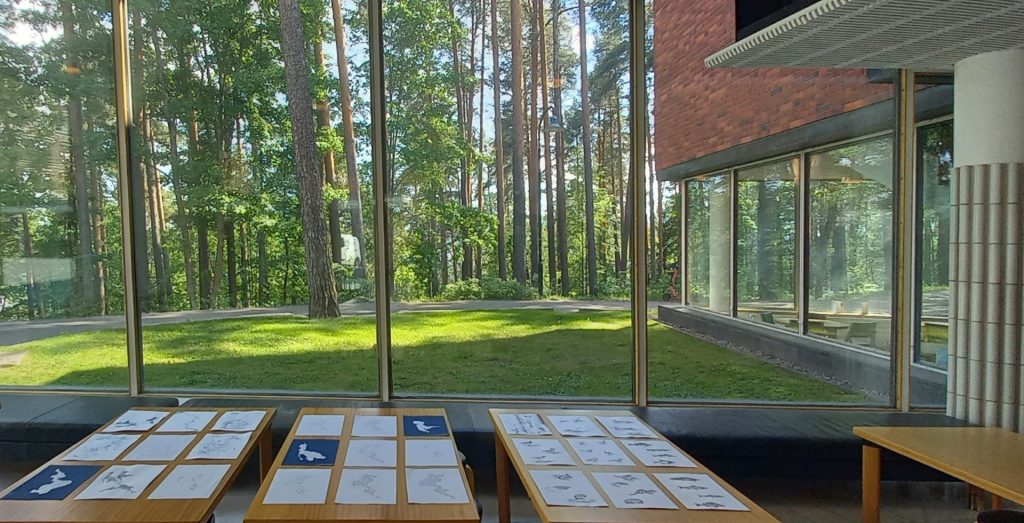
Exposición del proyecto Lenguajes del Agua en Capitolium, Universidad de Jyväskylä, mostrando registros, estudios y cartografías producidos durante la investigación/ Exhibition of the Languages of Water project at Capitolium, University of Jyväskylä, presenting records, studies, and cartographies produced during the research
Fotografía/Photography: Iván Juárez
At the same time, the project expanded through a series of drawings of lake fauna, temporarily integrated into different points across the territory. By returning to the environment that gave rise to them, these drawings established a direct dialogue with the lakes.
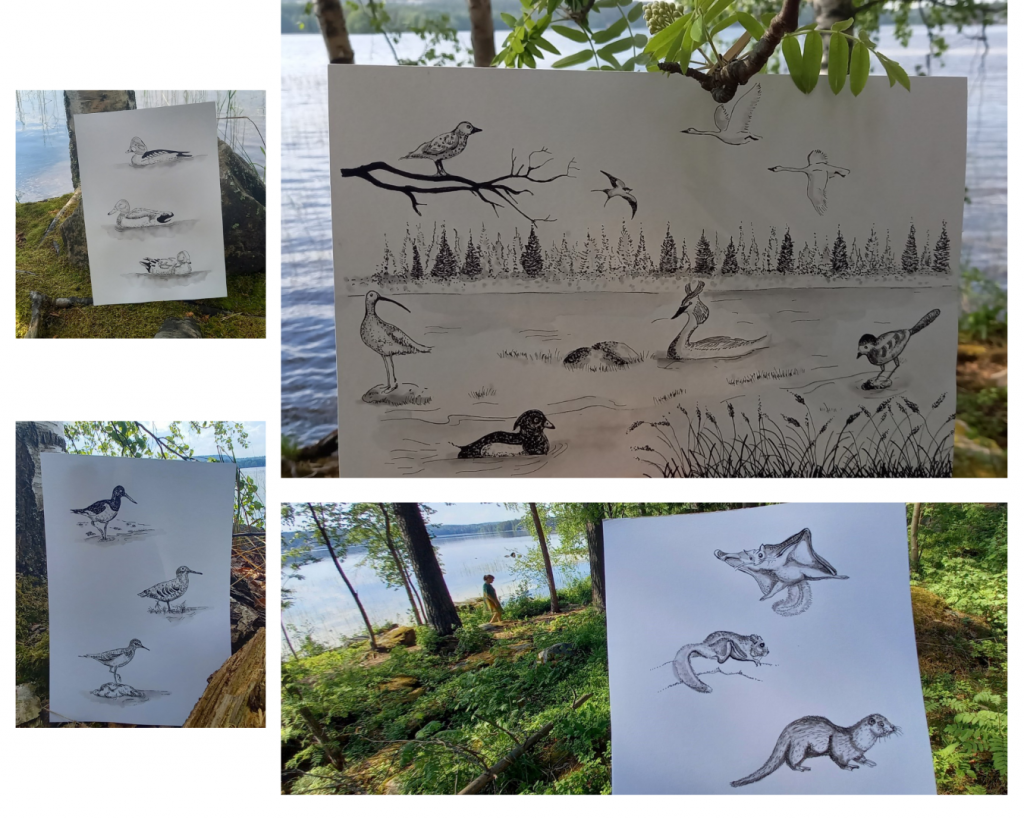
Serie de ilustraciones de especies lacustres instaladas temporalmente en los paisajes de los lagos de Jyväskylä/ Series of illustrations of lake species temporarily installed within the landscapes of the lakes of Jyväskylä
Fotografía/Photography: Iván Juárez
Reflexions of water
Languages of Water: Water as a Landscape of Encounter in the Finnish Lakeland Region explores how aquatic landscapes can foster environmental awareness, collective memories, and forms of coexistence among the different forms of life that inhabit the territory. The project proposes understanding lakes as ecological and territorial agents, as well as spaces of experience, memory, and encounter.In this sense, the project invites reflection on the relationships between water, territory, and life, and on the possibilities for coexistence that exist within these landscapes.
Bio
Iván Juárez | x-studio
Landscape architect, artist and educator. His work explores interactions between territory, culture and ecology through site-specific projects developed in diverse environmental and cultural contexts, integrating research, design, participation and artistic creation


-10.28.24.jpg "Anunciate07-13-a-la(s)-10.28.24")

 13.26.42.png "Captura de Pantalla 2023-02-08 a la(s) 13.26.42")