

Birds of urban oases
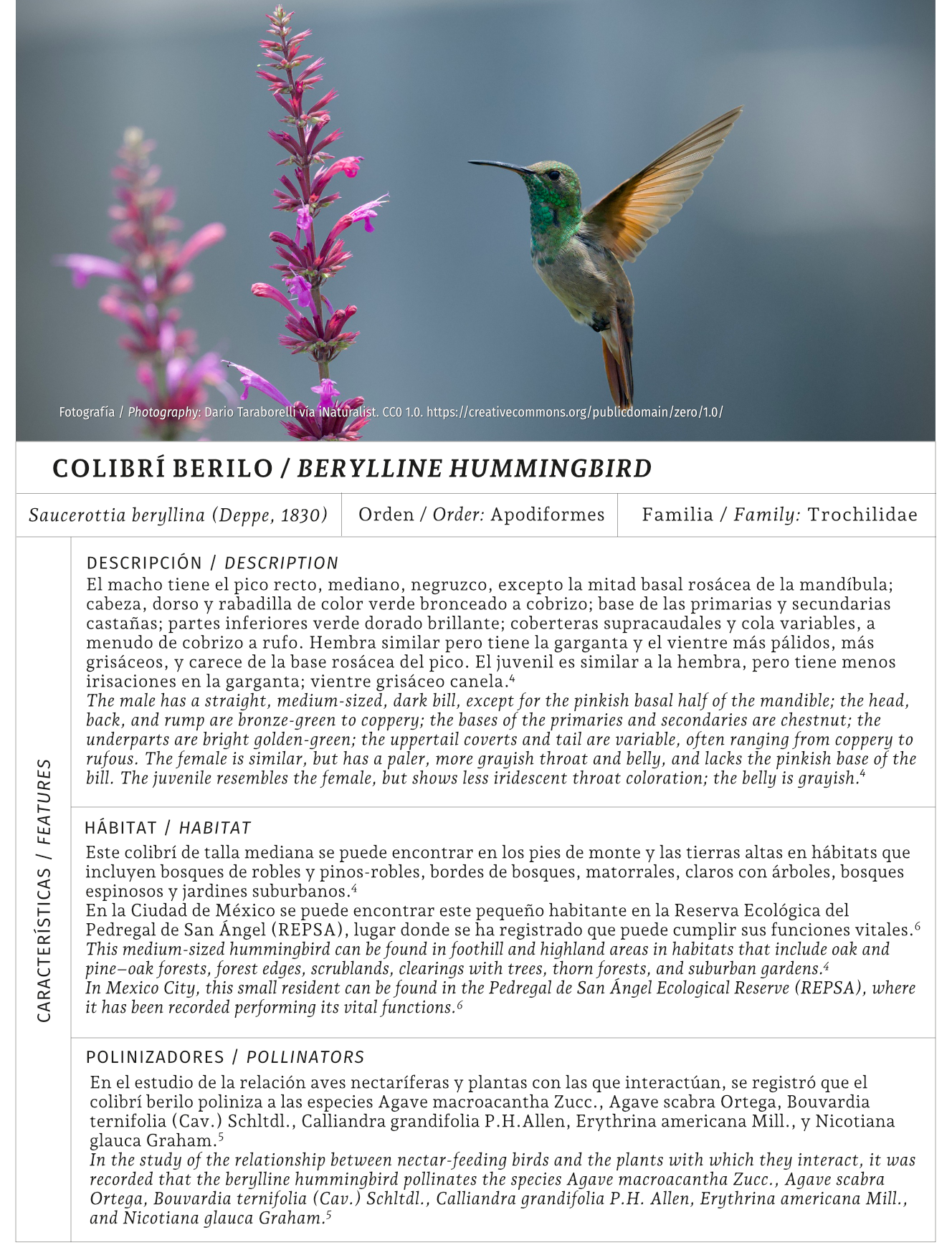
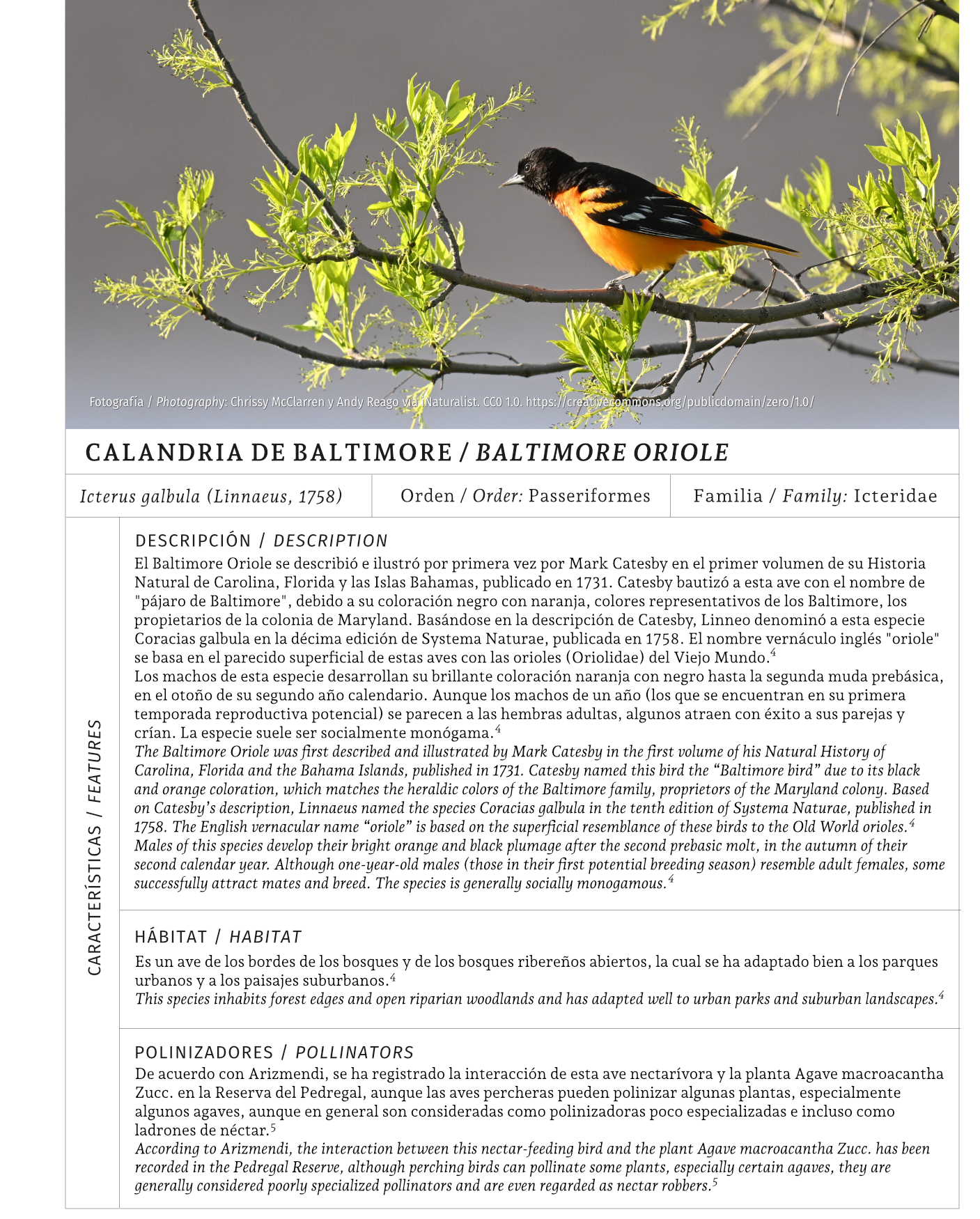
Discover the Baltimore Oriole and the Berylline Hummingbird in Birds of Urban Oases. In this article, Dr. Amaranta Arellano introduces us to the essential role of birds in pollination and their value as indicators of urban ecosystem health.
According to Olivier Balay and other researchers from the CRESSON laboratory, the urban oasis is a “parenthesis” that generates a sense of calm and well-being, giving the impression of having left behind a city that is often overly crowded, noisy, and mineral, where everything happens at high speed
Urban oases attract ephemeral visitors from various animal groups, such as insects and birds, the latter of which are responsible for fulfilling important ecosystem functions. These may include the pollination of the reproductive organ of angiosperms, the flower, as well as the dispersal of seeds of different species, a strategy that ensures the persistence of genetic material and its exchange during the reproductive phases of these organisms belonging to the Kingdom Plantae.
According to CONABIO, Mexico ranks eleventh in the number of bird species, with 1,124, representing 10.6% of the global total
Bibliografía Arizmendi, María del Coro, et al. “Plantas polinizadas por colibríes en la Reserva Ecológica del Pedregal de San Ángel, México, D.F.” Acta Botánica Mexicana (1994). http://www.repsa.unam.mx/documentos/del_Coro_et_al_1994_Plantas_polinizadas.pdf Consultado el 20 de marzo de 2026. Bautista, J. Manual de plantas útiles para las aves en la Ciudad de Querétaro. Querétaro: Universidad Autónoma de Querétaro, 2013. https://fcn.uaq.mx/docs/pdfs/4_plantasqro.pdf Consultado el 20 de marzo de 2026. Catalogue of Life. “Icterus galbula (Linnaeus, 1758)”. Consultado el 20 de marzo de 2026. https://www.catalogueoflife.org/data/taxon/8KQ6M. Catalogue of Life. “Saucerottia beryllina (Deppe, 1830)”. Consultado el 20 de marzo de 2026. https://www.catalogueoflife.org/data/taxon/8KQJR. CONABIO (Comisión Nacional para el Conocimiento y Uso de la Biodiversidad). “Aves de México”. Consultado el 20 de marzo de 2026. https://www.biodiversidad.gob.mx/especies/aves-de-mexico. LANDUUM. “Los oasis urbanos: una nueva alternativa para mitigar los efectos del cambio climático”. 2026. https://www.landuum.com/historia-y-cultura/los-oasis-urbanos-una-nueva-alternativa-para-mitigar-los-efectos-del-cambio-climatico/. Martínez del Río, Carlos, y Luis Eguiarte. “Visitas de aves a Agave salmiana: comparaciones entre colibríes y aves percheras”. The Condor 89, núm. 4 (1987): 944–958. Olguín, M. A. “Colibrí berilio: el polinizador que habita Ciudad Universitaria”. UNAM Global Revista (2025). https://unamglobal.unam.mx/global_revista/colibri-berilio-polinizacion-ciudad-universitaria/ Consultado el 20 de marzo de 2026. Parque La Mexicana. “Aves polinizadoras, embajadoras del equilibrio ecológico”. 2026. https://parquelamexicana.mx/aves-polinizadoras-embajadoras-del-equilibrio-ecologico/ Consultado el 20 de marzo de 2026. Rising, James D., y Nicholas J. Flood. “Baltimore Oriole (Icterus galbula)”. En Birds of the World, editado por P. G. Rodewald. Ithaca, NY: Cornell Lab de Ornitología, 2020. https://doi.org/10.2173/bow.balori.01. Stiles, F. Gary. “Aspectos geográficos de la coevolución entre aves y flores, con especial referencia a Centroamérica”. Annals of the Missouri Botanical Garden 68, núm. 2 (1981): 323–351. James D. Rising y Nicholas J. Flood, “Baltimore Oriole (Icterus galbula),” en Birds of the World, ed. P. G. Rodewald (Ithaca, NY: Cornell Lab of Ornithology, 2020). María del Coro Arizmendi et al., “Plantas polinizadas por colibríes en la Reserva del Pedregal,” 1994; Carlos Martínez del Río y Luis Eguiarte, “Bird Visitation to Agave salmiana,” The Condor 89, no. 4 (1987): 944–958; F. Gary Stiles, “Geographical Aspects of Bird-Flower Coevolution,” 1981. M. A. Olguín, “Colibrí berilio: el polinizador que habita Ciudad Universitaria,” UNAM Global Revista, 2025.
Bibliografía
Arizmendi, María del Coro, et al. “Plantas polinizadas por colibríes en la Reserva Ecológica del Pedregal de San Ángel, México, D.F.” Acta Botánica Mexicana (1994). http://www.repsa.unam.mx/documentos/del_Coro_et_al_1994_Plantas_polinizadas.pdf Consultado el 20 de marzo de 2026.
Bautista, J. Manual de plantas útiles para las aves en la Ciudad de Querétaro. Querétaro: Universidad Autónoma de Querétaro, 2013. https://fcn.uaq.mx/docs/pdfs/4_plantasqro.pdf Consultado el 20 de marzo de 2026.
Catalogue of Life. “Icterus galbula (Linnaeus, 1758)”. Consultado el 20 de marzo de 2026. https://www.catalogueoflife.org/data/taxon/8KQ6M.
Catalogue of Life. “Saucerottia beryllina (Deppe, 1830)”. Consultado el 20 de marzo de 2026. https://www.catalogueoflife.org/data/taxon/8KQJR.
CONABIO (Comisión Nacional para el Conocimiento y Uso de la Biodiversidad). “Aves de México”. Consultado el 20 de marzo de 2026. https://www.biodiversidad.gob.mx/especies/aves-de-mexico.
LANDUUM. “Los oasis urbanos: una nueva alternativa para mitigar los efectos del cambio climático”. 2026. https://www.landuum.com/historia-y-cultura/los-oasis-urbanos-una-nueva-alternativa-para-mitigar-los-efectos-del-cambio-climatico/.
Martínez del Río, Carlos, y Luis Eguiarte. “Visitas de aves a Agave salmiana: comparaciones entre colibríes y aves percheras”. The Condor 89, núm. 4 (1987): 944–958.
Olguín, M. A. “Colibrí berilio: el polinizador que habita Ciudad Universitaria”. UNAM Global Revista (2025). https://unamglobal.unam.mx/global_revista/colibri-berilio-polinizacion-ciudad-universitaria/ Consultado el 20 de marzo de 2026.
Parque La Mexicana. “Aves polinizadoras, embajadoras del equilibrio ecológico”. 2026. https://parquelamexicana.mx/aves-polinizadoras-embajadoras-del-equilibrio-ecologico/ Consultado el 20 de marzo de 2026.
Rising, James D., y Nicholas J. Flood. “Baltimore Oriole (Icterus galbula)”. En Birds of the World, editado por P. G. Rodewald. Ithaca, NY: Cornell Lab de Ornitología, 2020. https://doi.org/10.2173/bow.balori.01.
Stiles, F. Gary. “Aspectos geográficos de la coevolución entre aves y flores, con especial referencia a Centroamérica”. Annals of the Missouri Botanical Garden 68, núm. 2 (1981): 323–351. James D. Rising y Nicholas J. Flood, “Baltimore Oriole (Icterus galbula),” en Birds of the World, ed. P. G. Rodewald (Ithaca, NY: Cornell Lab of Ornithology, 2020).
María del Coro Arizmendi et al., “Plantas polinizadas por colibríes en la Reserva del Pedregal,” 1994; Carlos Martínez del Río y Luis Eguiarte, “Bird Visitation to Agave salmiana,” The Condor 89, no. 4 (1987): 944–958; F. Gary Stiles, “Geographical Aspects of Bird-Flower Coevolution,” 1981.
M. A. Olguín, “Colibrí berilio: el polinizador que habita Ciudad Universitaria,” UNAM Global Revista, 2025.


-10.28.24.jpg "Anunciate07-13-a-la(s)-10.28.24")

 13.26.42.png "Captura de Pantalla 2023-02-08 a la(s) 13.26.42")


