

Urban oasis: University landscape as wellness infrastructure
In Urban oasis: university landscape as wellness infrastructure, discover how the Ibero campus transforms into a living infrastructure that merges architecture and landscape to create comfort. Through a resilient and participatory design, this WW+P project invites us to rediscover the landscape as refuge and community.
In the context of a dense, fast-paced city like Mexico City, university campuses represent a strategic opportunity to create urban oases: green spaces that offer a pause, foster well-being, and facilitate reconnection with nature within university life. The intervention of the green areas at Universidad Iberoamericana’s Santa Fe campus, developed by WW+P, is based on this premise: transforming the university landscape into an ecological infrastructure that articulates community, well-being, and living spaces.
The intervention activates approximately 3.9 hectares of the campus’s green areas through a “common thread” that connects plazas, gardens, corridors, and small squares into a coherent, legible, and accessible sequence.
We recognize that the architecture of the Ibero campus is distinguished by a contemporary and monumental language, built from precise volumes, clear geometries, and the use of red brick as a unifying identity hallmark. Based on this reading, our proposal for open spaces seeks to integrate respectfully and naturally into this character, reinforcing the continuity between interior and exterior, activating remnant areas, and generating green zones, gathering spaces, and pathways that accompany university life.
Thus, the landscape not only articulates space and engages in dialogue with surrounding buildings, but also strengthens institutional identity and a sense of belonging, incorporating signage and furniture elements that extend and consolidate this visual language.
It is not merely about incorporating vegetation, but about designing systems capable of regenerating bonds: between people, between architecture and territory, and between society and nature.
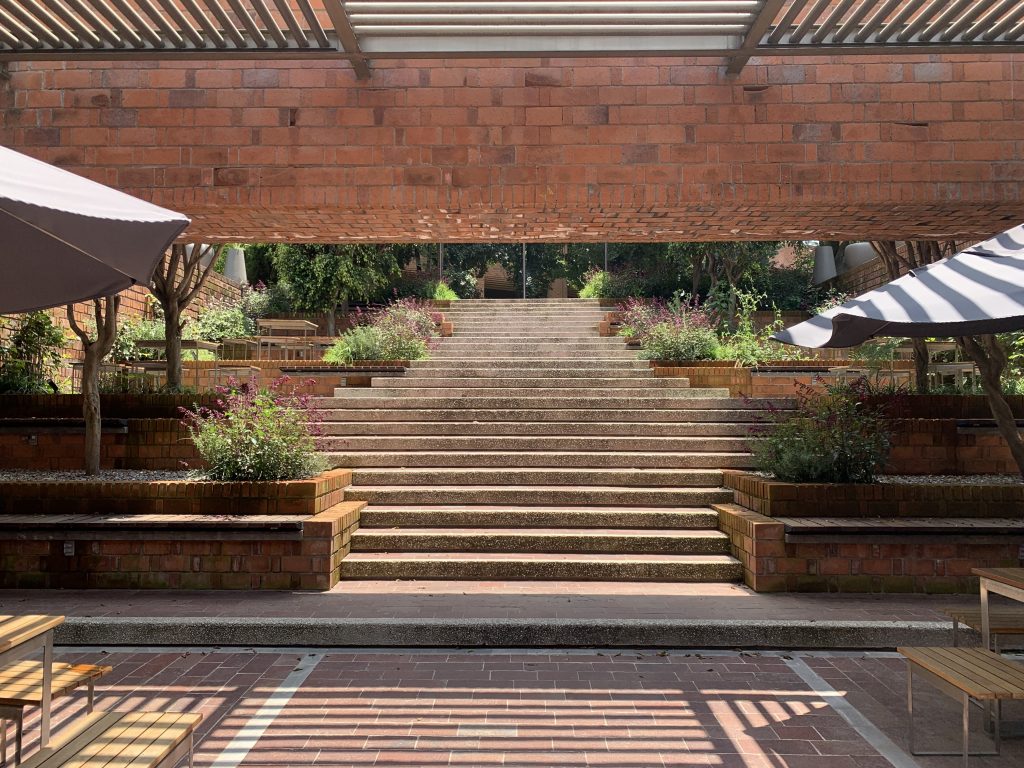
Escalinatas de la cafetería “El Cubo” remodeladas/Renovated stairways at ‘El Cubo’ cafetería
Fotografía/Photography: Ana Morodo
The design is based on three typologies of open space aimed at encouraging permanence: activation, contemplation, and learning landscapes. Each zone responds to one or more of these categories according to its specific identity and character. Active plazas, reflection gardens, experimental orchards, open classrooms, and didactic trails form a system that promotes diverse forms of appropriation.
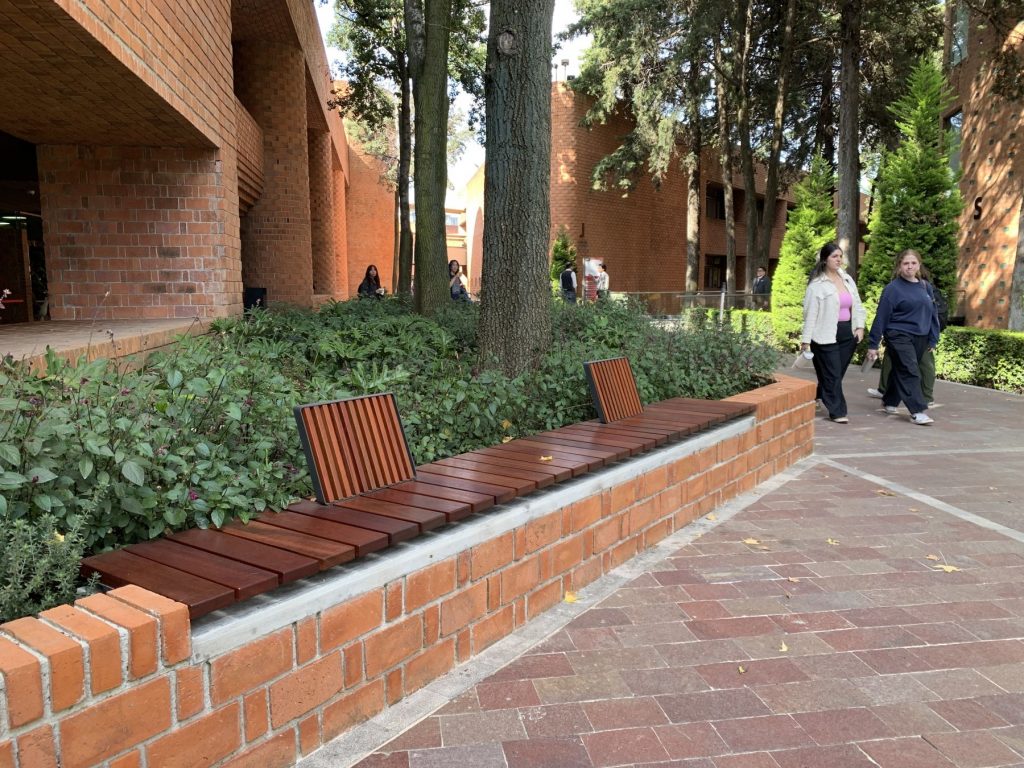
Bancas nuevas colocadas en corredores/New benches installed in corridors
Fotografía/Photography: Ana Morodo
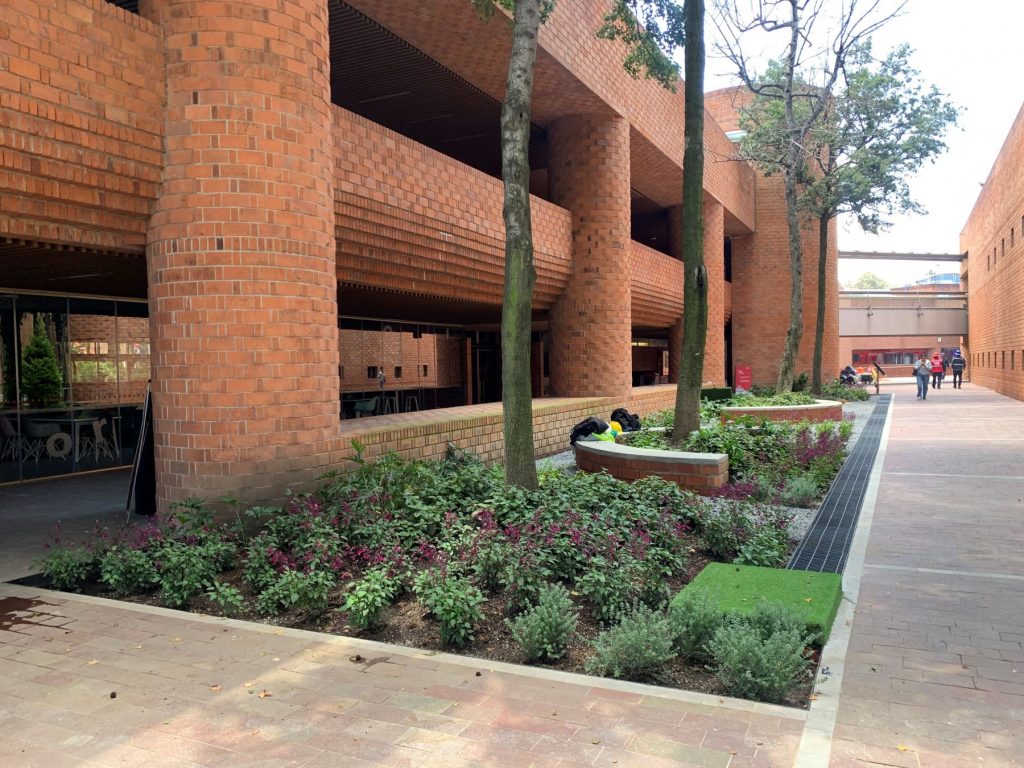
Nueva paleta vegetal de corredores/New plant palette for hallways
Fotografía/Photography: Ana Morodo
The intervention responds not only to a formal logic, but also to an environmental vision that guides its design. This urban oasis is understood as a living system. The landscaping strategy is based on principles of ecological resilience: the selection of native, low-maintenance species adapted to temperate forest and arid ecosystems, supporting biodiversity.
It also includes reducing water consumption, soil restoration, and the creation of microhabitats. Rain gardens, infiltration zones, and permeable surfaces were incorporated, allowing the campus to function as an urban sponge, capturing and managing stormwater.
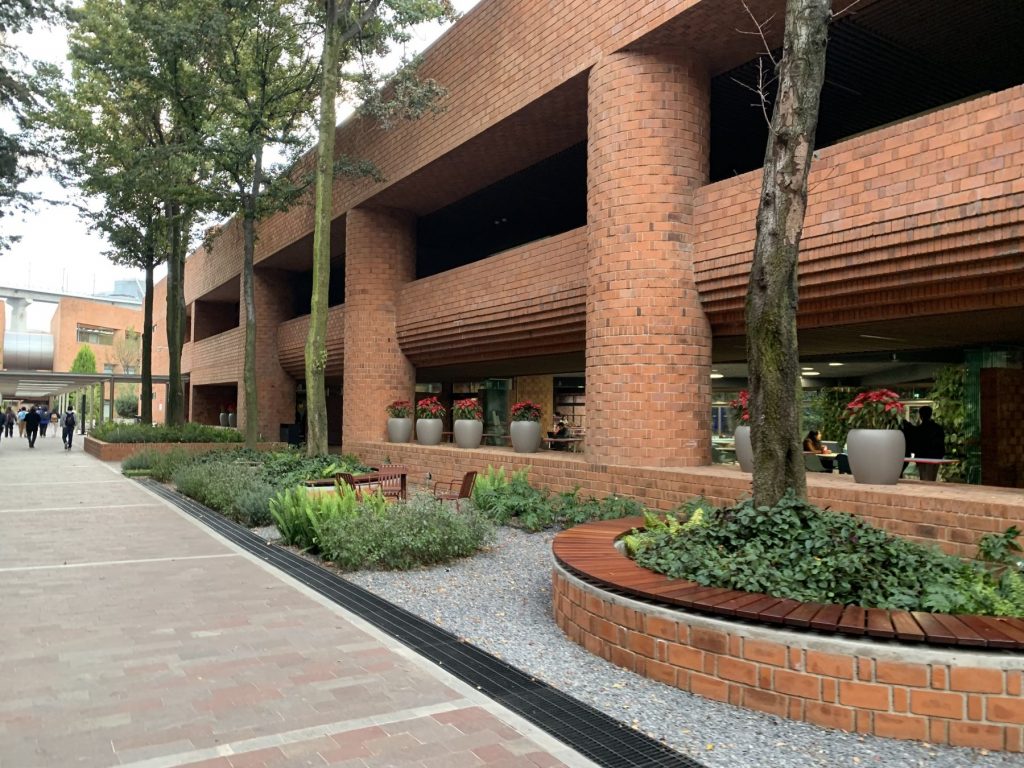
Corredor afuera del edificio de administración/Corridor outside the Administration Building
Fotografía/Photography: Ana Morodo
The proposal was developed through a participatory methodology involving key users and university technical teams, integrating architecture, landscape, engineering, horticulture, and graphic design. This interdisciplinary collaboration translated institutional values —well-being, community, social justice, and environmental care— into concrete spatial decisions.
At a time when cities face climate, social, and mental health crises, the notion of the urban oasis takes on an urgent dimension.
It is not merely about incorporating vegetation, but about designing systems capable of regenerating bonds: between people, between architecture and territory, and between society and nature.
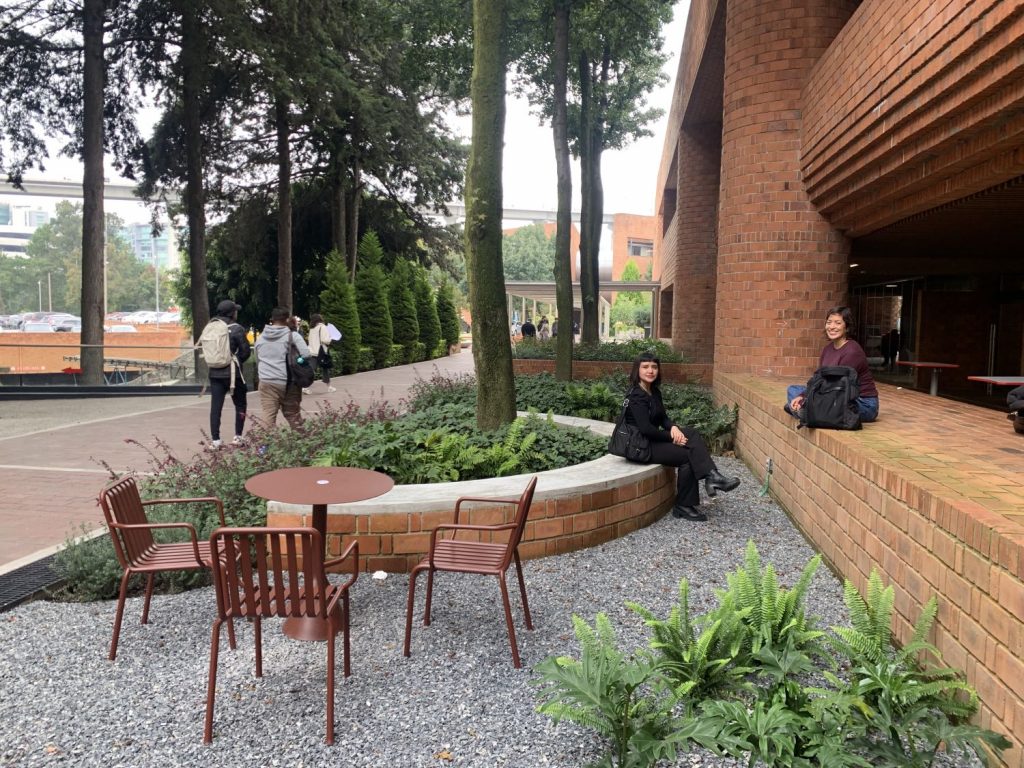
Mobiliario nuevo en corredores/New furniture in hallways
Fotografía/Photography: Ana Morodo
The Ibero campus green areas project demonstrates that even in consolidated contexts, landscape can reconfigure the urban experience through everyday life. By integrating ecological infrastructure, public space, and environmental pedagogy, the campus becomes an active refuge within the metropolis: an oasis that does not isolate, but connects.
Mobiliario nuevo en corredores/New furniture in hallways
Fotografía/Photography: Ana Morodo


-10.28.24.jpg "Anunciate07-13-a-la(s)-10.28.24")

 13.26.42.png "Captura de Pantalla 2023-02-08 a la(s) 13.26.42")