
La Tebaida
TA Arquitectura invites us to discover La Tebaida, a public space revitalized after the 1999 earthquake. Located within Colombia’s Coffee Cultural Landscape, the project seeks to enhance the natural component and create a meaningful space. Through simple geometries, it recovers the layout, vegetation, and historic elements that strengthen the municipality’s urban memory.
In 1999, the earth shook beneath Colombia’s Coffee Axis. In La Tebaida, the earthquake affected most of the municipality’s buildings and, with them, much of the public space that, until then, had shaped the daily lives of its inhabitants. The revitalization of La Tebaida’s public space stems from this: not as a project that starts from scratch, but as an attempt to recognize and recover what the earthquake left loose.
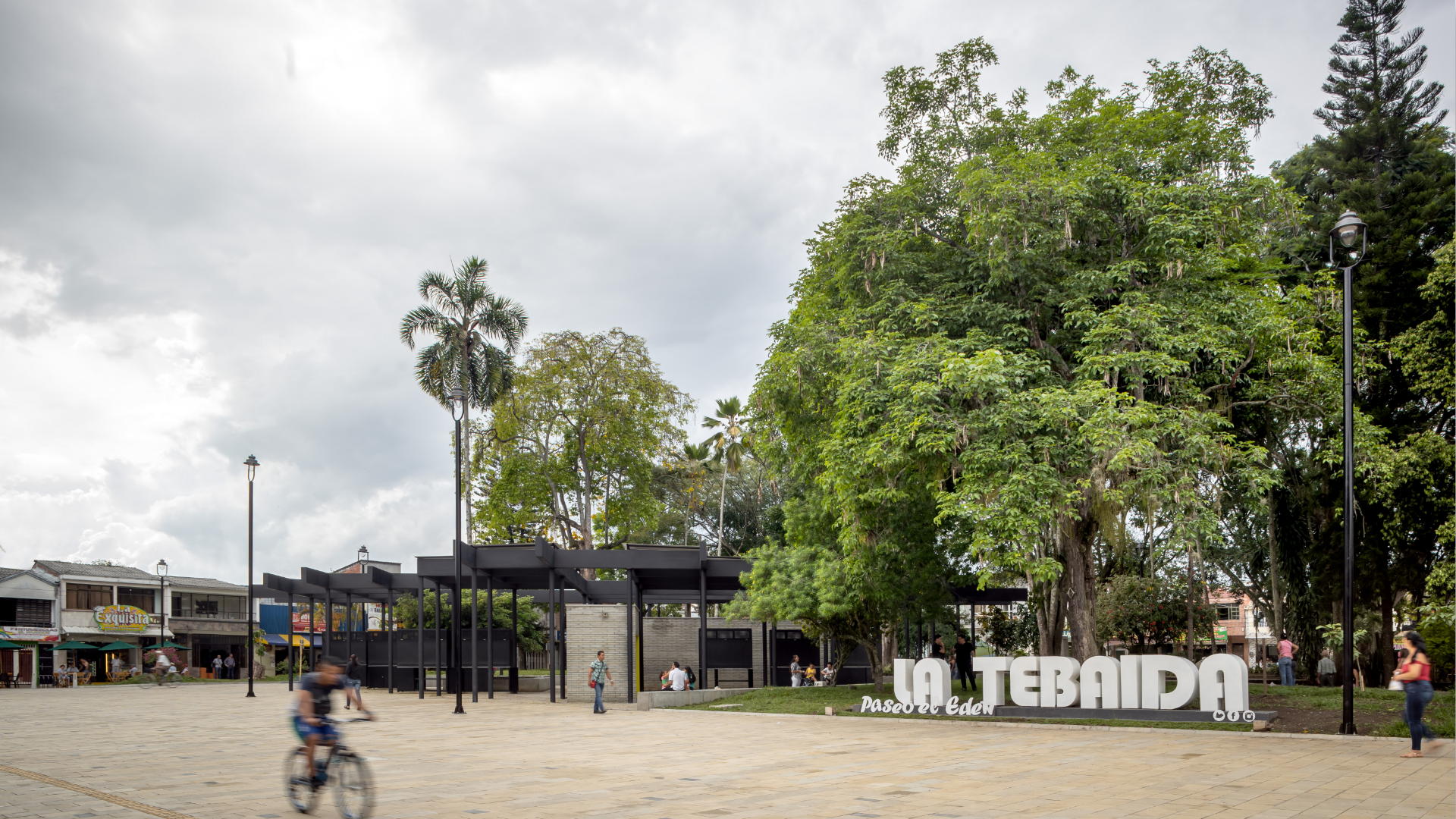
Tarde en la plaza cívica/ Afternoon at the civic plaza Fotografía/Photography: Mauricio Carvajal
La Tebaida, although not officially recognized as such, is located within the Coffee Cultural Landscape of Colombia, a region comprising forty-seven municipalities that was declared a World Heritage Site by UNESCO on June 25, 2011. Despite being part of this widely recognized and visited territory, the municipality has remained outside the region’s tourism circuits and the broader collective interest surrounding it.
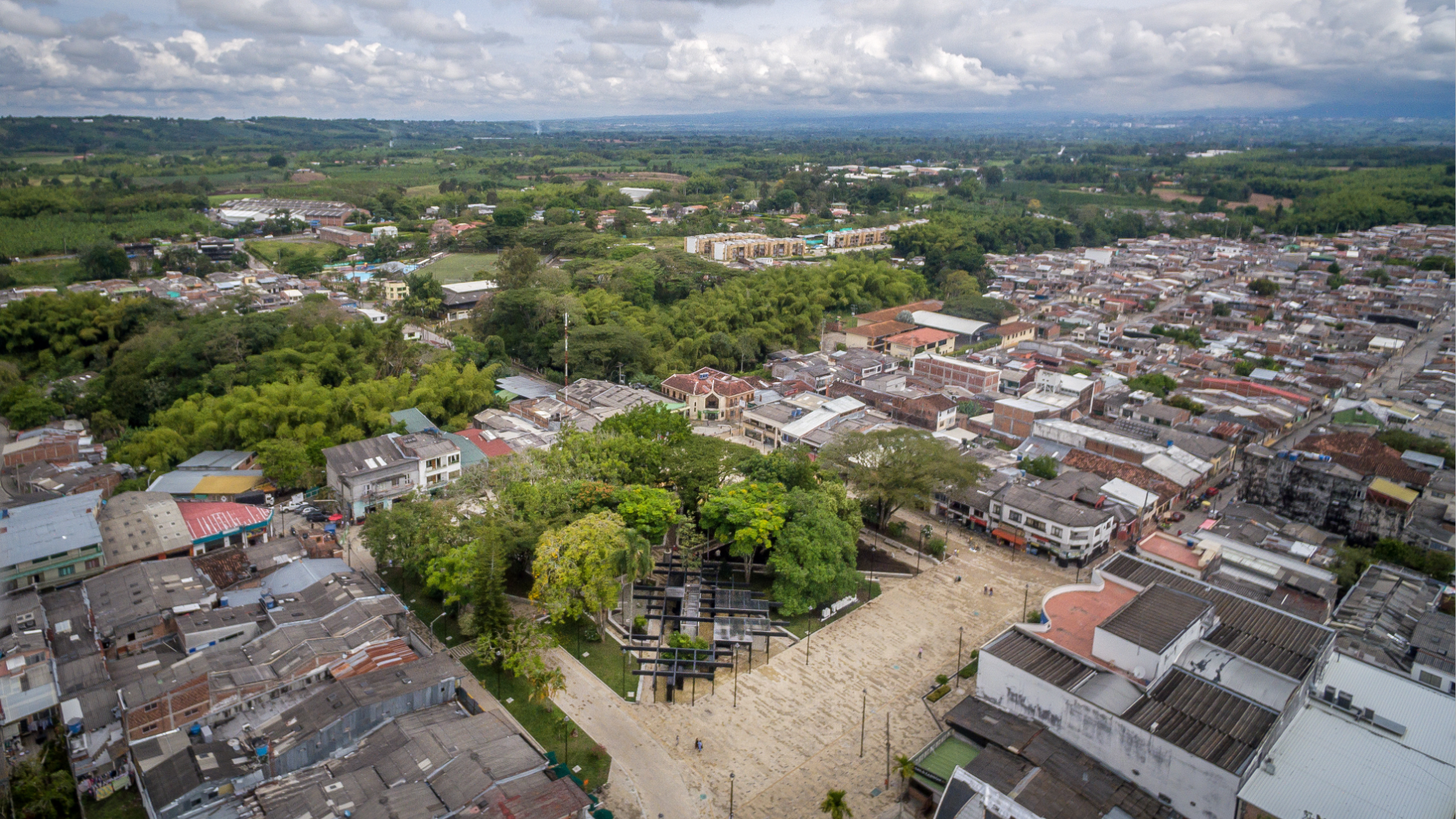
Imágen aérea del Paisaje Cultural Cafetero de Colombia/ Aerial image of the Coffee Cultural Landscape of Colombia
Fotografía/Photography: Mauricio Carvajal
The project’s design is based on two premises. The first is to highlight and enhance the predominant natural component by preserving the existing vegetation in the plazas and planting new species along the roads that connect them; the second is to create a comfortable and meaningful public space for residents and visitors, prioritizing pedestrians and incorporating constant references to the history and customs of the place.
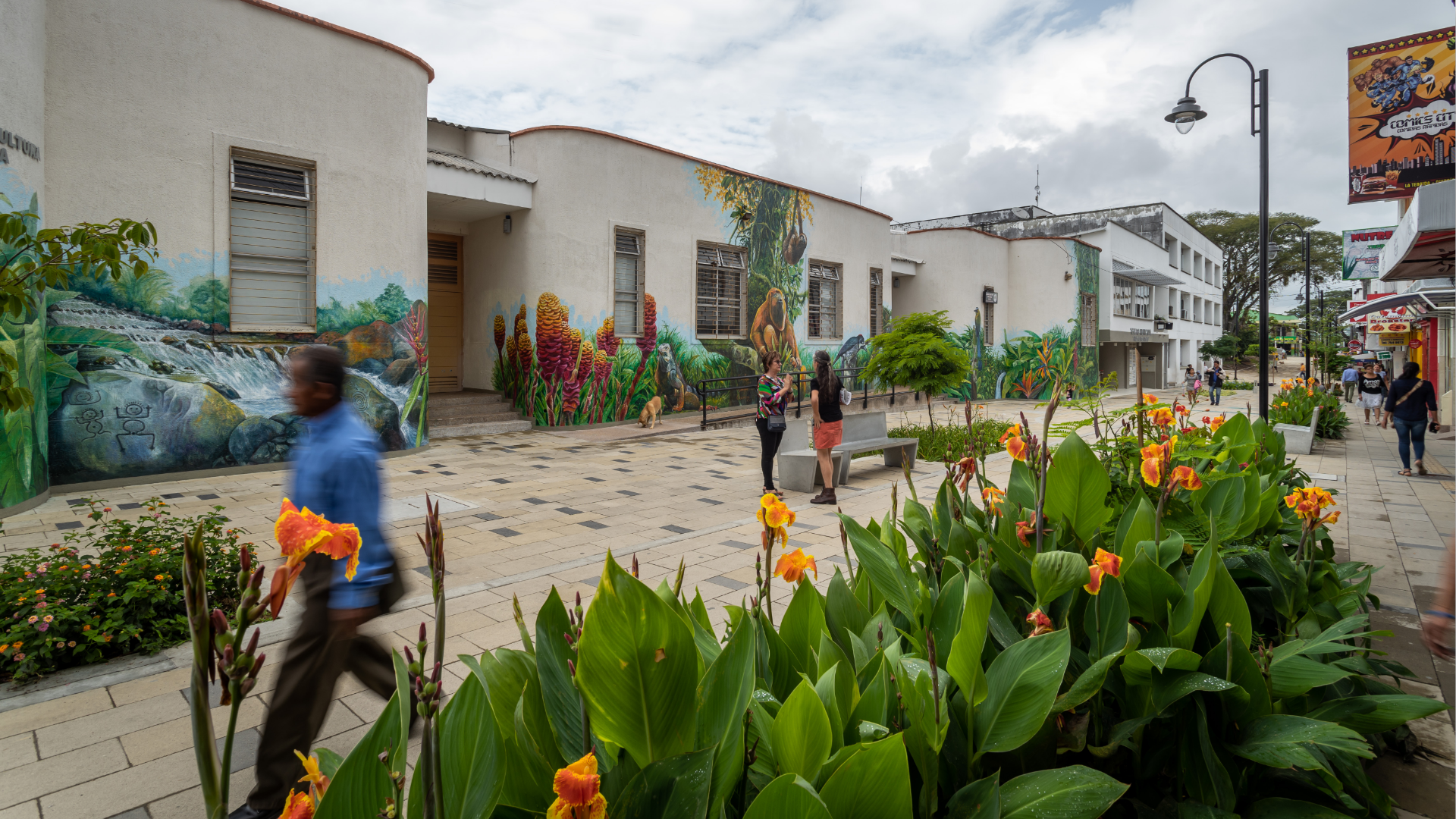
Espacios de transición revitalizados/ Revitalized transitional spaces
Fotografía/Photography: Mauricio Carvajal
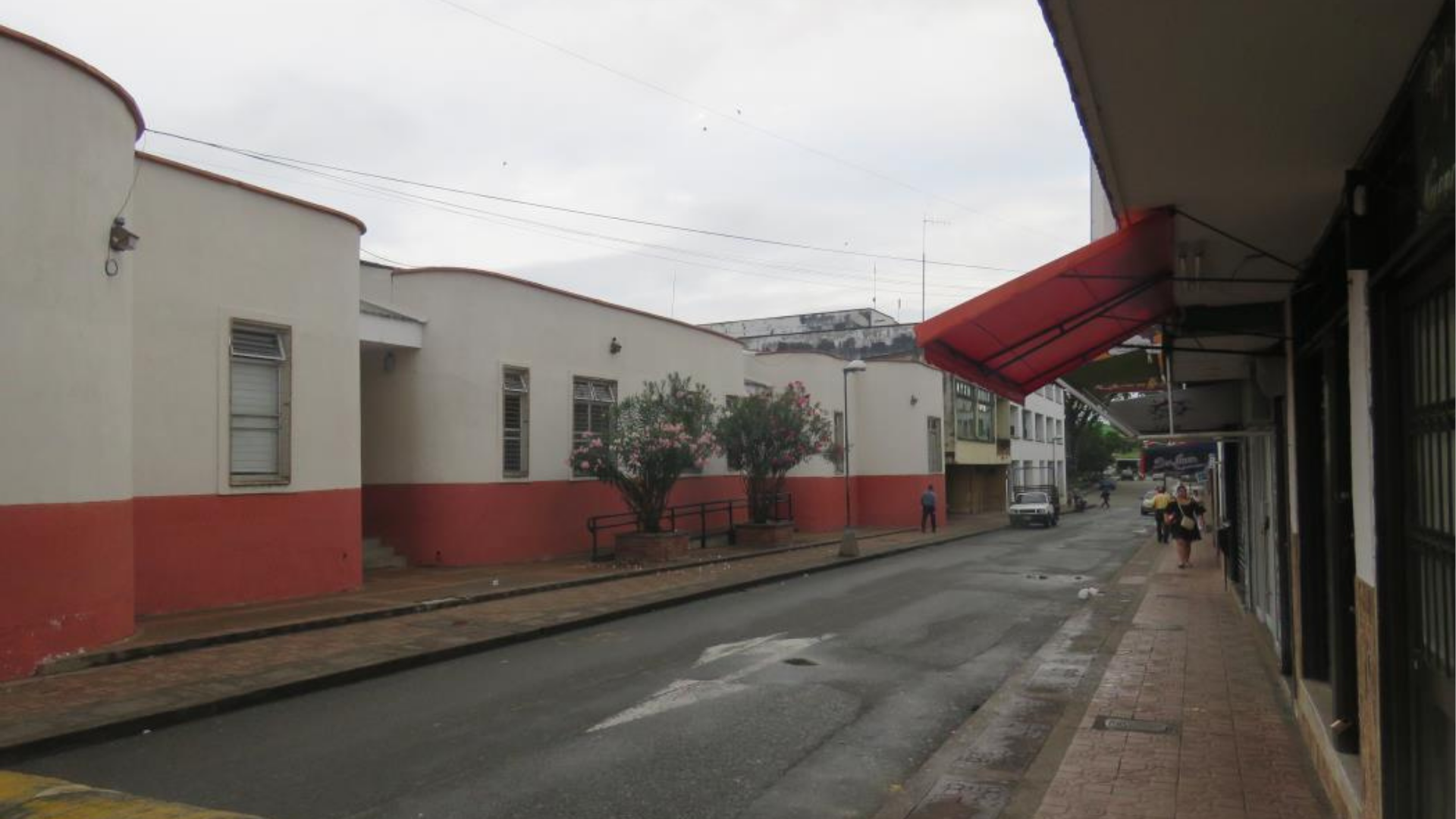
Calle 12 antes de la revitalización/ Street 12 before revitalization
Fotografía/Photography: Alcaldía de La Tebaida
The logic: what survived becomes the starting point for the design. The geometries of the new layouts recover the language and traditional activities of the public space, identified through the few elements that remained standing.
A design that draws from what survived the earthquake, where the geometries recover the language and traditional activities of the public space.
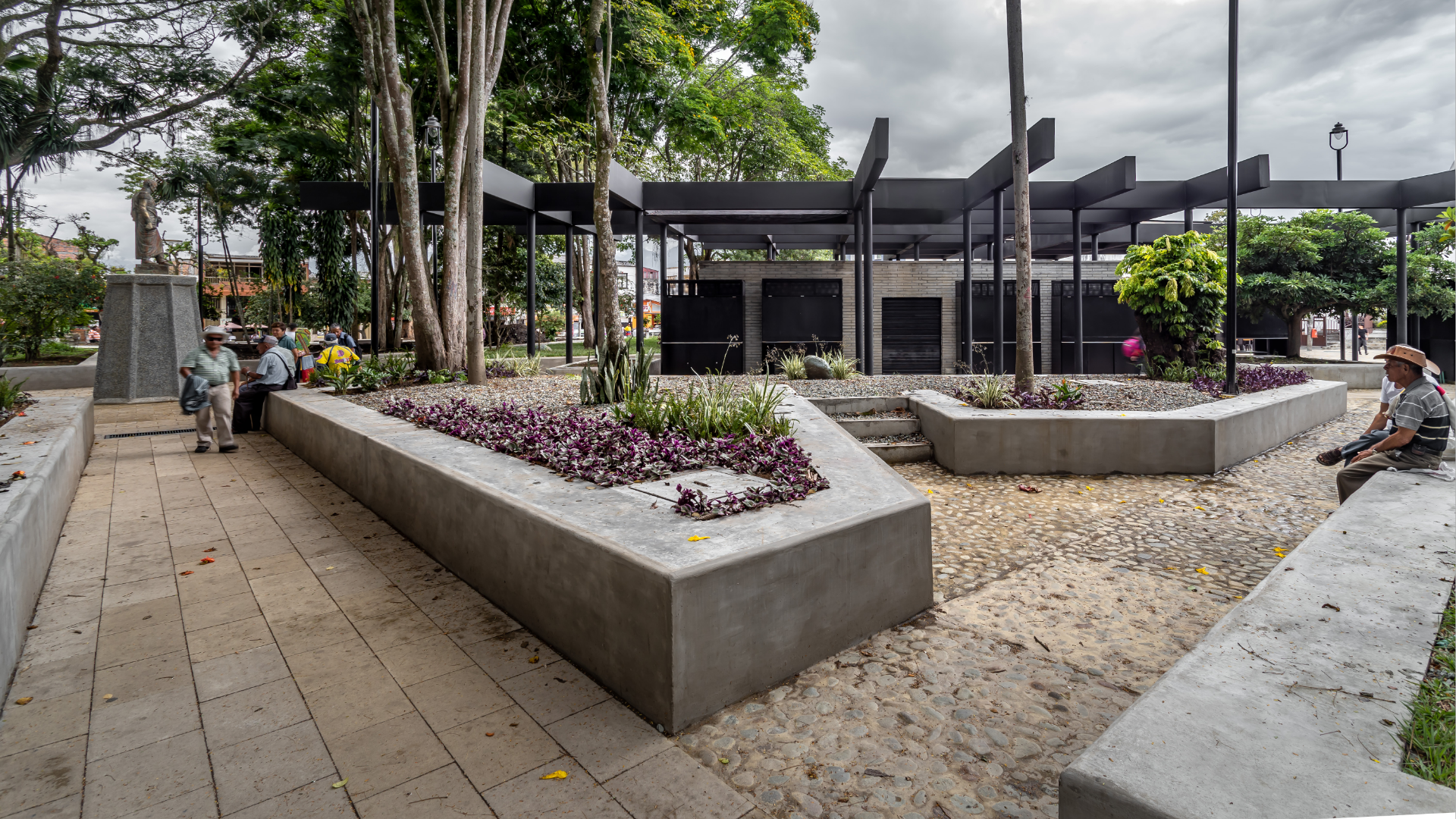
Senderos internos habitados/ Inhabited internal pathways
Fotografía/Photography: Mauricio Carvajal
The first stage of the intervention focuses on Plaza Bolívar, the municipality’s founding space, and the roads that connect it to Plaza Nueva. The design of this area is based on recognizing its initial geometric layout, in an effort to highlight the historical and cultural value of the place.
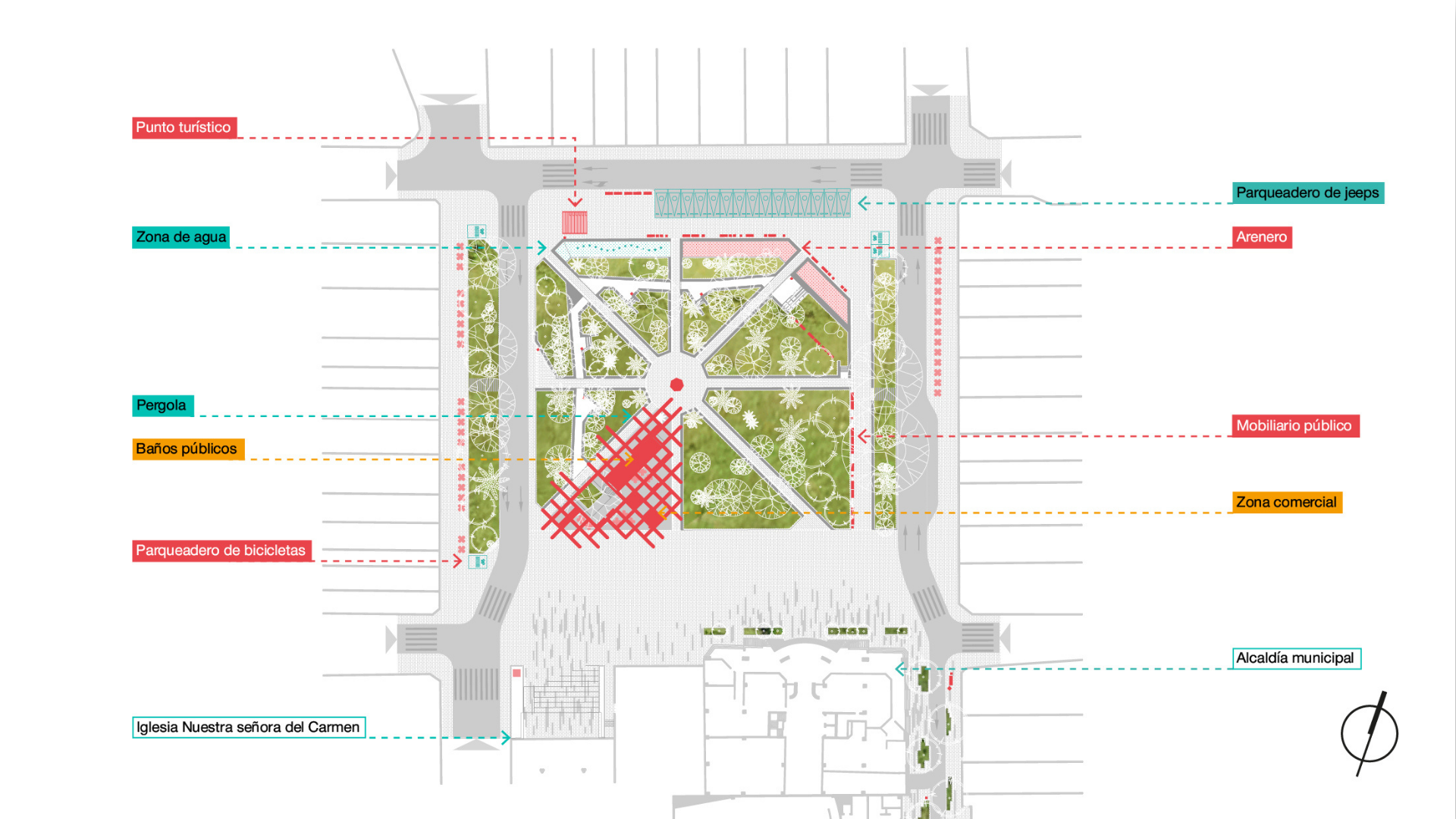
Plaza Bolivar, planta proyecto de revitalización/ Plaza Bolívar, plan of the revitalization project
Fotografía/Photography: TA Arquitectura
In the three blocks connecting both plazas, the main strategy was to recover the ground through new planters and strengthen the environmental connection by planting tree species that had previously been absent from these streets. Two of these streets were completely pedestrianized and brought to a single level: a pedestrian-oriented street where non-motorized modes of transportation are prioritized, and motor vehicles are permitted only under specific restrictions.
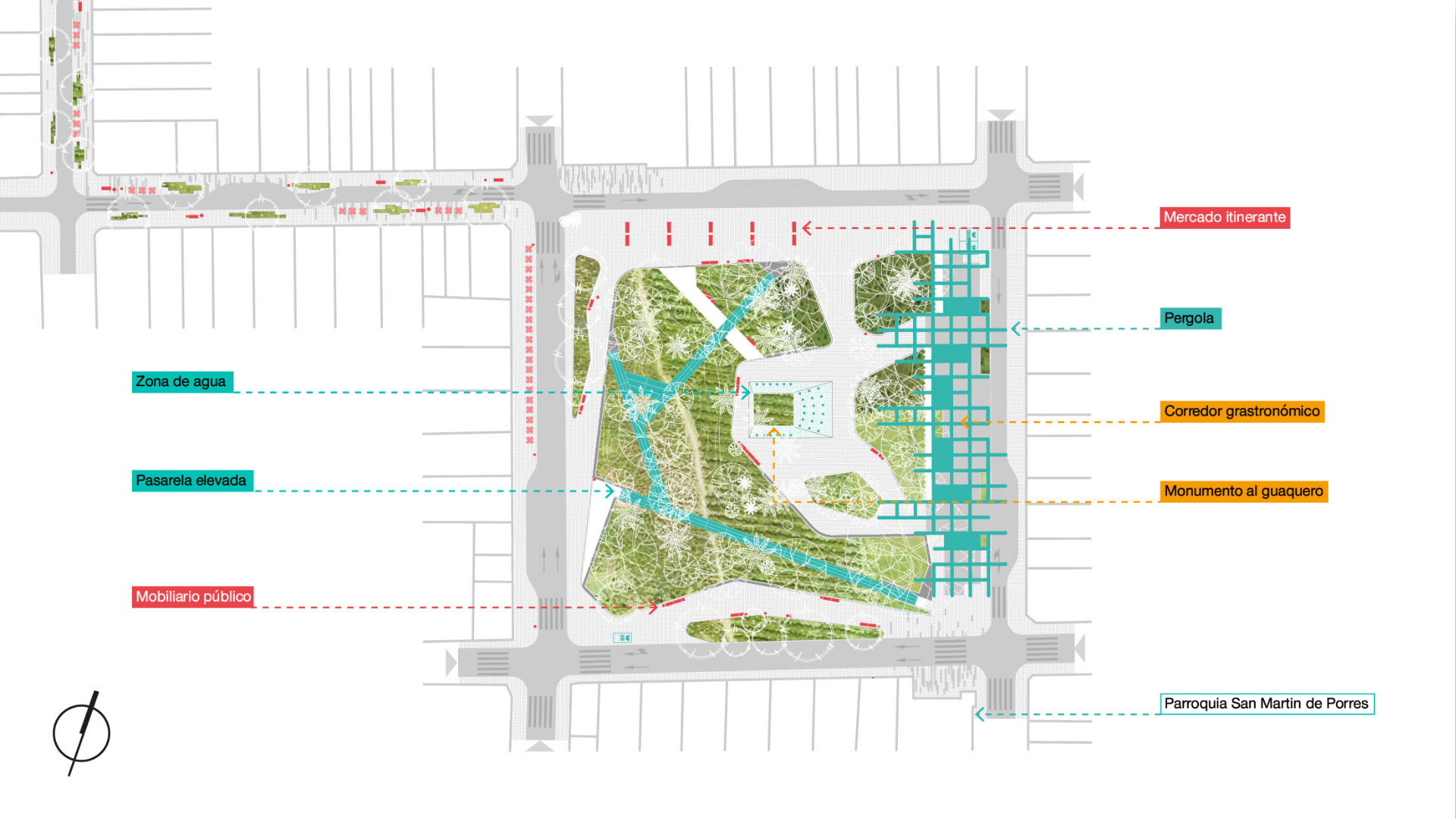
Plaza Nueva, planta proyecto de revitalización/ Plaza Nueva, revitalization project plan
Fotografía/Photography: TA Arquitectura
The second stage focuses on Plaza Nueva, the area where commerce in La Tebaida has traditionally taken place. Unlike the orderly geometry of the first stage, here the design adopts more organic and dynamic forms, consistent with the commercial use and the constant movement of visitors that characterizes the area.
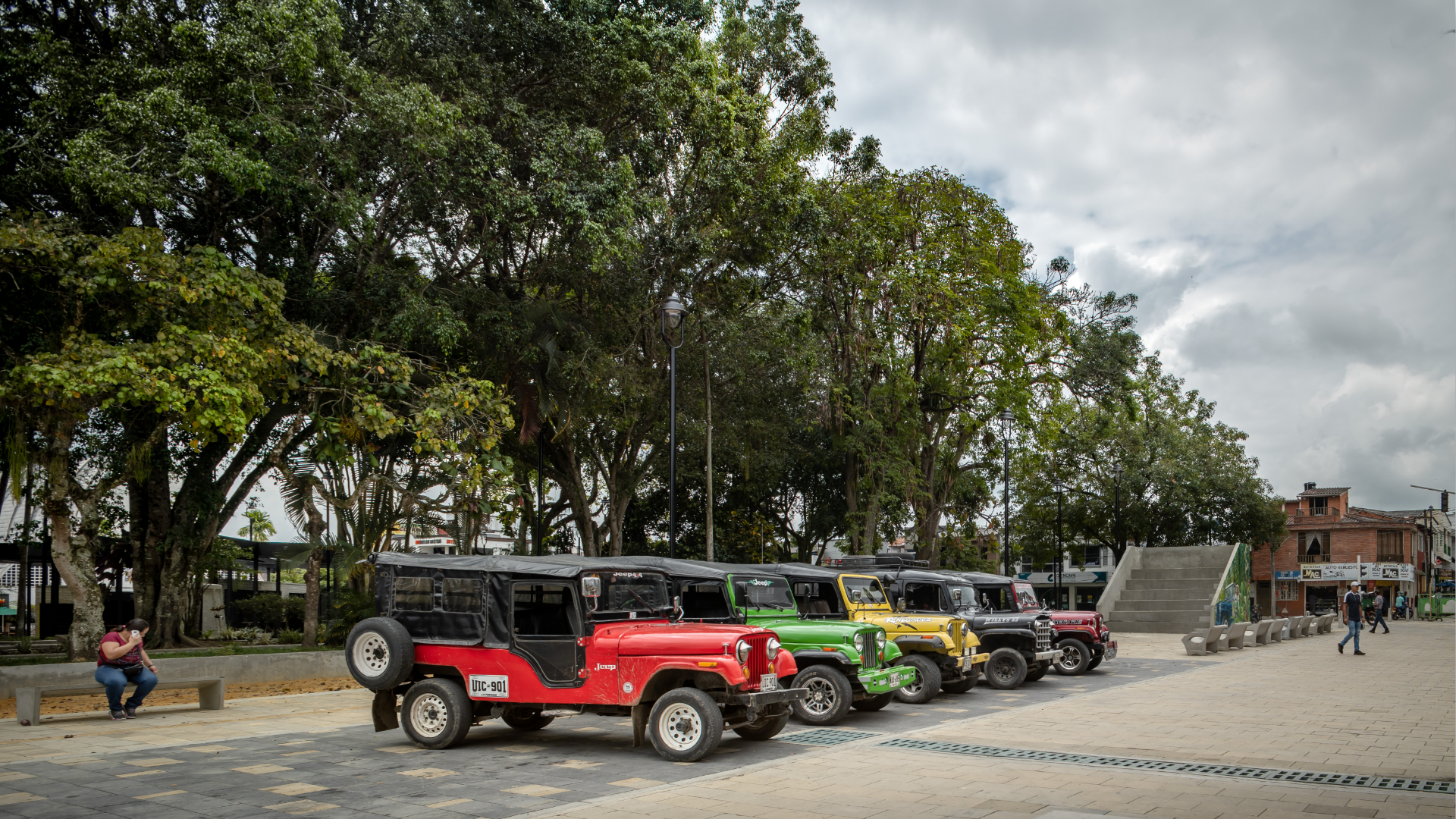
Conservar las dinámicas de la plaza/ Preserve the dynamics of the plaza
Fotografía/Photography: Mauricio Carvajal
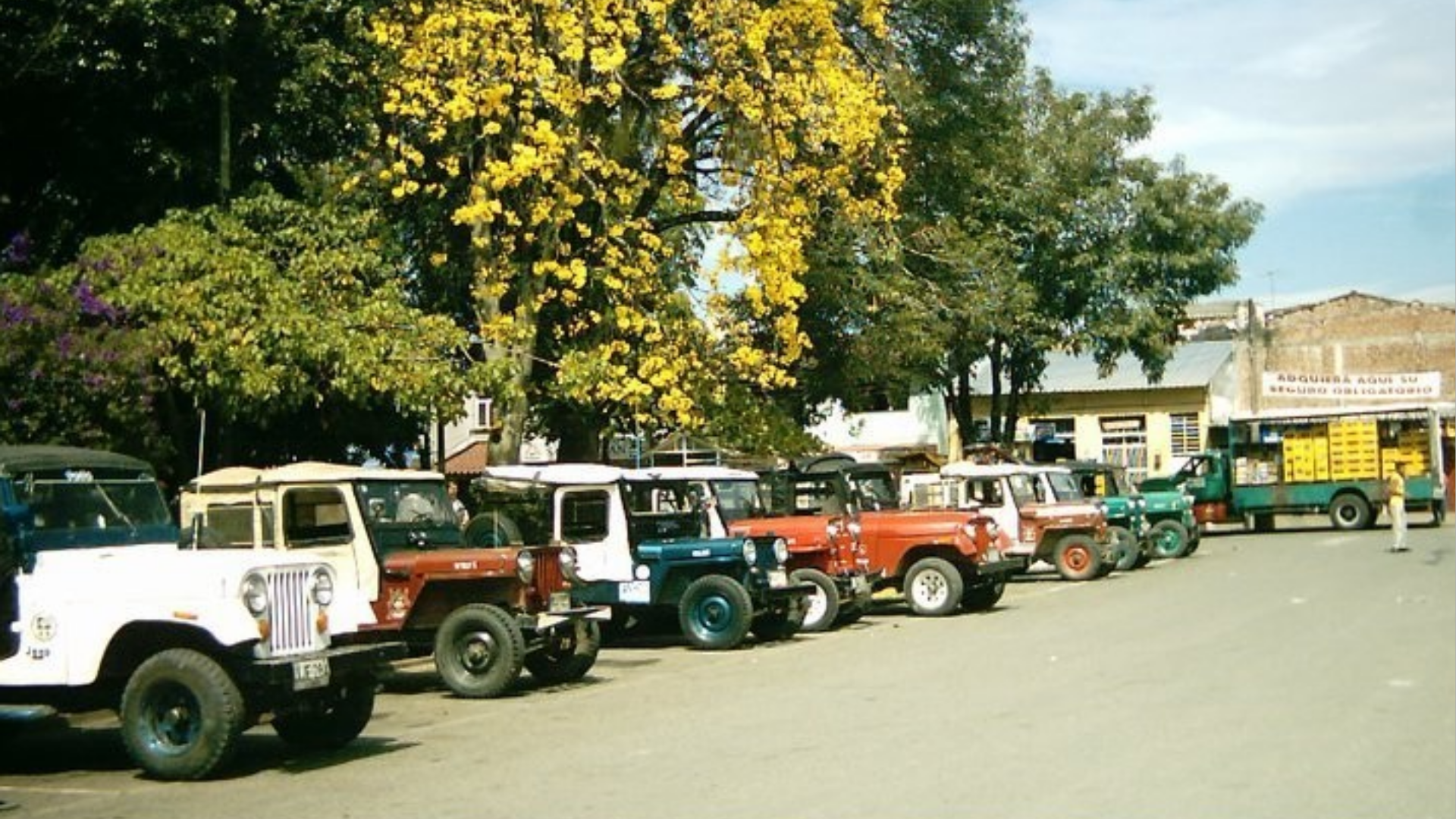
Foto antigua de jeeps tradicionales/ Old photograph of traditional Jeeps
Fotografía/Photography: Alcaldía de La Tebaida
Some historic elements were preserved and became an integral part of the proposal, such as the original benches in Parque Bolívar, donated by the municipality’s founding families. Commemorative plaques were also installed along the route, narrating the history of La Tebaida to visitors. These elements were already there and directly evoke those who founded the place. Their permanence is what connects the renewed space with what existed before the earthquake.
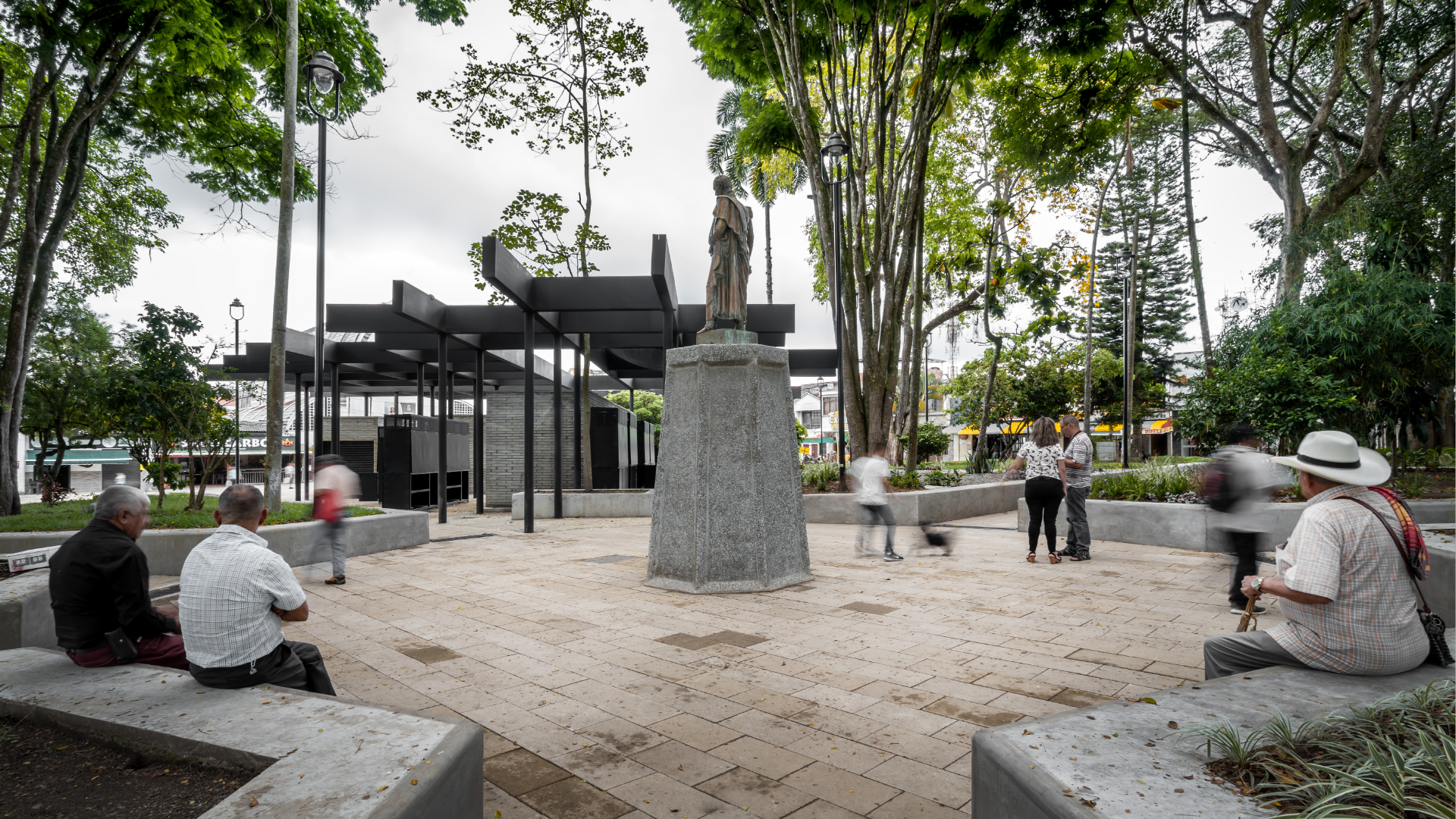
Exaltar los símbolos tradicionales de la plaza/ Highlight the traditional symbols of the plaza
Fotografía/Photography: Mauricio Carvajal
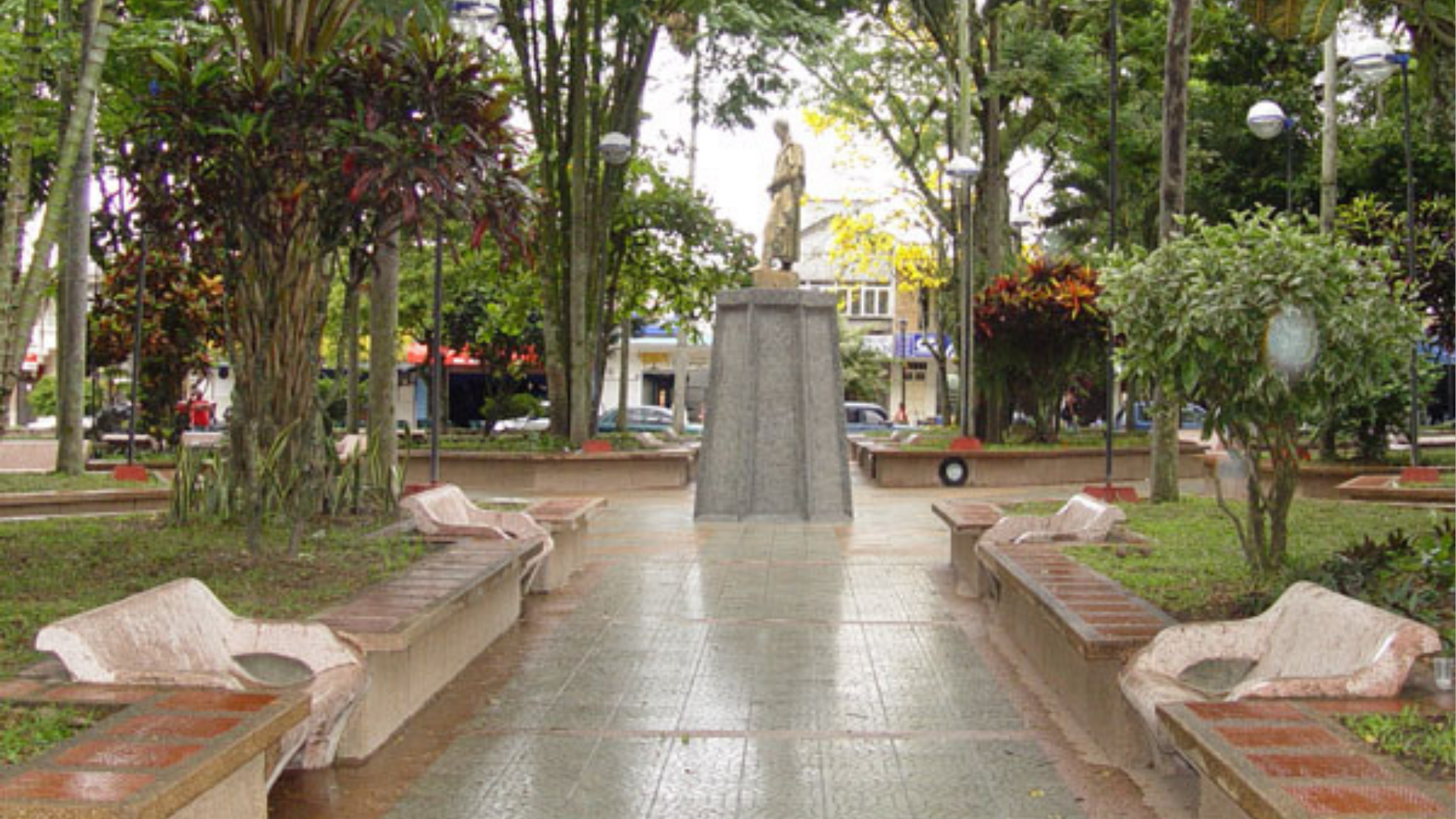
Vista antigua del monumento original/ Old view of the original monument
Fotografía/Photography: Alcaldía de La Tebaida
The revitalization of La Tebaida’s public space does not reconstruct what the 1999 earthquake destroyed. Through a proposal based on simple geometries, the project recovers the layout, vegetation, and surviving elements, putting them at the service of those who walk through the space today. In this way, it contributes to the town’s urban memory and lays the foundation for its future development within the Coffee Cultural Landscape of Colombia.
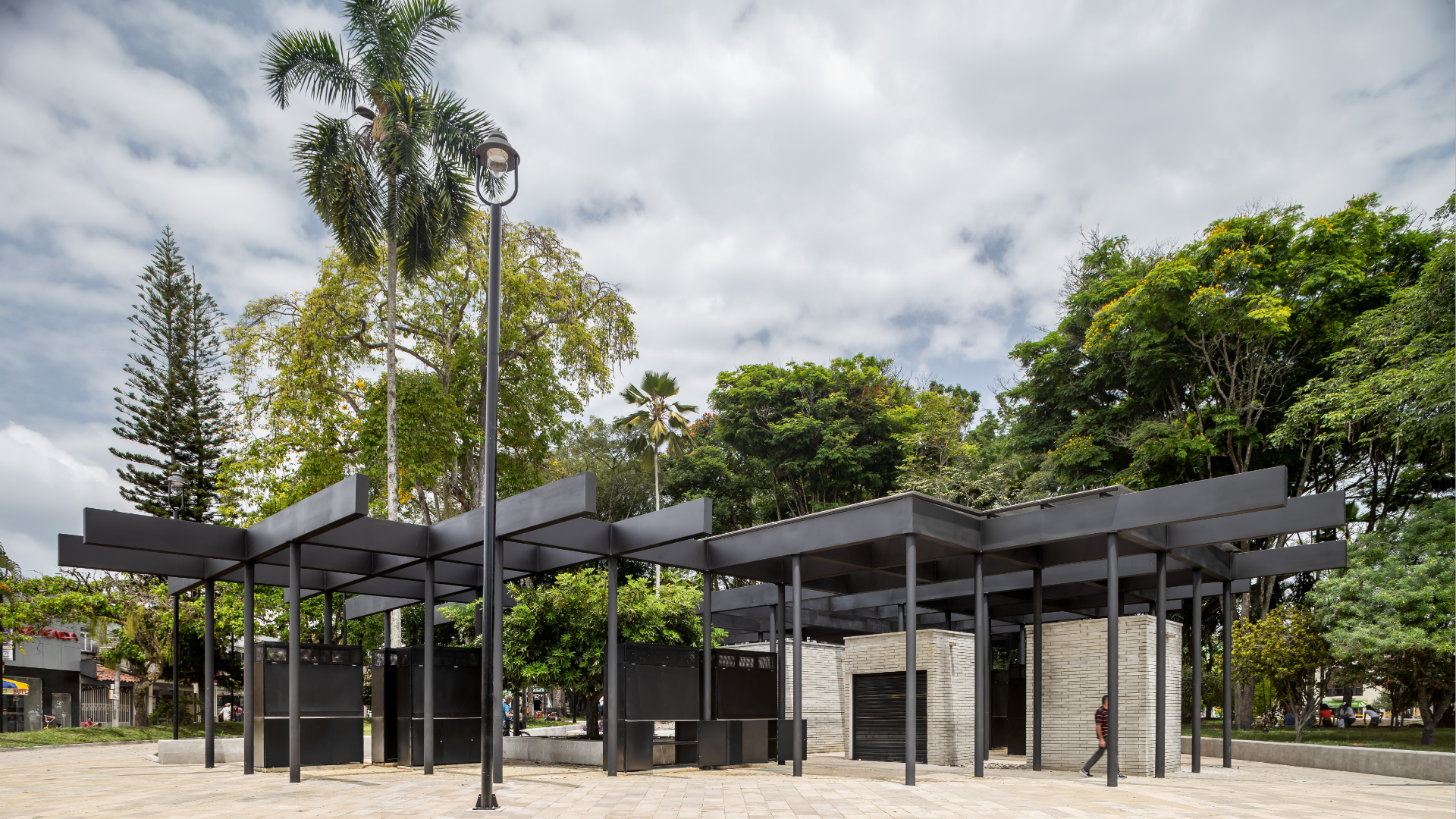
Activar el espacio con pérgola y servicios/ Activate the space with a pergola and amenities
Fotografía/Photography: Mauricio Carvajal
Bio of the Team:
TA Arquitectura is a design and consulting studio working at the intersection of architecture, landscape, public space, and urban planning, based in the city of Medellín.


-10.28.24.jpg "Anunciate07-13-a-la(s)-10.28.24")

 13.26.42.png "Captura de Pantalla 2023-02-08 a la(s) 13.26.42")