

Xicoténcatl Park
Taller Capital and the School of Architecture of the Universidad Nacional Autónoma de México come together to show, in the article “Xicoténcatl Park” how a degraded watercourse on the outskirts of Tijuana is transformed into an active public space for a community previously relegated to neglect.
The Xicoténcatl Park project shapes a degraded territory to reconnect it with its urban context and inhabitants through programmatic platforms that provide public space while simultaneously capturing stormwater runoff.
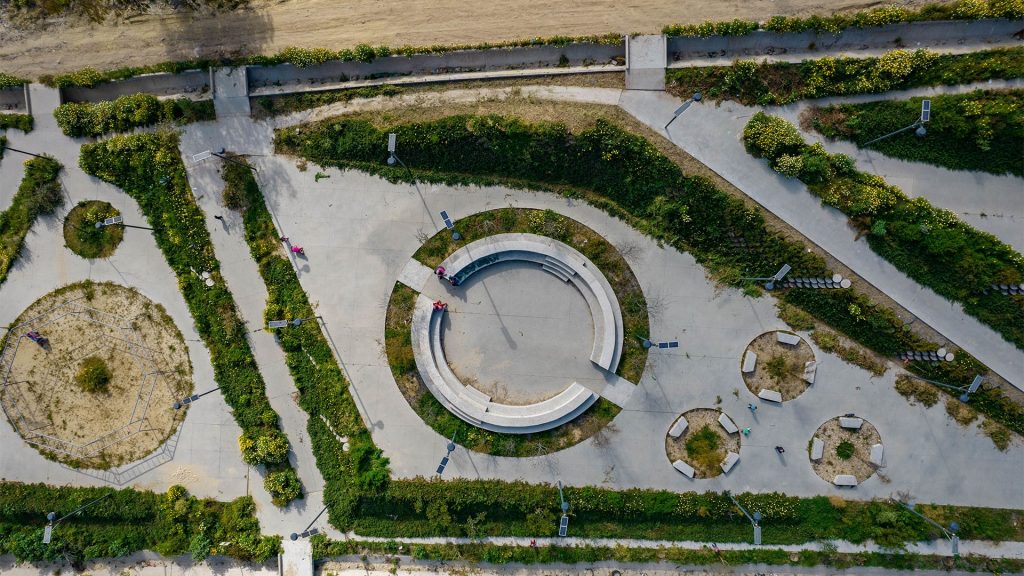
Imágen aérea / Aerial image
Fotografía / Photography: Secretaría de Desarrollo Agrario, Territorial y Urbano
Xicoténcatl Park was built over the bed of a stream located on the southern periphery of Tijuana. Over the years, local residents filled the site with debris in an effort to create level ground and provide play areas that had been promised to them when they settled there. This informally urbanized area is characterized by dwellings built on the hillside, made of cardboard and sand–cement block, typically roofed with corrugated metal sheets or concrete slabs. Around 5,000 people live in the immediate surroundings of this space.
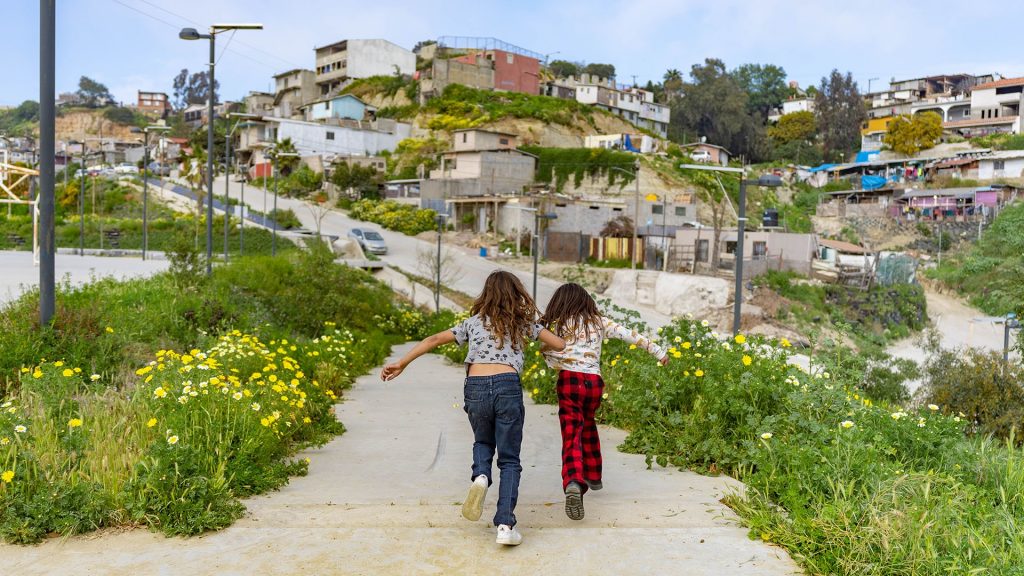
Niñas jugando / Girls playing
Fotografía / Photography: Secretaría de Desarrollo Agrario, Territorial y Urbano
This project was originally intended to address the construction of sidewalks and the cleaning of the streambed to guide water runoff. After visiting the site and understanding the community’s urgent need for public and recreational spaces, as well as witnessing the massive amounts of debris filling the streambed, a drastic change to the program was proposed: to terrace the debris and create recreational and play spaces, connected by ramps and capable of linking both sides of the stream. This built upon actions already initiated by the community, where debris had been used to create a soccer field.
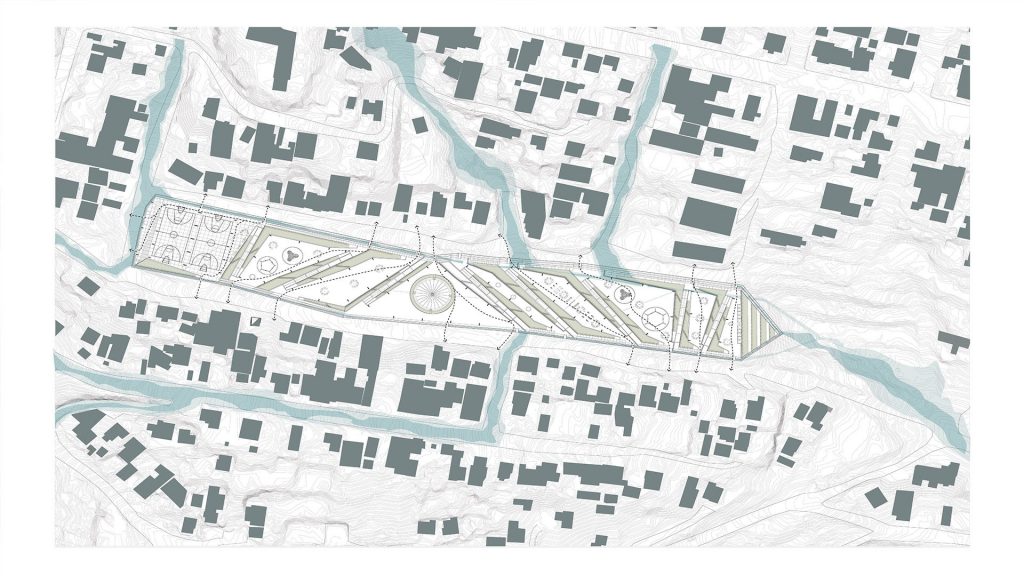
Plano de conjunto / Master plan
Ilustración / Illustration: Taller Capital
Using a popular and vernacular construction system for retaining walls called “llantimuro”, the project repurposes debris and the millions of used tires imported annually from the United States—often left uselessly piled up in border cities like Tijuana—to build a series of earth and concrete platforms shaping a slope with level differences of more than 15 meters across 390 meters of length. The “llantimuros” also accommodate vegetation. The project introduced 84 trees, 890 shrubs, and 13,400 succulents.
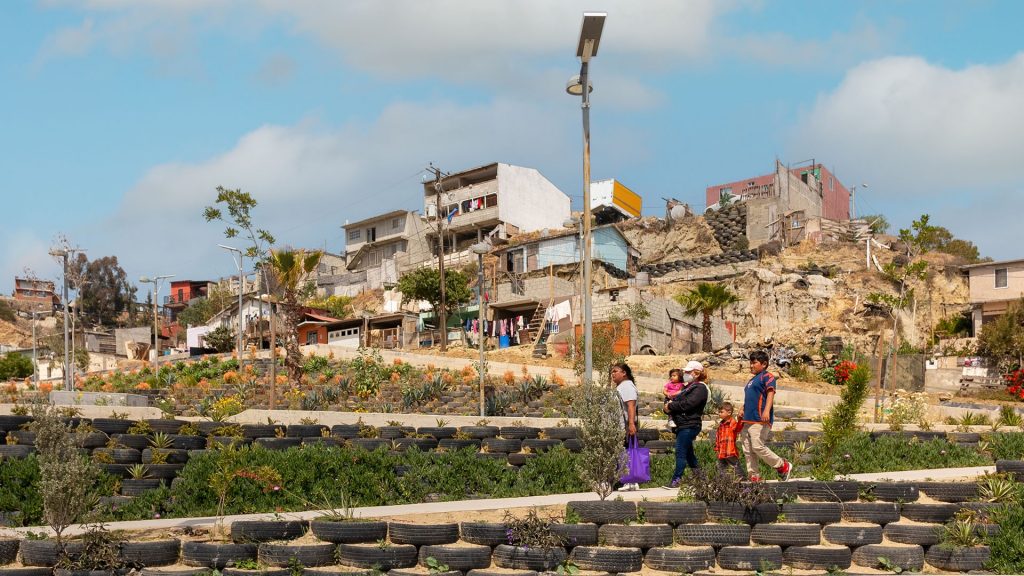
Familia caminando / Family walking
Fotografía / Photography: Gabriel Félix
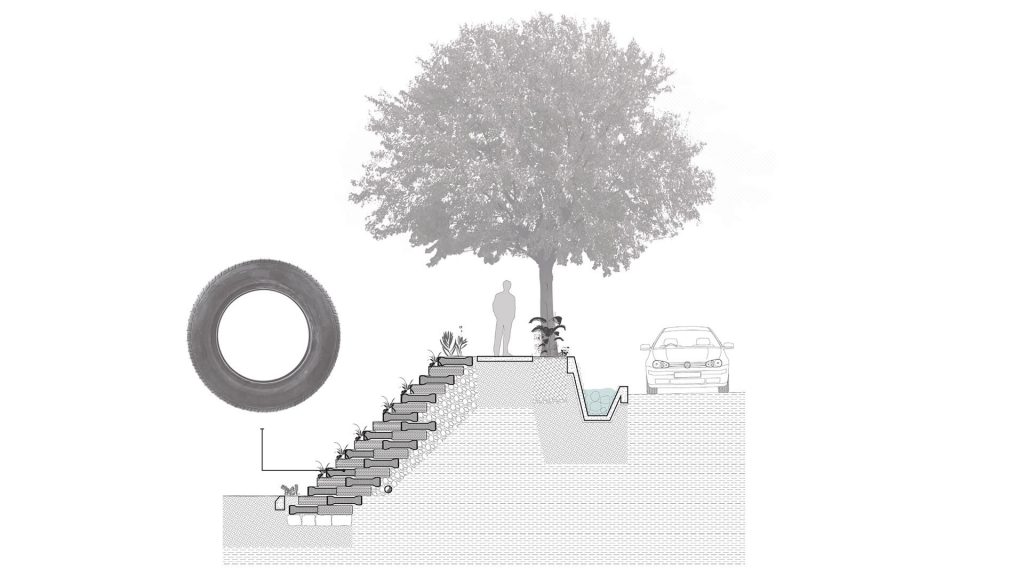
Plano de detalle / Detail plan
Ilustración / Illustration: Taller Capital
These spaces now serve as public and recreational areas that also connect residents living on both sides of the stream. The intervention also incorporates a climate risk–reduction strategy that consists of constructing perimeter channels that redirect rainwater runoff, keeping the streets free of water and guiding it downstream toward areas of the stream where the landscape has not yet been affected, ultimately discharging into the sea.
These spaces now serve as public and recreational areas that also connect residents living on both sides of the stream.
Description of beneficiaries as users, clients, promoters, etc:
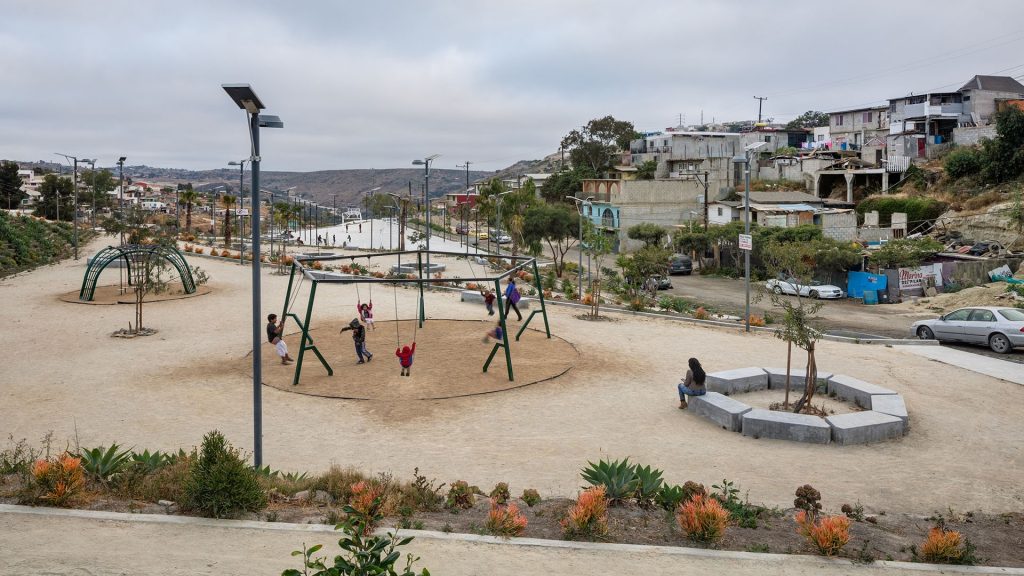
Juegos infantiles / Playground
Fotografía / Photography: Rafael Gamo
This project was developed through SEDATU’s Urban Improvement Program for the 5,000 residents living adjacent to the Xicoténcatl stream in Tijuana, who face vulnerable conditions due to the topography, the poor quality of their housing construction, and high levels of insecurity and violence. Dirt streets, runoff flowing directly over them, and a total lack of lighting made the area particularly hazardous. Additionally, the debris-filled streambed enabled the settlement of seven homes in extremely vulnerable conditions, which were subsequently relocated.
The original budget of 5 million MXN increased ninefold once the client reviewed the proposal and later, after a very successful first stage of construction.
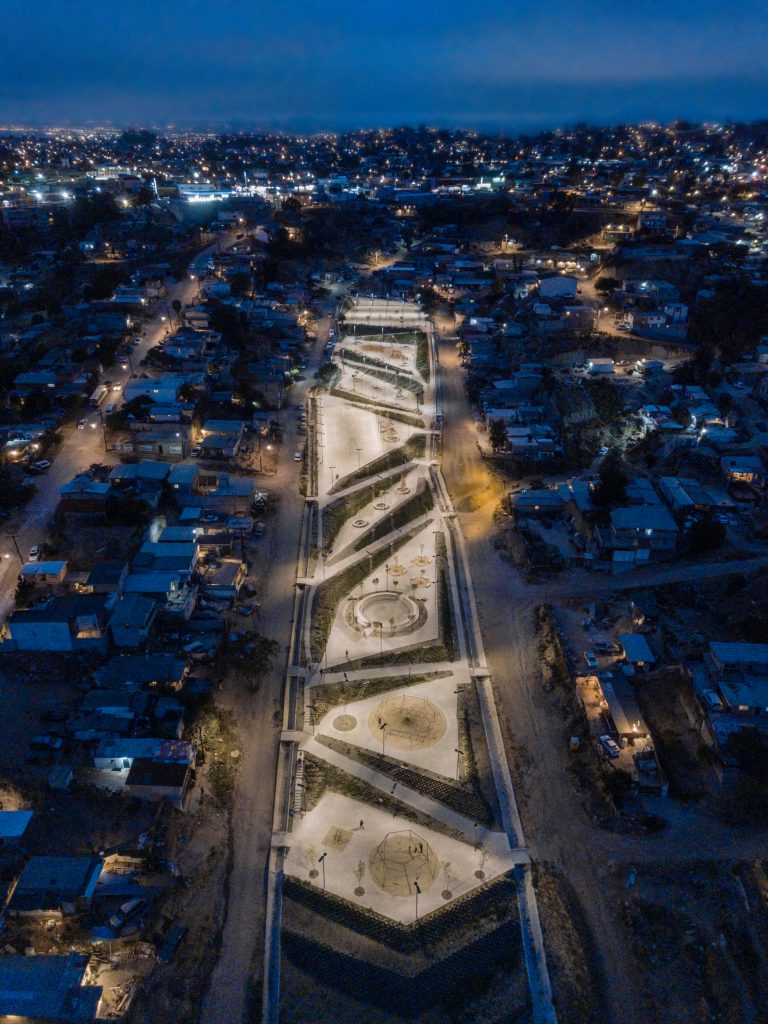
Imágen aérea de noche / Aerial view at night
Fotografía / Photography: Rafael Gamo
Technical team:
Architecture:
- Main designers: José Pablo Ambrosi y Loreta Castro Reguera
- Design team: Catalina Vega, Mariana Bovadilla, Ivan Rangel, Alexis Escalante, Manuel Abad
- Hydrology: Ing. Juan Ansberto Cruz Gerón – Taller ID
- Soil mechanics: Ing. Elvira León
- Landscape: Arq. Hugo Sánchez


-10.28.24.jpg "Anunciate07-13-a-la(s)-10.28.24")

 13.26.42.png "Captura de Pantalla 2023-02-08 a la(s) 13.26.42")


