

Hop-Park: Green Pop-up. Hop into the Greeniverse
Come and discover Hop-Park: Green Pop-up. Hop into the Greeniverse, an urban oasis that redefines what ‘city commuting’ means. It is a living structure created for you to breathe, heal from stress, and reconnect with nature, designed by Shma Company Limited.
Hop Park is a project that instantly creates a green space that requires low maintenance and makes the least change to the original structure. The space can easily “hop” and adapt to different areas while tackling the problems of the city.
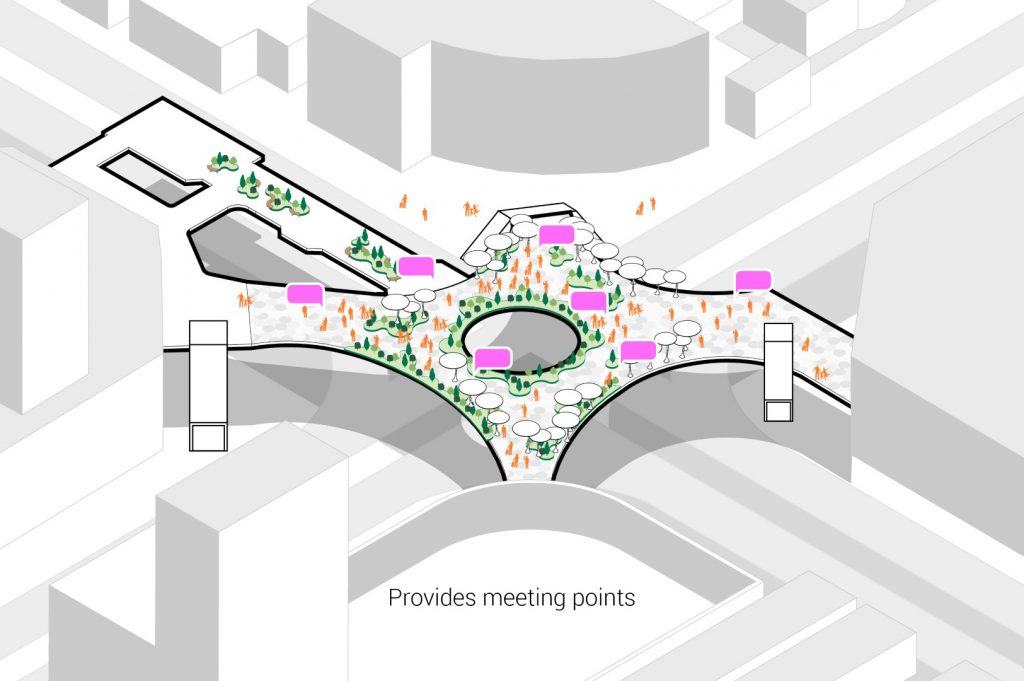
Shma, in collaboration with Garnier, the leading skincare brand of natural beauty industry, and Bangkok Metropolitan, creates a 550 square meters park on the busy Pathumwan skywalk. The project aims to show how green space can be a part of our daily life. This space potentially slows down pace of life at this public transportation hub, provides meeting points, and creates a nice environment for those passerby. This space is a prototype that can be adapted to other areas later on.
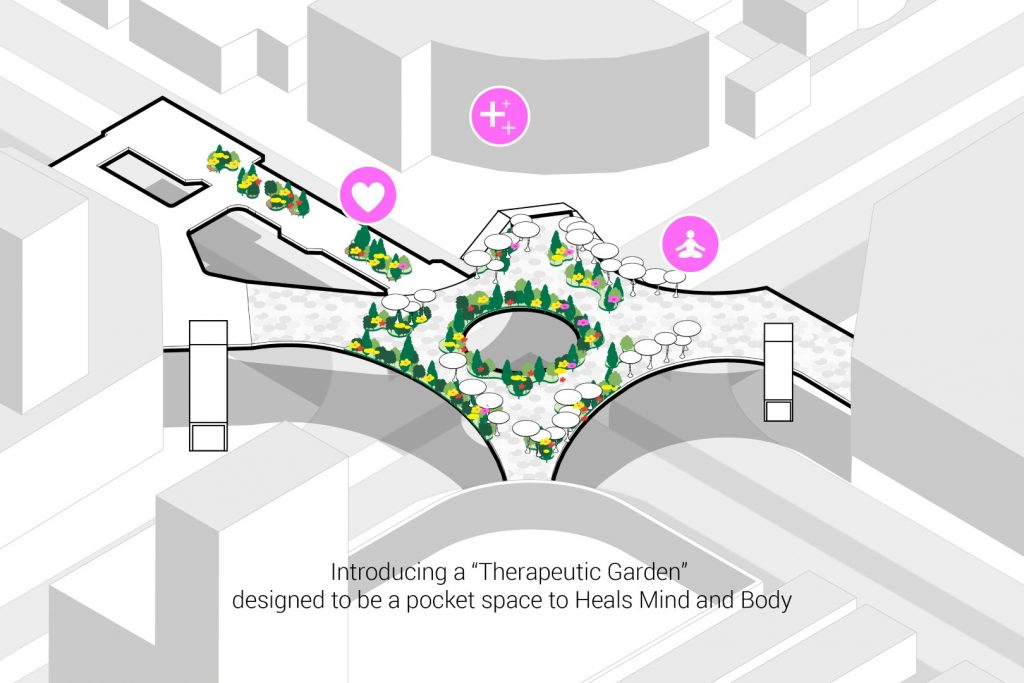
Ilustración izquierda: Puntos de encuentro/ Left Illustration: Meeting point Ilustración derecha: Jardines terapéuticos/ Right illustration: Therapeutic gardens Ilustraciones/Illustrations:Cortesía de autores
Hop-Park can hop around other areas and instantly turn more gray spaces into more lush green spaces.
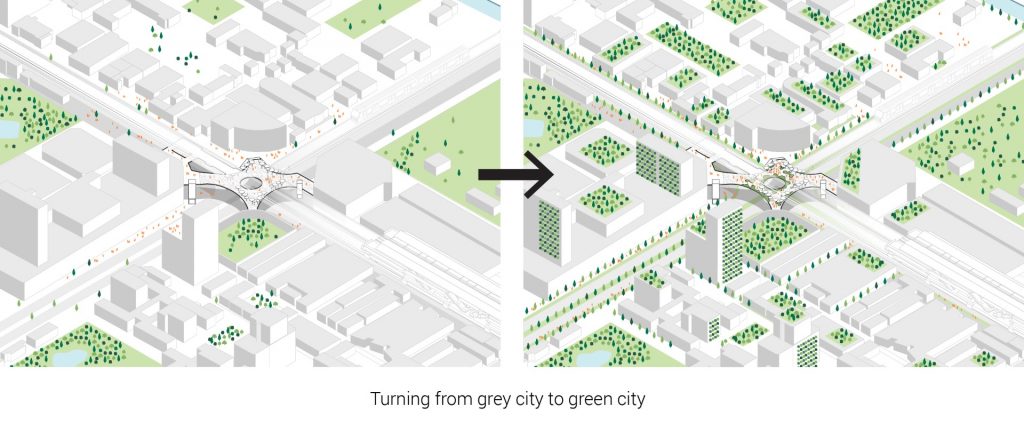
Hop Park: De una ciudad gris a una ciudad verde/ Hop Park: Turning from gray city to green city
Ilustración/ Illustration: Cortesía de autores
Hop Park landscape design is divided into 5 zones. With around 20,000 trees, each zone is designed to make the most of the green space and fully enhance the user’s experience.
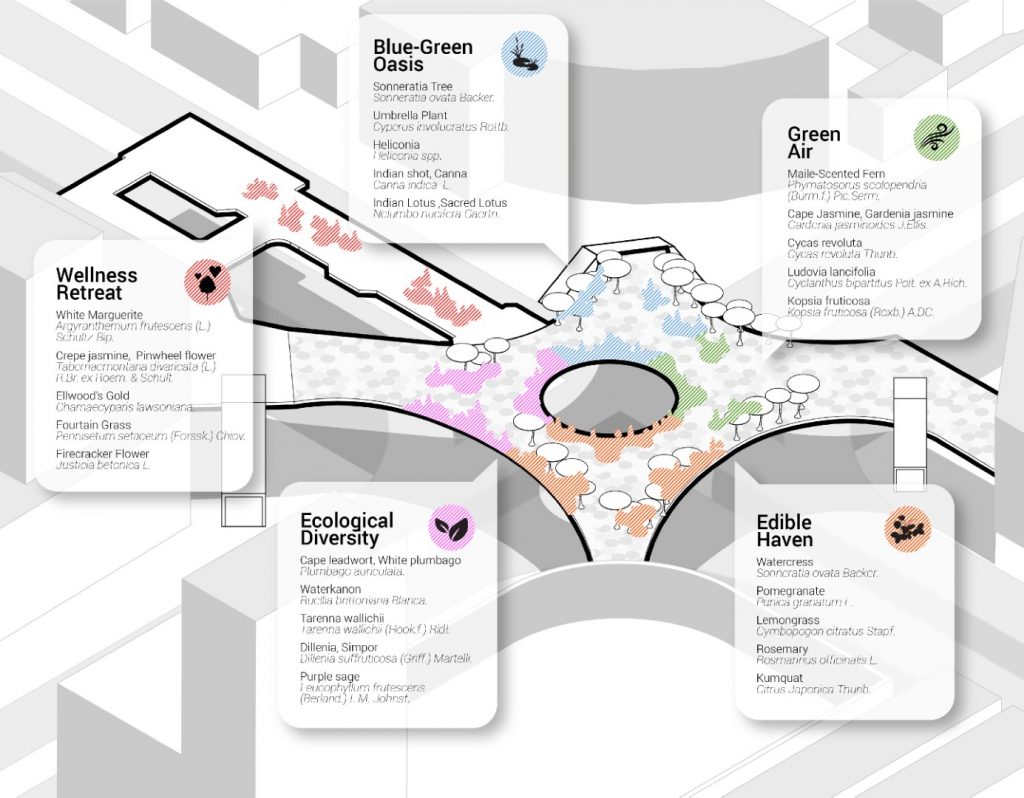
Zonificación del proyecto/ Project zoning
Ilustración/ Illustration: Cortesía de autores
1.Green Air Zone
Bangkok is buried under dust and smoke. Several studies show green space can help filter out pollution and purify the air. Over a year, a tree can produce enough oxygen for two people, absorb 9-15 kilograms of carbon dioxide, and capture 1.4 kilograms of dust and pollutants.
2. Blue-Green Oasis Zone Plants
As well as green space, don’t only grow on land. Blue space is also a crucial part of the ecosystem. Water plants can help remove bacteria, filter water, and reduce water pollution.
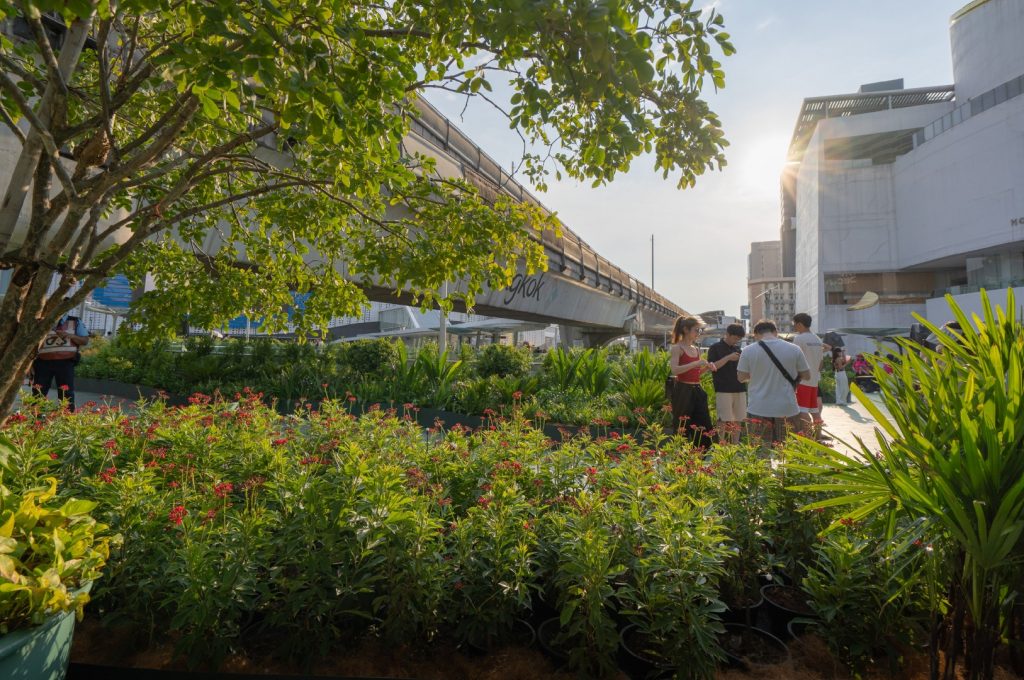
Zona de aire verde/ green air zone
Fotografía / Photography: Nawin Deangnul
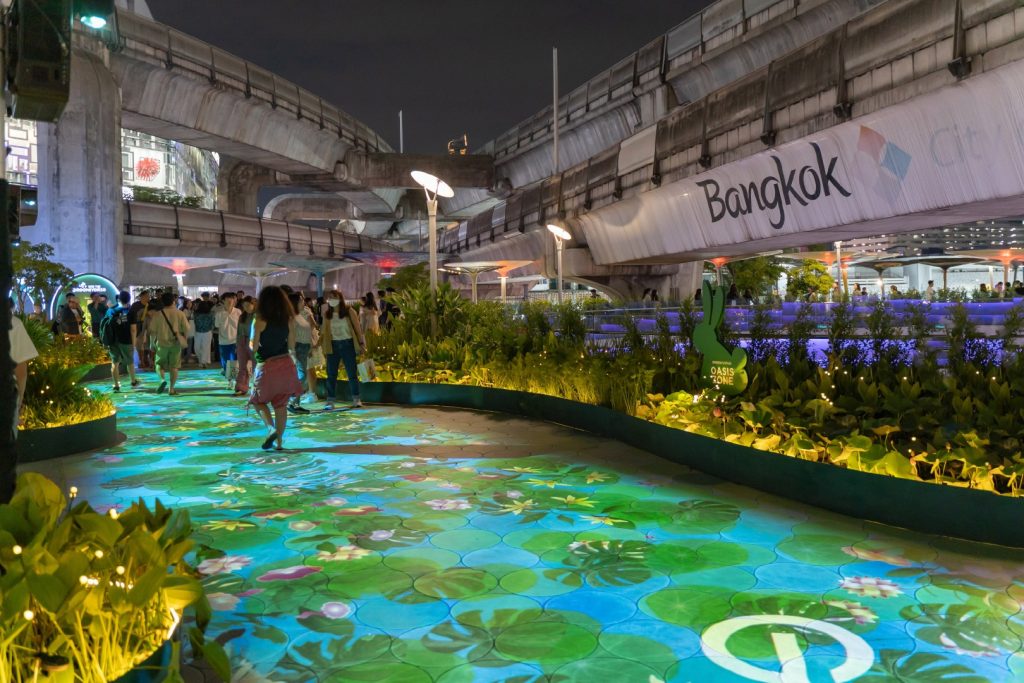
Zonas oasis azul-verde/ blue-green oasis zone
Fotografía / Photography: Nawin Deangnul
3. Edible Haven Zone
Food and produce are getting more costly. In the era of “global boiling”, food security has become a concern in many cities around the world. Edible green space tackles this problem by providing people with healthy and sufficient food. The space gives city dwellers a food source while encouraging them to grow their own city garden.
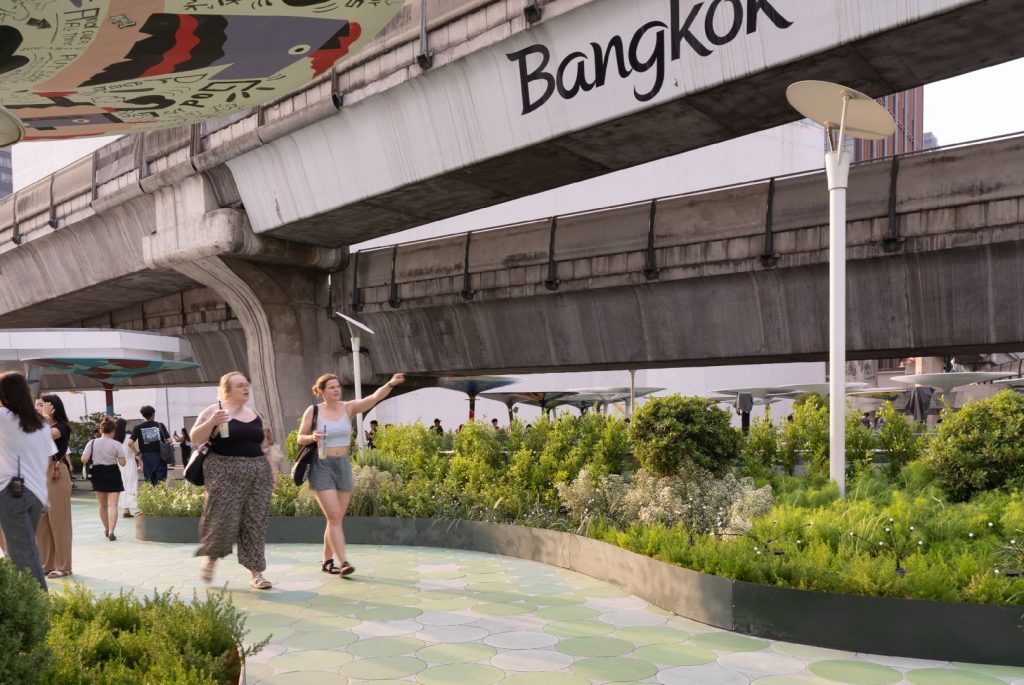
Zona de refugio comestible/ Edible haven zone
Fotografía / Photography: Nawin Deangnul
4. Ecological Diversity Zone
Human beings are not the only living creature; there are also animals and insects that play important roles in maintaining the ecosystem. Plants in this zone provide animals with food, insects with sweet juicy nectar and all these small creatures with homes.
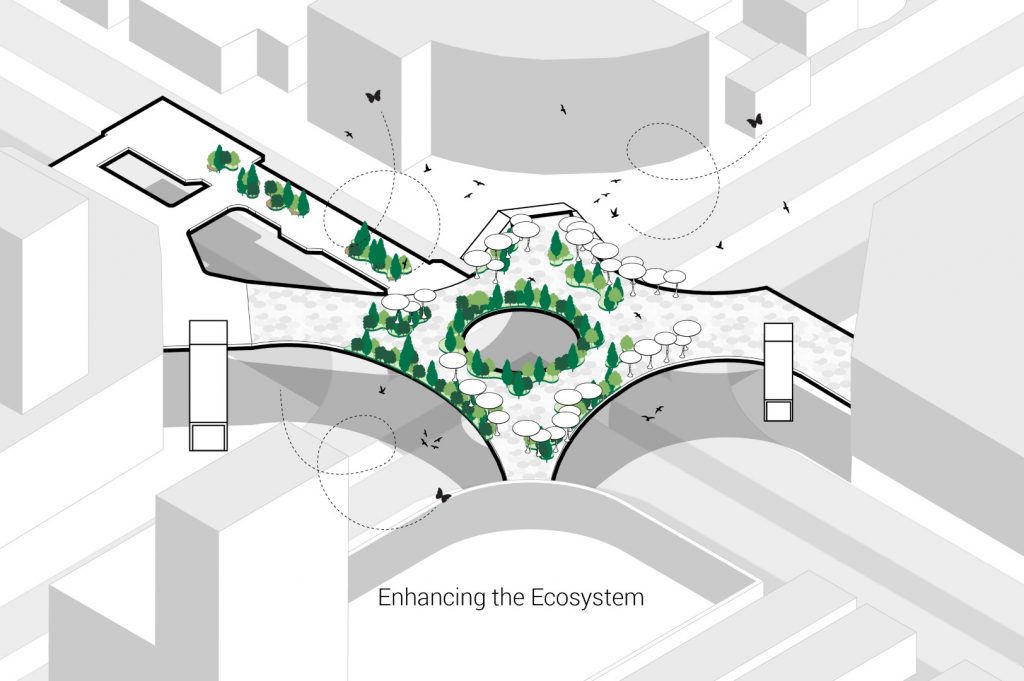
Ilustración: Zona de diversidad ecológica/ Illustration: zone of ecological diversity
Ilustración/ Illustration: Cortesía de autores
5. Wellness Retreat Zone
Life in a big city forces people to always be in a rush of getting to a destination where they usually forget to notice the beauty around them. This zone invites people to sit down among greenery, take a break, and slow down. They can enjoy fragrant flowers that help them relax and recover after a long day.
When night falls, Hop Park lighting shines through, brightening the whole area and providing safety for passersby. “Projection mapping” also adds more fun and color to the zone, making it a perfect leisure space for Bangkokian.
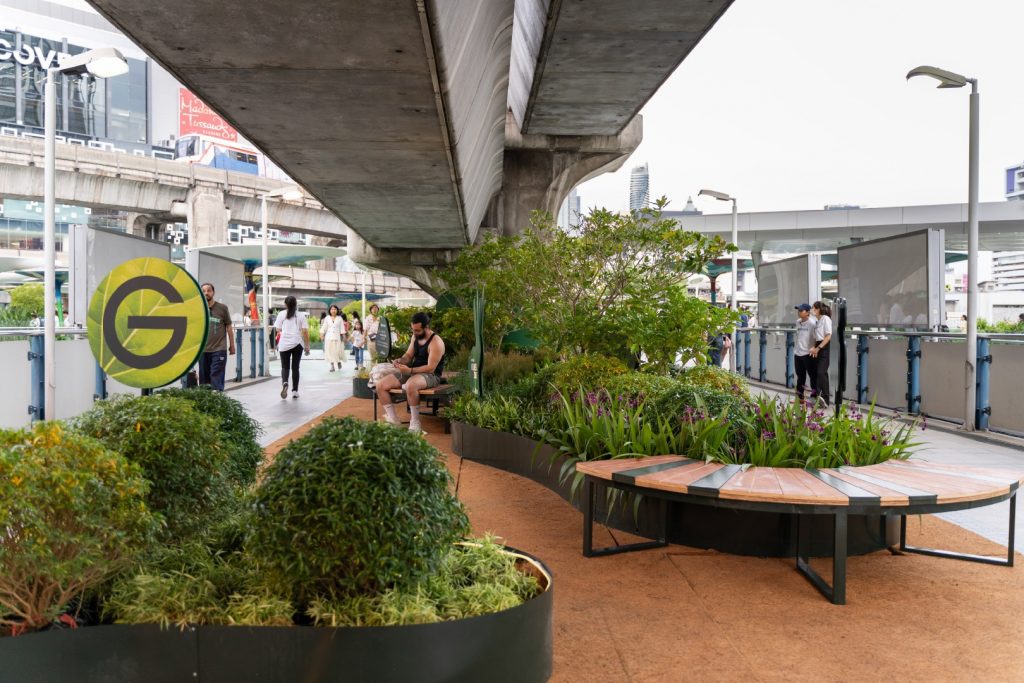
Zona de retiro para el bienestar/ Wellness retreat zone
Fotografía / Photography: Nawin Deangnul
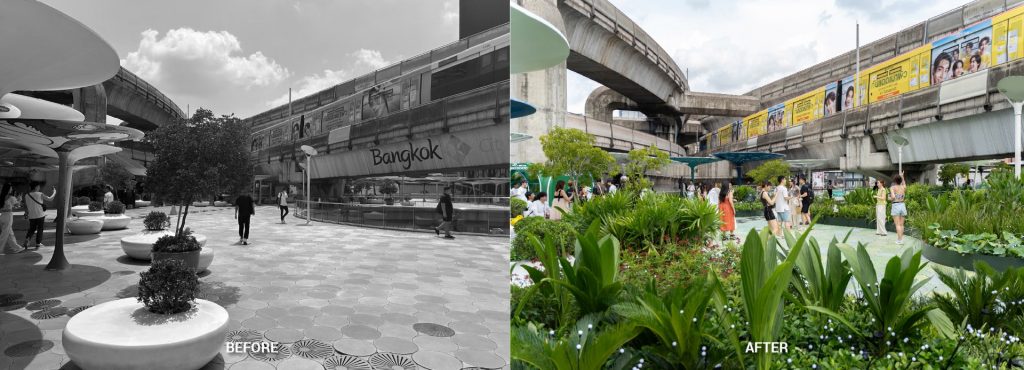
Hop-Park: Antes y después/ Hop-Park: Before and after
Fotografía / Photography: Nawin Deangnul
Hop-Park: Instantly Green Everywhere is a pilot project that shows how a dull and dry space can be turned into a lush green space, giving benefits to people of the city in so many aspects.
Página web/Web page: Shma Designs
Año en que se completó/Completion Year: 2024
Director de diseño/Design Director: Yossapon Boonsom
Correo del director de diseño/Design Director e-mail: yossapon@shmadesigns.com
Gerente de proyecto/Project Manager: Sarawut Pensrichol
Arquitectos paisajistas/Landscape Architect: Yossit Poonprasit, Krittapong Yongkiatpanich, Benjapon Yeangyang
Community Manager/CM: Sarawut Phunkoed
Horticultores/Horticulturist: Jakkrapan Kongklum, Kritsadang Phopluk
Diseñador gráfico/Graphic Designer: Thanaphum Thongprasert


-10.28.24.jpg "Anunciate07-13-a-la(s)-10.28.24")

 13.26.42.png "Captura de Pantalla 2023-02-08 a la(s) 13.26.42")


